







Understanding Your Visa-Free Entry
Good news for Indian passport holders: you can enter Malaysia for tourism for up to 30 days without a visa. This generous visa-free facility is in place until December 31, 2026, making spontaneous trips much easier to plan. However, 'visa-free' doesn't
mean you can just show up. The most critical step is to fill out the Malaysia Digital Arrival Card (MDAC) online. This must be done within the three days leading up to your arrival. Upon landing, an immigration officer will also expect to see your passport (valid for at least six months), a confirmed return flight ticket, and proof of accommodation. It's also wise to have proof of sufficient funds, just in case.
Pre-Trip Essentials for a Smooth Journey
Before you pack your bags, a little planning goes a long way. Start by booking your flights; carriers like AirAsia often have direct routes from several Indian cities at competitive prices. Next, book your first few nights of accommodation. For a backpacker budget, look for hostels in Kuala Lumpur’s lively Bukit Bintang or Chinatown areas, and in George Town for Penang. While not always mandatory, getting travel insurance is highly recommended to cover any unforeseen medical emergencies or travel disruptions. Lastly, remember to fill out your MDAC. It's a simple online form, but it is a non-negotiable entry requirement for all foreign visitors.
Arriving and Navigating Kuala Lumpur
Once you land at Kuala Lumpur International Airport (KLIA/KLIA2), your adventure begins. After clearing immigration, your first tasks are getting cash and a connection. You can exchange a small amount of currency at the airport and get a local SIM card for data access. Navigating into the city is straightforward. While Grab (Malaysia's equivalent of Uber) is convenient, the most budget-friendly option is the airport bus service to KL Sentral, the city’s main transport hub. From there, the city's excellent public transport network of LRT, MRT, and Monorail can get you almost anywhere. The free Go KL City Bus is another fantastic option for exploring the central tourist areas without spending a Ringgit.
Backpacking Kuala Lumpur On a Shoestring
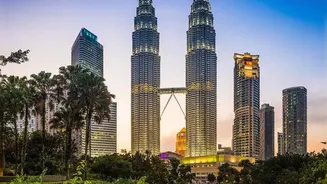
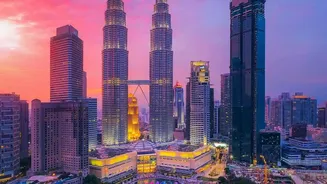
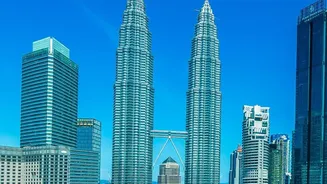
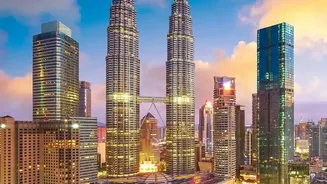
Kuala Lumpur is a city of contrasts, where gleaming skyscrapers stand beside traditional markets. For a backpacker, it offers a wealth of free and cheap activities. A must-visit is the Batu Caves, a stunning Hindu shrine set in a limestone hill which is free to enter for the main temple. You can also admire the iconic Petronas Twin Towers from the KLCC Park below. For food, immerse yourself in the culinary chaos of Jalan Alor, a street food haven, or explore the affordable eats in Chinatown and Brickfields (Little India). A daily budget of around 115-150 MYR (Malaysian Ringgit) is realistic if you stay in hostels and primarily eat street food.
The Journey North to Penang
Getting from Kuala Lumpur to the island of Penang is a classic Malaysian travel leg. The most economical way is by bus. Comfortable, air-conditioned buses depart regularly from Terminal Bersepadu Selatan (TBS) in KL and arrive at Penang Sentral or Sungai Nibong bus terminal in about five to six hours. Alternatively, the ETS (Electric Train Service) offers a faster and more scenic journey to Butterworth, from where you can take a short ferry ride across to George Town on Penang Island. While flying is the quickest option, it's generally more expensive and less of a backpacking experience.
Exploring Historic George Town and Beyond
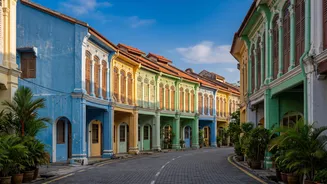
Penang's capital, George Town, is a UNESCO World Heritage site for a reason. Its streets are a living museum of colonial architecture, vibrant street art, and clan houses. The best way to explore is on foot, hunting for the famous murals by artist Ernest Zacharevic. For accommodation, look for charming guesthouses and hostels around Chulia Street and Love Lane. No trip to Penang is complete without indulging in its legendary hawker food. Head to sprawling food courts to sample local delicacies like Char Kway Teow and Assam Laksa for just a few Ringgit. For a break from the city, take the funicular railway up Penang Hill for panoramic views of the island.