







Perfect the Batter Consistency
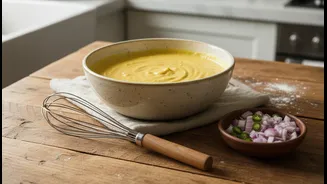
The single most important factor for a successful chilla is the batter. A common mistake is a batter that is either too thick or too thin. A thick batter won't spread properly and results in a heavy, undercooked chilla. A watery batter will spread too thin and break
easily.. The ideal consistency is smooth and pourable, similar to a dosa batter but slightly thicker.. Start with one cup of besan (gram flour) and gradually add about three-quarters of a cup of water, whisking continuously to eliminate lumps.. Add water slowly until the batter coats the back of a spoon and drips in a steady stream. Letting the batter rest for 10-20 minutes allows the besan to fully hydrate, which improves the texture and spreadability..
Add a Binder for Strength
If your chillas consistently break upon flipping, the batter may lack sufficient binding. Besan is naturally gluten-free, so it doesn't have the same structural integrity as wheat flour. An easy fix is to add a tablespoon of another flour. Rice flour or sooji (semolina) are excellent choices.. These ingredients not only help bind the chilla together, making it less prone to tearing, but they also contribute to a much crispier final product. For every cup of besan, a tablespoon of rice flour or fine sooji is usually enough to do the trick without altering the classic flavour.
Master Your Pan and Heat
The wrong pan or incorrect temperature is a frequent cause of chillas sticking.. While a non-stick pan is the easiest option, a well-seasoned cast-iron tawa works wonderfully too.. The key is to preheat the pan properly over a medium flame.. A simple test is to sprinkle a few drops of water on the surface; if they sizzle and evaporate immediately, the pan is ready.. If the pan is too hot, the batter will seize and won't spread evenly.. If it's too cool, the chilla will stick.. Before pouring the first chilla, lightly grease the hot pan with oil and wipe away any excess with a cloth or paper towel. This creates a perfect, non-stick surface..
Manage Your Vegetables
Adding vegetables like onions, tomatoes, and coriander makes chillas more nutritious and flavourful, but it can also introduce problems. Using too many vegetables or chopping them into large pieces can disrupt the batter's structure, causing the chilla to break.. Ensure all your vegetables are chopped very finely so they integrate smoothly into the batter.. Another pro tip is to manage the moisture. Vegetables release water as they cook, which can make the chilla soggy. If you are using particularly watery vegetables, you can lightly salt them and press out excess moisture before adding them to the batter..
The Art of Spreading and Flipping
Once your pan is hot, you can slightly lower the heat before pouring the batter.. Pour a ladleful into the centre and, using the back of the ladle, gently spread it outwards in a circular motion.. Don't press too hard, and aim for an even thickness. Spreading it too thin makes it fragile, while too thick results in a soft, pancake-like texture.. Now, patience is key. Let the chilla cook on medium-low heat until the top surface looks dry and the edges start to lift away from the pan.. This is your signal that it's ready to be flipped. Trying to flip it too early is the number one reason for breakage. Drizzle a little oil around the edges before flipping to help it release cleanly and get crispy..