




The Ultimate Insurance Policy
At the heart of crew safety for any human spaceflight mission is the Crew Escape System (CES). Think of it as the most sophisticated and powerful ejection seat ever built. Its only job is to do one thing: in the event of a catastrophic rocket failure,
it must pull the crew module—and the astronauts inside—away from the exploding launch vehicle in fractions of a second. For ISRO, perfecting this system is not just a technical requirement; it's a moral one. The lives of India's 'Vyomanauts' depend on the CES working flawlessly the one time everyone hopes it never has to be used. This system is a cornerstone of the entire Gaganyaan programme, reflecting an unwavering commitment to astronaut safety.
Why Practice for Disaster?
A rocket launch is a controlled explosion, with countless variables that must align perfectly. Failures can happen at any moment: on the launchpad before liftoff, or minutes into the flight as the vehicle punches through the atmosphere at supersonic speeds. ISRO Chairman S. Somanath has emphasized that crew safety is the absolute first priority, which is why the agency focuses so heavily on a series of 'abort missions'. These missions are designed to intentionally simulate failures at the most critical and stressful phases of a launch. By creating these worst-case scenarios on purpose, engineers can prove that the automated abort triggers and the escape hardware function exactly as designed, ensuring the crew can be brought back safely.
How to Simulate a Catastrophe
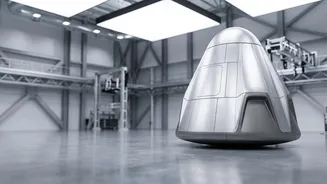
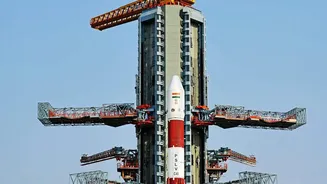
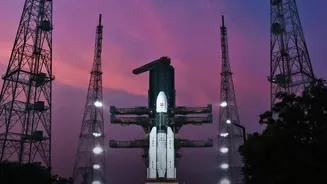
Simulating an engine failure isn't as simple as just flipping a switch. The tests must replicate the precise conditions under which a real abort would be necessary. To do this, ISRO uses a specially designed, cost-effective Test Vehicle—a single-stage liquid-fuelled rocket—to carry a test version of the Gaganyaan crew module to a specific altitude and speed. In a key test known as TV-D1, the vehicle was programmed to simulate an abort when it reached a speed of Mach 1.2 (1.2 times the speed of sound) at an altitude of about 17 km. At this exact point, the onboard computers initiated an 'abort sequence'. This command effectively tells the system that a catastrophic failure has occurred, triggering the escape system autonomously, without any human input. This proves the system's brain is as effective as its muscle.
The Anatomy of an Escape
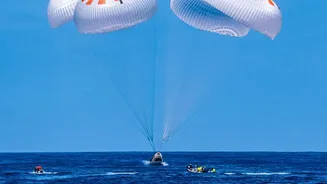
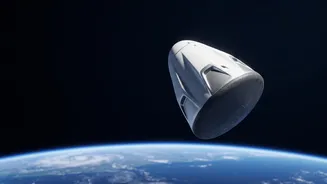
Once the abort is triggered, a rapid sequence of events unfolds in mere seconds. A set of powerful, fast-acting solid motors on the Crew Escape System ignites, generating immense thrust to pull the crew module away from the launch vehicle with violent acceleration. The system is designed to get the crew to a safe distance immediately. After the initial separation, the escape system detaches from the crew module. The crew module then begins its descent, but it's still moving too fast. To solve this, a complex sequence of ten parachutes deploys in stages. First, smaller drogue parachutes stabilize the capsule, followed by the massive main parachutes that slow the module down for a gentle splashdown in the sea. In tests, the entire sequence, from launch to a safe splashdown, can take less than ten minutes.
From Test Dummies to Vyomanauts
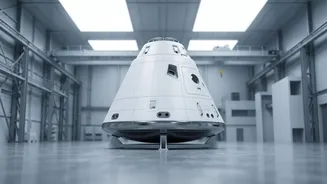
ISRO has conducted a series of these rigorous tests to validate every aspect of the escape procedure. The Pad Abort Test in 2018 confirmed the system works even before liftoff, pulling the module away from a stationary launchpad. More recent tests, like the in-flight abort demonstration (TV-D1) and Integrated Air Drop Tests (IADT), have validated the high-altitude escape and the complex parachute deployment system. In these tests, an unpressurised, dummy version of the crew module is used, loaded with sensors to collect data on every aspect of the flight. Teams from the Indian Navy are also a critical part of these missions, practicing the recovery of the capsule from the ocean to ensure the procedure is seamless after a real mission. Each successful test is a crucial step, building the confidence and reliability needed before astronauts board the Gaganyaan spacecraft for India's historic human spaceflight.