




Meet the 'Sea Sparkle'
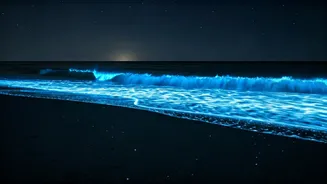
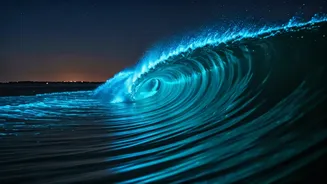
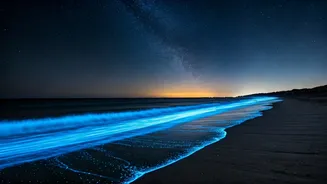
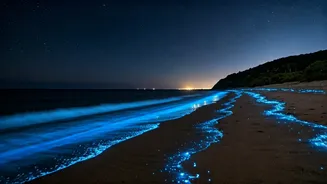
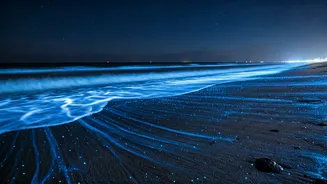
So, what’s causing this otherworldly glow? The magic comes from tiny, single-celled marine organisms called dinoflagellates. Specifically, the species *Noctiluca scintillans*, which translates beautifully to 'sparkling night light.' These microorganisms
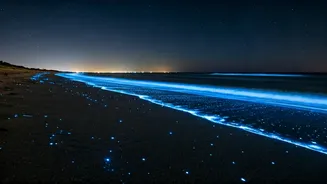
are a type of phytoplankton that float near the water's surface. By themselves, they’re unremarkable. But when they gather in massive numbers, or 'blooms,' they create a spectacle. The light is a defense mechanism. When the water is disturbed—by a breaking wave, a skipping stone, or even your own feet wading in the shallows—the *Noctiluca* produce a flash of blue light through a chemical reaction inside their cells. This is bioluminescence, the same process that makes fireflies glow. The theory is that the sudden flash of light startles potential predators, giving the dinoflagellate a better chance of survival. For us, the effect is pure enchantment: millions of tiny specks of light creating a shimmering, liquid galaxy at our feet.
Ground Zero: The Karnataka Coastline
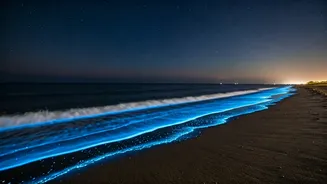
This captivating light show has been making headlines along the coast of Karnataka, a state in southwestern India. In particular, beaches near the city of Udupi, like Padukere Beach and Mattu Beach, have become hotspots for witnessing the phenomenon. For years, this was a relatively low-key local secret, an occasional wonder spotted by fishermen and late-night beachcombers. The conditions need to be just right. The blooms often appear after the monsoon season, typically from late September through November, when nutrient levels in the water change.
The recent surge in viral photos and videos has turned these quiet beaches into must-see destinations for local tourists and photographers. Armed with tripods and smartphones, people are flocking to the shoreline after dusk, hoping to capture the electric-blue waves. The result is a flood of stunning imagery that has put this corner of the Indian coastline on the global map for nature lovers.
Why It’s Blowing Up Online
In an era dominated by screens, a natural event that looks like a special effect is destined for viral fame. The bioluminescence in Karnataka hit a sweet spot. It’s visually arresting, easily captured on modern phone cameras, and feels like a discovery. Each shared video and photo acts as a digital postcard from a fantasy world, sparking curiosity and a deluge of 'Where is this?!' comments.
The trend also speaks to a collective yearning for wonder. As global travel remains complicated for many, spectacular, location-based phenomena like this offer a form of virtual escapism. It's a reminder that the planet is still full of surprises, hidden spectacles waiting for the right conditions—and the right Instagrammer—to come along. The glow connects people, allowing someone in Ohio to share in the awe felt by someone standing on a beach in Udupi, all thanks to a hashtag and a Wi-Fi connection.
A Beautiful Warning?
While the sight is undeniably beautiful, marine biologists offer a more nuanced perspective. Massive blooms of *Noctiluca scintillans* aren't always a good sign. These blooms, sometimes called 'red tides' for their daytime appearance, can be triggered by an excess of nutrients in the water, often from agricultural runoff and sewage. While *Noctiluca* itself is not toxic, it can lead to problems.
As the bloom grows, it consumes vast amounts of oxygen in the water. When the organisms die and decompose, the process can create 'dead zones' where other marine life, like fish, cannot survive due to oxygen depletion. Furthermore, *Noctiluca* are voracious predators of other plankton and fish eggs. So, while they light up the night, their presence in such high concentrations can disrupt the local marine food web. Scientists see these increasingly frequent and intense blooms as a potential indicator of environmental stress and changing ocean chemistry. The ethereal blue glow might be a beautiful symptom of a deeper imbalance.