



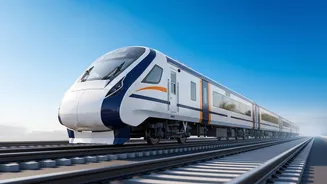
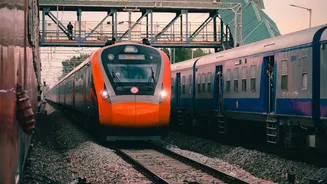
A deadly high-speed train crash in Spain has cast a harsh spotlight on rail safety. The incident, caused by a combination of system failure and human error, naturally raises questions for India as it constructs its own ambitious bullet train network.
What Went Wrong in Spain?
On October 28, 2026, a high-speed train slammed into the back of a stationary train near Urda, south of Madrid, killing 69 people. It was Spain's second fatal high-speed rail accident in the same year, shattering the network's previously strong safety record. According to initial reports, the disaster unfolded after an automatic safety system failed, bringing several trains to a halt. A control centre in Madrid then manually authorised one train to proceed, despite another train being stopped on the same track ahead, leading to the catastrophic rear-end collision. The incident has been attributed to a fatal combination of a technical glitch and a subsequent error in human judgment. Spain's transport minister has since resigned over the tragedy.
India's Shinkansen Bet
For its first high-speed corridor between Mumbai and Ahmedabad, India is not just buying trains; it is importing an entire ecosystem: Japan's Shinkansen technology. This system is globally renowned for its unparalleled safety record, boasting zero passenger fatalities from collisions or derailments since it began operations in 1964. The project involves much more than just the rolling stock. It includes the construction of dedicated tracks completely isolated from the existing Indian Railways network, which eliminates the risk of collision with slower passenger or freight trains. The entire 508-kilometre line will have no level crossings, further securing the corridor from external interference.
Technology Designed to Prevent Collisions
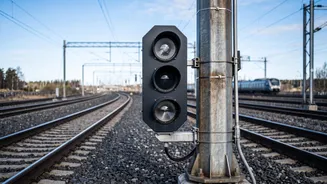
The core of the Shinkansen's safety philosophy is its Automatic Train Control (ATC) system. Unlike the system in Spain, which appears to have allowed for a manual override that led to disaster, the ATC is designed to make such collisions virtually impossible. It continuously monitors the train's position and speed, and if it detects another train on the track ahead or if the driver fails to slow down for a signal, the system automatically applies the brakes. This principle of 'crash avoidance' is built into the fundamental design. Furthermore, the system is integrated with a network of seismometers that can detect earthquake tremors and automatically halt all trains before the more destructive secondary waves arrive, a feature proven during major earthquakes in Japan.
Building a Culture of Safety
While technology is a critical component, experts note that the Shinkansen's success is also due to a deeply ingrained culture of safety and meticulous maintenance. This extends from nightly track inspections to the behaviour of passengers who queue in an orderly fashion. For India, adopting the Shinkansen technology is only half the battle. The project also involves training thousands of Indian engineers and technicians in Japanese operational practices to ensure these high standards are maintained. This transfer of knowledge and work culture is seen as crucial for the longterm safety and success of high speed rail in India. The National High Speed Rail Corporation Limited (NHSRCL) is also introducing advanced components like 'swing nose crossings' to allow for smooth and stable track switching at 320 km/h, a technology that is a non negotiable requirement for high speed safety.
The Road Ahead for Indian Rail Safety
While the bullet train project leverages proven international technology, Indian Railways is also developing its own indigenous Automatic Train Protection system, Kavach, for its conventional network. Kavach is designed to prevent collisions by automatically applying brakes if a loco pilot misses a signal. However, its deployment is still in its early stages, with only a fraction of the vast network currently covered. Concurrently, India is also manufacturing its own high speed trainsets, with the first prototype, named B–28, currently undergoing stringent 'squeeze tests' to ensure its structural integrity in case of a collision. This twin approach—adopting the world's best for the new high speed lines while developing homegrown solutions for the existing network—highlights the scale of the country's railway modernisation efforts.