



The Illusion Everyone Sees
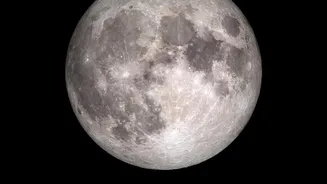
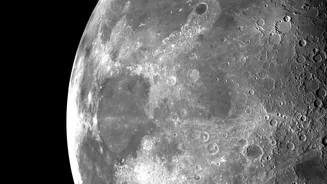
The Moon illusion is one of the most ancient and democratic mysteries in science. For thousands of years, people have observed that the full moon appears enormous when it's low in the sky—peeking over a mountain range or behind a cityscape—but seems to
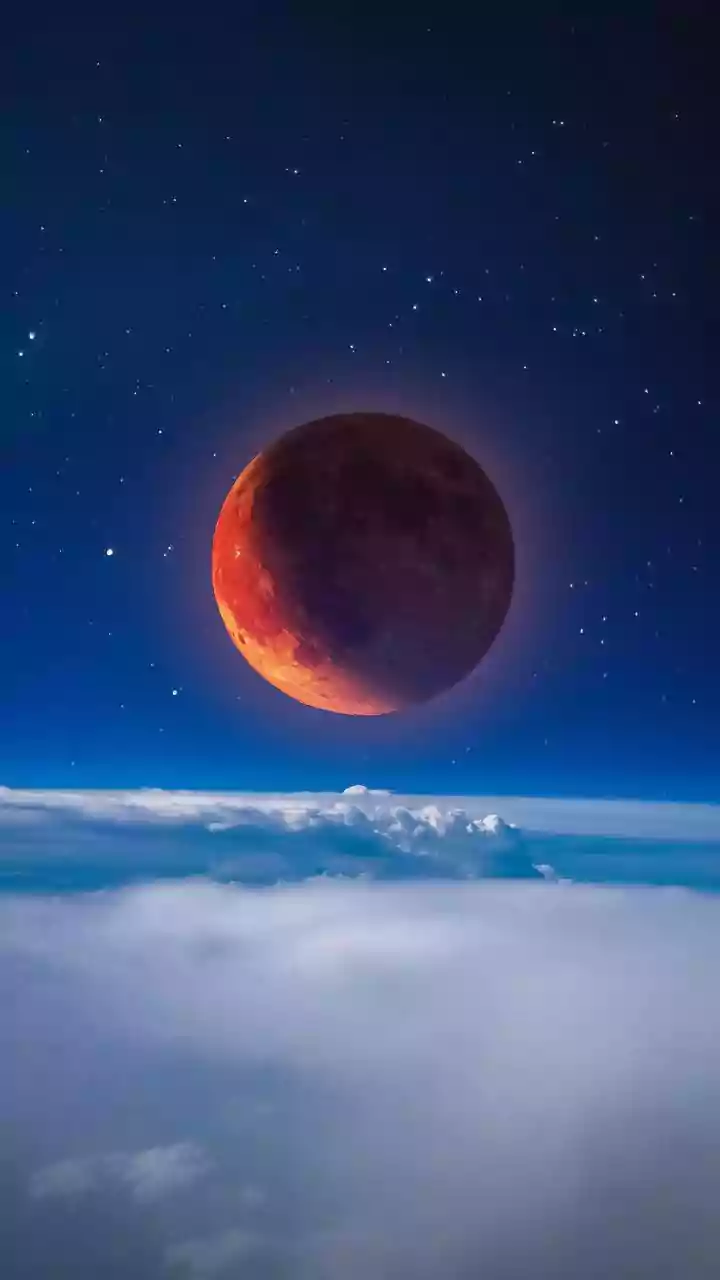
shrink as it climbs toward its zenith. Photographs prove what science confirms: the Moon's actual size in the sky doesn't change. In fact, due to the geometry of our planet, the horizon moon is technically one Earth-radius farther away from you than the overhead moon, meaning it should appear slightly smaller, not larger. The dramatic size difference isn't real; it’s a powerful trick of the mind. This isn’t an atmospheric effect, like the reddish color the Moon sometimes gets from light scattering. It is a cognitive illusion, rooted entirely in how our brains process visual information and interpret the world around us.
Theory 1: The Brain Expects Distance
The leading explanation is called the 'apparent distance hypothesis', sometimes referred to as the Ponzo illusion. This theory suggests our brains are hardwired to perceive the sky not as a perfect half-sphere, but as a flattened dome. Think about it: clouds directly overhead might be just a few miles up, while clouds on the horizon can be a hundred miles away. Because of this, our brain learns a simple rule: things on the horizon are usually farther away than things overhead. When the Moon appears on the horizon, our brain automatically applies this rule and perceives it as being very distant. Since its image on our retina is the same size as the overhead moon, our brain makes a logical leap: if it appears the same size but is perceived as much farther away, then it must be physically gigantic. It's a case of your brain's logic creating an illusion.
Theory 2: It’s All About Context
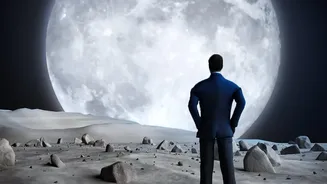
Another powerful factor is the 'relative size hypothesis'. When the Moon is on the horizon, it shares the view with familiar objects that provide scale: trees, buildings, and mountains. Our brain sees the Moon in relation to these objects. Since we know those distant trees and buildings are large, our mind gets tricked into perceiving the Moon as being enormous by comparison. High in the sky, however, the Moon is surrounded by a vast, empty expanse. With no points of reference to give it scale, it appears isolated and, to our perception, smaller. This is similar to the Ebbinghaus illusion, where a circle looks larger when surrounded by smaller circles than when it's next to larger ones. The surrounding scenery, or lack thereof, changes how we judge the Moon's size.
Tricking the Trickster
Interestingly, you can often break the illusion with simple experiments. Looking at the horizon moon through a cardboard tube, for instance, often makes it 'shrink' back to its normal size. This works because the tube isolates the Moon from its surroundings, removing the contextual cues from trees and buildings that contribute to the size-contrast effect. Another famous trick is to bend over and look at the Moon upside down, through your legs. This strange posture makes the scene unfamiliar to your brain. By inverting the view, you disrupt your brain's automatic processing of the terrain and its relationship to the horizon, which can weaken or even cancel out the apparent distance illusion.
But Why Does It Still Persist?
This brings us to the headline's conundrum. For some people, or in some situations, these tricks don't entirely work. The illusion, though perhaps diminished, stubbornly remains. The reason is that there is no single, universally accepted explanation for the Moon illusion; it's likely a combination of multiple factors. For some individuals, the 'apparent distance' wiring in the brain might be so strong that it overrides the lack of foreground objects when looking through a tube. The brain's rule that 'horizon equals far away' is so deeply ingrained that it doesn't need all the usual cues to be triggered. Furthermore, the fact that a small minority of people perceive the horizon moon as being both larger and farther away, while most perceive it as larger and closer, shows how complex and subjective this cognitive process is. Astronauts in orbit, who have no terrestrial foreground objects, have even reported experiencing the illusion, suggesting there are fundamental aspects of our visual processing at play that scientists are still trying to fully understand.