

The Royal Proclamation
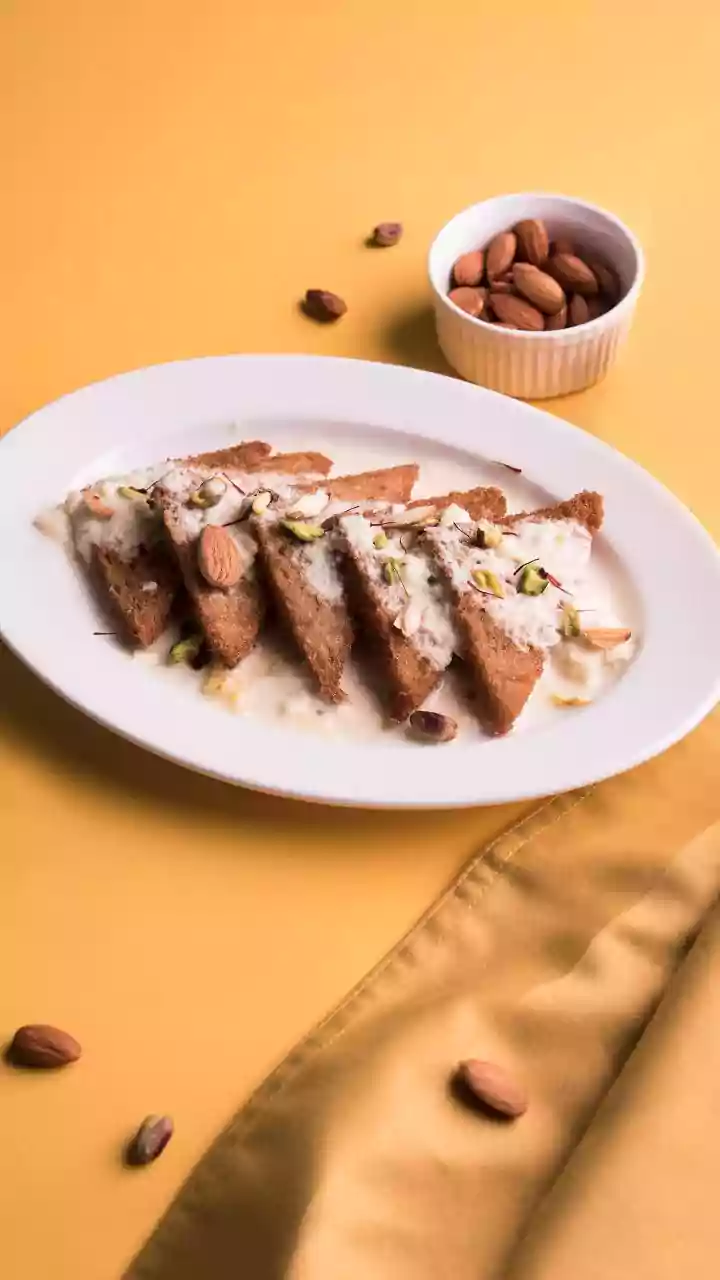
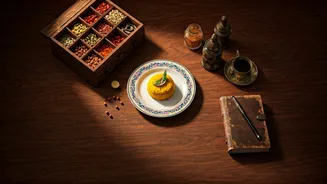
We're talking about Shahi Tukda. The name itself is a giveaway: 'Shahi' meaning royal, and 'Tukda' meaning piece. A ‘royal piece’ that lives up to its regal billing. Imagine this: crisp, golden triangles of bread, fried to perfection in ghee, soaking
in a fragrant, sugar syrup. This forms the base. But the crowning glory is the generous layer of thick, creamy rabri—milk slow-cooked for hours until it's dense and luscious—draped over the top. It's then showered with slivered pistachios and almonds and perfumed with delicate strands of saffron and a hint of cardamom. It’s not a dessert; it’s a statement.
A Dish Steeped in History
The origins of Shahi Tukda are as rich as its ingredients. Most culinary historians trace its lineage back to the opulent kitchens of the Mughal emperors, who were known for their lavish feasts and sophisticated palate. The story goes that it was a clever way to use up leftover bread, transforming a humble staple into a dessert fit for kings. The use of expensive ingredients like saffron, nuts, and copious amounts of milk and ghee was a clear display of wealth and status. It was a dish designed to impress, a sweet symbol of the empire's grandeur. While some variations exist, like the closely related Double Ka Meetha from Hyderabad, the soul of the dish remains rooted in this tradition of royal indulgence.
The Anatomy of Indulgence
What makes Shahi Tukda so unapologetically indulgent is the harmony of its textures and flavours. It's a masterclass in culinary contrast. You have the crunch of the fried bread, which, despite being soaked, should retain a slight bite. This is immediately followed by the soft, yielding embrace of the syrup-laden interior. Then comes the rabri—cool, creamy, and mildly sweet, it perfectly balances the richness of the ghee-fried bread. The nuts provide another layer of texture and a lovely, earthy flavour. Finally, the saffron and cardamom weave their magic, lending an intoxicating aroma and a subtle floral and spicy note that cuts through the richness, leaving you ready for the next bite. Each component is indulgent on its own; together, they are sublime.
More Than a Recipe, an Art
Making Shahi Tukda is not a hurried affair. It’s a labour of love that demands patience. The most crucial element, the rabri, requires simmering milk on a low flame for hours, painstakingly scraping the cream from the sides of the pot and stirring it back in. This process cannot be rushed. Rushing results in thin, watery rabri that lacks the characteristic granular texture. Similarly, frying the bread requires attention. It must be fried in pure ghee over a medium flame until it achieves a perfect, uniform golden-brown colour without burning or becoming too greasy. It’s this dedication to process that elevates Shahi Tukda from a simple sweet to a culinary art form.
A Legacy of Celebration
Today, Shahi Tukda is no longer confined to royal courts. It has become a beloved dessert for special occasions across India. It graces the menus of grand weddings, is a highlight of Eid and Diwali feasts, and is the go-to dessert for when you want to make a meal truly memorable. It represents a connection to a luxurious past and a desire to celebrate the present. In a world of minimalist, 'healthy' desserts, Shahi Tukda stands proud and defiant. It reminds us that sometimes, food is not just about fuel; it's about joy, history, and the pure, unadulterated pleasure of indulgence.