







First, What Exactly Is E20 Fuel?
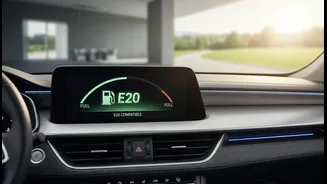
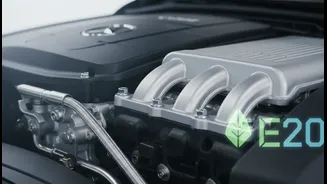
Let’s start with the basics. E20 is a blended fuel that contains 20% ethanol and 80% petrol. Ethanol is a biofuel, primarily produced in India from agricultural feedstocks like sugarcane and maize. The government has mandated the nationwide availability
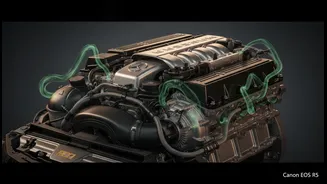
of E20 fuel, advancing its target from 2030 to 2025. This move means that almost every new petrol car sold in India since 2023 is designed to run smoothly on this blend, with changes to engine components and fuel systems to handle the different properties of ethanol.
The Real Incentive: A Three-Pronged National Strategy
The primary driver for the E20 push isn't a direct discount for car buyers, but a larger strategic vision for the country. The benefits are threefold. First is energy security. India imports over 85% of its crude oil, making the economy vulnerable to global price shocks and geopolitical instability. By blending domestically produced ethanol, India reduces its reliance on imported crude, saving valuable foreign exchange. Second, it provides a significant boost to the agricultural sector. The policy creates a stable and remunerative market for sugarcane and maize, directly increasing the income of Indian farmers. Third, there are environmental gains. Ethanol burns cleaner than conventional petrol, leading to lower tailpipe emissions and helping India meet its climate goals.
So, Are There Tax Breaks for Car Buyers?
This is where the headline's premise gets complicated. While expert committees and industry bodies like SIAM recommended tax incentives on E20 fuel or E20-compatible cars to compensate for a slight drop in mileage, the government has not implemented a direct tax cut or GST reduction for buyers. In fact, there are active proposals to reduce GST on flex-fuel vehicles (which can run on higher ethanol blends like E85), but this does not currently apply to the E20 cars in the mass market. The government's position is that the main benefit for consumers is long-term fuel price stability. Because 20% of the fuel is sourced domestically at a fixed price, it cushions the retail price from the volatility of international crude oil markets. So, while E20 petrol may not be cheaper at the pump today, it helps prevent sharp price hikes in the future.
A New Standard in the Showroom
The most significant change has happened on the manufacturing front. Since 2023, almost all major automakers in India, including Maruti Suzuki, Hyundai, Tata Motors, and Mahindra, have made their popular models E20-compatible as a standard feature. From the Maruti Swift and Hyundai Creta to the Tata Nexon and Mahindra XUV 3XO, E20 compatibility is no longer a special feature but the new normal for petrol cars. This industry-wide transition means that if you are buying a new car, it is already future-proofed for the new fuel standard. You can verify this by checking for a sticker on the fuel lid or in the owner's manual.
What It Means for Performance and Your Wallet
One of the biggest questions from consumers is about mileage. Because ethanol has a slightly lower energy density than petrol, a marginal drop in fuel efficiency of around 3-5% is possible, a figure acknowledged by both the government and manufacturers. However, this is often offset by other performance benefits. E20 fuel has a higher octane rating, which can lead to better engine performance, smoother acceleration, and reduced knocking. The government's view is that these performance gains and long-term price stability outweigh the minor mileage trade-off. For owners of older, non-E20 compatible cars, the transition has raised more concerns, but manufacturers have stated that extensive testing has not shown significant issues like engine damage.