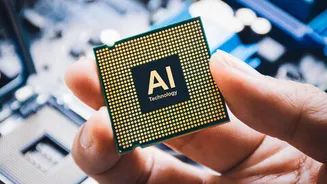







The invincibility of the technology sector has been tested. A sharp, worldwide sell-off has shaken investor confidence, raising a critical question: What does this reality check mean for the artificial intelligence boom that seemed immune to gravity?
A Sudden Global Correction
The past week has served as a stark reminder that markets can turn swiftly. A significant sell-off on Wall Street, led by technology stocks, quickly spread to markets in Asia and Europe. The tech-heavy Nasdaq index saw its worst single-day drop since March 2020, with chipmakers and AI-centric firms experiencing particularly steep losses. Companies like Nvidia, AMD, and even Tesla saw their shares plunge, wiping out trillions in market value globally. This downturn wasn't confined to a single market; Japan's Nikkei and South Korea's Kospi both registered major drops, largely driven by weakness in their semiconductor and AI-related sectors. The mood has clearly shifted from unbridled optimism to one of caution and risk assessment.
AI: The Presumed Safe Haven
Until this correction, artificial intelligence was seen as the undisputed engine of market growth. While other sectors faced headwinds, AI was attracting massive capital investment, with some large tech firms planning to spend over a trillion dollars by 2027 on infrastructure. The narrative was powerful: AI would revolutionize every industry, creating a productivity boom that would justify any valuation. This belief drove staggering growth in private funding and public stock prices for any company associated with the AI supply chain, from foundational model developers like OpenAI to the chipmakers and data centre operators providing the essential hardware. Even as some investors voiced concerns about 'frothy' expectations, the sheer momentum of the AI boom seemed unstoppable.
When Hype Meets Economic Gravity
The recent slump reveals the danger of treating this AI-driven growth as a certainty. The market correction was triggered in part by investor anxiety over the future of the AI buildout, which relies on enormous, sustained capital expenditure. Analysts are increasingly asking hard questions about the return on these massive investments. The gap between AI capital spending and AI-related revenue is widening, exceeding even the levels seen during the dot-com buildout of the late 1990s. With Q3 earnings for some tech giants showing immense cash burn to fund AI capacity, shareholders are growing nervous about when, or if, this spending will translate into proportional profits. The idea that AI could exist in a separate economic reality is being dismantled; it is subject to the same pressures of interest rates, regulation, and profitability as any other sector.
A Necessary and Healthy Reset
This market dip shouldn't be interpreted as the end of artificial intelligence, but rather as a necessary and healthy recalibration. The slump forces a shift from a 'growth at all costs' mindset to a more disciplined focus on sustainable business models. For months, the primary risk for investors was being left behind. Now, the focus is turning to concentration risk and overexposure to a single, volatile theme. This correction pressures companies to move beyond pilot programs and demonstrate realworld utility and revenue. A more measured pace, driven by genuine demand and viable economics, could ultimately make the AI sector healthier and more resilient than a boom fuelled by pure speculation. It separates the companies with durable longterm value from those merely riding a wave of hype.