




A Lifeline From The Stars
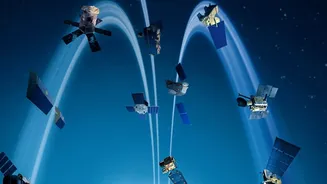
When Russia launched its full-scale invasion, it targeted Ukraine's communications infrastructure. Into this void stepped SpaceX's Starlink, a constellation of low-Earth orbit satellites providing high-speed internet. It quickly became indispensable.
From frontline troops communicating in trenches to drone operators guiding attacks and civilians staying connected to the world, Starlink became a core part of Ukraine's resilience and defence strategy. Recognizing its importance, the U.S. Department of Defense eventually signed a contract with SpaceX to ensure these services continued, cementing the technology's role as a vital layer in Ukraine's communication network.
The Double-Edged Sword of Dependence
This reliance on a single commercial provider has created significant vulnerabilities. The system's central figure, Elon Musk, has expressed unease about Starlink's use in offensive military actions, stating that it should be a civilian network. This has led to friction, most notably in a past incident where a Ukrainian request to extend coverage to attack the Russian fleet in Crimea was denied. More recently, in mid-October 2026, Ukrainian forces reported sudden and disruptive restrictions on their military-grade Starshield service, particularly a speed cap that hampered the use of fast-moving drones. This unexpected change, which came without warning, forced the cancellation of some military missions.
Whose Hand Is On The Switch?
The recent restrictions sparked a blame game and exposed the confusing command structure. Ukrainian officials were caught by surprise, with President Volodymyr Zelenskyy calling it a 'planned operation' after tests allegedly showed the speed limits were specific to Ukraine. Elon Musk publicly stated that SpaceX controls the commercial Starlink service, which is limited to defensive use, but that the military-grade Starshield system is 'owned and controlled by the US government'. He asserted that any limits on Starshield are decided by the U.S. military and president. However, reports citing unnamed U.S. officials suggested the decision was not a high-level policy directive, creating a fog of uncertainty. Senior US lawmakers have since called for a congressional investigation into the disruptions.
The High Bar for Action
The headline's core assertion—that any change requires confirmed evidence—is a reflection of this high-stakes environment. For the Pentagon, which funds the service, altering the arrangement is not a simple contractual matter. It involves verifying complex claims amidst the chaos of war. For instance, there have been allegations of Russian forces acquiring and using Starlink terminals, which SpaceX says it investigates and deactivates if confirmed. Any decision to fundamentally alter or restrict Ukraine's access would require irrefutable intelligence about misuse or a major shift in U.S. policy. Unconfirmed reports or the whims of a CEO are not enough to justify a change that could blind one side in a conflict the U.S. is heavily supporting. The operational impact is too severe, making any modification a major geopolitical decision, not just a technical one.