








Breaking Down the June Numbers
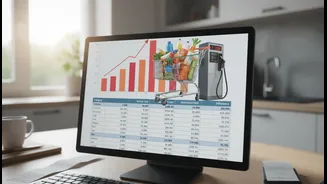
On July 13, government data showed that the Consumer Price Index (CPI), the most common measure of retail inflation, rose to 4.4% in June. This is the first time in 17 months the rate has crossed the Reserve Bank of India's 4% medium-term target, a notable
shift after a period of milder price increases. The primary drivers were a jump in food and fuel prices. Food inflation alone climbed to 5.32%. Specifically, items like vegetables, particularly tomatoes and ginger, saw significant price surges, alongside increases in transportation costs due to higher fuel prices. While this sounds alarming, it's important to remember this headline number is a national average, and not every household experiences it the same way.
Your 'Personal' Inflation Rate Is What Matters
The official CPI is a basket of goods and services representing an 'average' consumer. Food and beverages make up a large part of this basket, about 46%. However, your family's spending habits are unique. If you don't drive, rising fuel prices might not affect you directly. If you are a vegetarian, changes in meat prices are irrelevant. The key is to understand your personal inflation rate. To get a rough idea, look at your bank statements from last year and compare them to today. Are your grocery bills 5% higher? Is your electricity bill up 10%? Tracking your own major expense categories—like food, transport, housing, and utilities—will give you a much more realistic picture of how inflation is affecting your specific financial situation than any headline number.
A Smart Budget Review, Not a Panic Reset
Seeing inflation tick up isn't a signal to slash all spending, but it is a perfect trigger for a calm and considered budget review. A full-scale, panicked 'reset' is rarely effective. Instead, focus on a simple review. Pull up your last three months of expenses. Separate your spending into three buckets: needs (rent, EMIs, groceries), wants (dining out, entertainment), and savings/investments. Look at the 'wants' category first. Are there any subscriptions you're not using or small luxuries you can trim temporarily without a major lifestyle change? For 'needs,' identify which specific costs have risen. If your grocery bill is the main culprit, that's where you should focus your energy.
Tackling High-Impact Areas: Food and Fuel
Since food and transport are driving much of the current inflation, targeting these areas can have the biggest impact. For groceries, this means planning meals to reduce waste, buying seasonal vegetables which are often cheaper, and using loyalty programs at your local stores. With food inflation at over 5%, even small changes here can add up. For fuel, which saw a significant price jump in June, consider combining errands into a single trip, using public transport where feasible, or carpooling. These aren't drastic sacrifices but mindful adjustments that directly counter the specific price pressures of the moment.
Looking Ahead: Context is Everything
Economists note that factors like an uneven monsoon and geopolitical tensions are contributing to price uncertainty. The RBI has already factored this in, forecasting an average inflation of 5.1% for the fiscal year, suggesting they anticipate these pressures continuing. However, the central bank has indicated it will not rush into aggressive interest rate hikes, preferring to wait and see if the price rises become more widespread. This 'watch and wait' approach from policymakers is a good model for households too. While the June numbers are higher, they remain within the RBI's tolerance band of 2-6%.