





Far below the sunlit waves lies a world of crushing pressure, perpetual darkness, and bizarre life forms. This is the deep sea, Earth's last great frontier. Now, a new kind of gold rush is on, threatening to scar this pristine environment forever.
The World Beneath the Waves
The
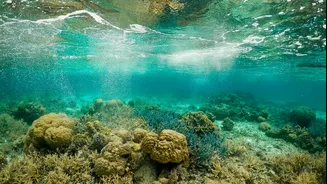
ocean floor, or the benthic zone, is not a barren wasteland. It is a vast and complex ecosystem teeming with life. These habitats range from shallow coastal shelves to the deepest trenches and support a stunning diversity of organisms. Many of these creatures are found nowhere else on Earth, having adapted to extreme conditions without light and with immense pressure. They include everything from slow-growing corals and sponges to unique species of octopus and fish. Benthic ecosystems are also vital for the planet's health. They play a crucial role in cycling nutrients, stabilizing sediments, and sequestering carbon, locking it away in the deep sea for millennia. Scientists are still in the early days of exploring these zones, with estimates suggesting thousands of species remain undiscovered.
A New Industrial Frontier
The push to mine the deep sea comes from a surging global demand for minerals like cobalt, nickel, and copper. These metals are essential components for green technologies, including electric vehicle batteries, wind turbines, and solar panels. Proponents argue that mining the seabed could provide a more stable supply of these critical resources than land-based mining, which often comes with its own host of environmental and social problems. The targets are polymetallic nodules—potato-sized rocks rich in valuable metals that lie scattered across the abyssal plains—as well as mineral crusts on underwater mountains and massive sulfide deposits near hydrothermal vents. Using robotic vehicles, mining companies plan to vacuum these deposits from the ocean floor, pump them to a surface ship, and process them for extraction.
The Irreversible Damage
Scientists and environmental groups warn that deep-sea mining could cause catastrophic and irreversible harm. The process would effectively strip-mine the seafloor, destroying habitats and killing the unique, slow-growing organisms that live on and within the nodules and crusts. Given that sediment on the deep seabed accumulates at a rate of just one millimeter per thousand years, any recovery would be unlikely on a human timescale. Beyond the direct destruction, the mining vehicles would kick up vast plumes of sediment that could drift for miles, smothering nearby life and disrupting food webs. The noise and light from 24/7 operations would pollute a naturally silent and dark environment, interfering with how species communicate and navigate. Furthermore, disturbing these deep-sea sediments could release stored carbon, impacting the ocean's ability to regulate the climate.
A Call for Caution
The regulation of this nascent industry is a complex and contentious issue. The International Seabed Authority (ISA), an agency established under the United Nations, is responsible for managing mineral resources in international waters, which it deems the 'common heritage of humankind'. However, the ISA has been struggling for years to finalize a 'Mining Code' that would govern commercial exploitation, with key environmental and financial rules still unresolved. This regulatory uncertainty has not stopped companies from pushing forward, with some already holding exploration contracts. In response to the growing threat, a coalition of over 30 countries, along with numerous scientists and major corporations like Google and BMW, have called for a moratorium or precautionary pause on deep-sea mining. They argue that we cannot afford to rush into exploiting an environment we barely understand, especially when the potential for permanent damage is so high. The debate pits the urgent need for green energy minerals against the equally urgent need to protect one of the last pristine wildernesses on our planet.