

A Tale of Two Hemispheres
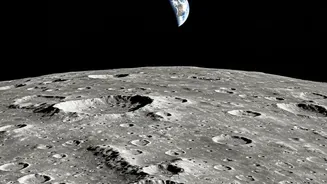
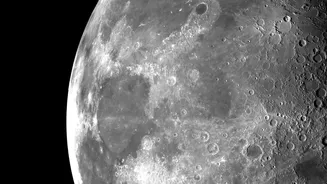
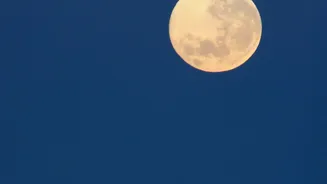
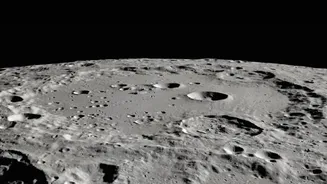
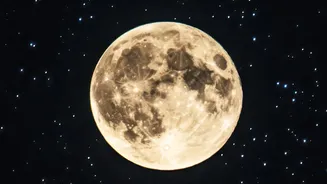
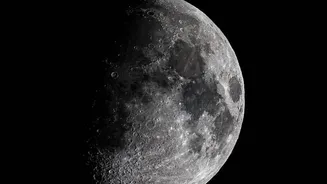
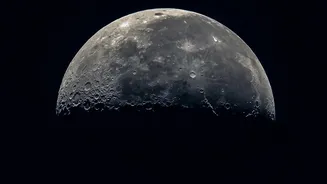
The side of the Moon that faces Earth, the near side, is the one we all know. It is characterised by vast, dark plains of volcanic basalt, often called 'maria' or seas, which create the familiar patterns of the 'Man in the Moon'. In stark contrast, the far
side, which was hidden from us until the space age, is a different world. It is almost entirely covered in a brighter, heavily cratered crust, with very few volcanic plains. For decades, scientists have debated why this stark difference, known as the lunar dichotomy, exists.
Clues from Another World
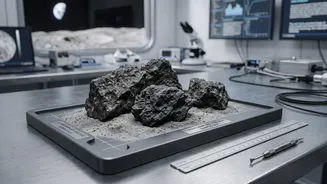
The key to unlocking this puzzle lies in the rocks. For years, scientists studied samples brought back by the Apollo missions, all from the near side. But the game changed with China's Chang'e-6 mission, which in 2024 became the first to successfully return samples from the Moon's far side. A team led by researchers at Nanjing University compared these new, precious fragments with samples from the near side, allowing for the first direct, layer-by-layer comparison of the Moon's two halves.
A Primordial Imbalance
The new research supports a fascinating origin story that begins billions of years ago when the Moon was young and mostly molten. The leading theory for the Moon's formation is the 'giant-impact hypothesis', which posits that a Mars-sized object slammed into the early Earth, and the debris from this collision eventually formed the Moon. This cataclysmic event would have left the newborn Moon covered in a deep ocean of magma. As this ocean cooled and solidified, a process of separation began, with lighter minerals floating to the top to form the crust and denser ones sinking to form the mantle.
The KREEP Connection
Central to this story is a peculiar geochemical component known by the acronym KREEP. This material is a mix of elements that were left over in the last dregs of the solidifying magma ocean. Its name stands for K (potassium), REE (rare-earth elements), and P (phosphorus), and it also contains heat-producing radioactive elements like thorium. Near-side samples have always shown high concentrations of KREEP, while it appears to be scarce on the far side. The heat from the radioactive decay in this KREEP layer is thought to have kept the near side's mantle hotter for longer, fuelling the extensive volcanism that created the dark plains we see today.
The Pull of Earth
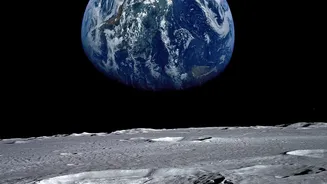
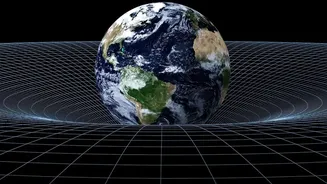
The latest findings from the Chang'e-6 samples suggest a compelling reason for this uneven distribution. The analysis indicates that while the deep mantle of the Moon is chemically similar on both sides, the crust is not. Researchers propose that shortly after the Moon formed, it became tidally locked with Earth, meaning the same side always faced us. Back then, the Moon was much closer to Earth, and our planet's powerful gravity exerted a much stronger tidal pull. This may have generated more heat on the near side. This temperature difference could have driven a massive, globe-spanning circulation in the remaining molten rock beneath the crust. This flow, like a vast subterranean river, may have pushed floating crustal material towards the far side, making it thicker, while concentrating the hot, KREEP-rich material on the near side.