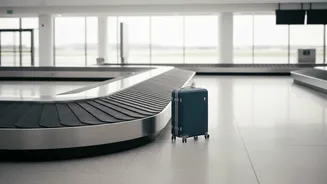








The Ruling That Changes Everything
In a significant decision dated July 22, 2026, a District Consumer Commission in Palakkad, Kerala, ordered a private airline to pay a passenger a total of ₹53,923. The issue? The passenger's checked-in bag was delayed by three days. Crucially, the passenger had
kept meticulous records and filed a claim for ₹8,923 spent on essential clothing and other necessities. The commission not only ordered the airline to reimburse this amount but also to pay ₹20,000 in compensation as mandated by the Passenger Charter of the Ministry of Civil Aviation, plus an additional sum for the service deficiency and legal costs. This case wasn't a one-off; it reinforces a clear principle: documented expenses are the key to fair compensation.
Your Receipts Are Your Best Evidence
The Kerala ruling underscores why vague claims for inconvenience often fail while specific, receipt-backed claims succeed. When your bag is delayed, airlines are liable for reasonable, essential expenses you incur. However, the definition of "reasonable" is where disputes often arise. Without receipts, it's your word against theirs. With itemised bills, your claim becomes concrete evidence of the financial damage caused by the delay. The court noted that the passenger proved his expenses through documentary evidence, which was a deciding factor. This precedent sends a clear message to travellers: your first move after discovering a delay should be to think like you're building a case.
What To Do The Moment Your Bag Is Delayed
Don't leave the airport until you've taken the first critical step. Head straight to the airline's baggage service counter in the arrivals hall and file a Property Irregularity Report (PIR). This official document is the most important piece of evidence proving your bag did not arrive with your flight. Get a copy of the PIR and ensure it has a reference number for tracking. Ask the staff for a contact number for baggage services. Before you leave, confirm the airline's procedure for claiming interim expenses. Some may offer an immediate cash advance or a pre-loaded card, while most require you to purchase items and submit receipts for reimbursement later.
The Smart Shopper's Guide to Delayed Bags
Once you have your PIR, you can purchase essentials. But be strategic. Airlines and travel insurance policies will only cover "reasonable and necessary" items. This typically includes basic toiletries, a change of underwear, socks, and simple clothing appropriate for your destination's climate and the purpose of your trip. It does not include luxury brands, a whole new wardrobe, or expensive electronics. Think survival, not shopping spree. If you are on a business trip and need a formal shirt, that may be considered reasonable. Buying a designer jacket for a beach holiday will likely be rejected. Keep every single itemised receipt, as credit card statements alone are often not enough.
Filing Your Claim and Knowing Your Rights
You must submit your claim for delayed baggage within 21 days of receiving your luggage. Compile your documents: the PIR, your boarding pass, baggage tags, and all the original receipts for your essential purchases. Submit these to the airline through their official claims portal or email address. Refer to the DGCA Passenger Charter, which states that domestic airlines' liability for delayed, lost or damaged baggage is up to ₹20,000 per passenger. For international flights governed by the Montreal Convention, the liability is significantly higher. If the airline refuses to pay or offers an unsatisfactory amount, you can escalate the issue by filing a complaint on the national consumer helpline (1915) or approaching a consumer disputes redressal commission.