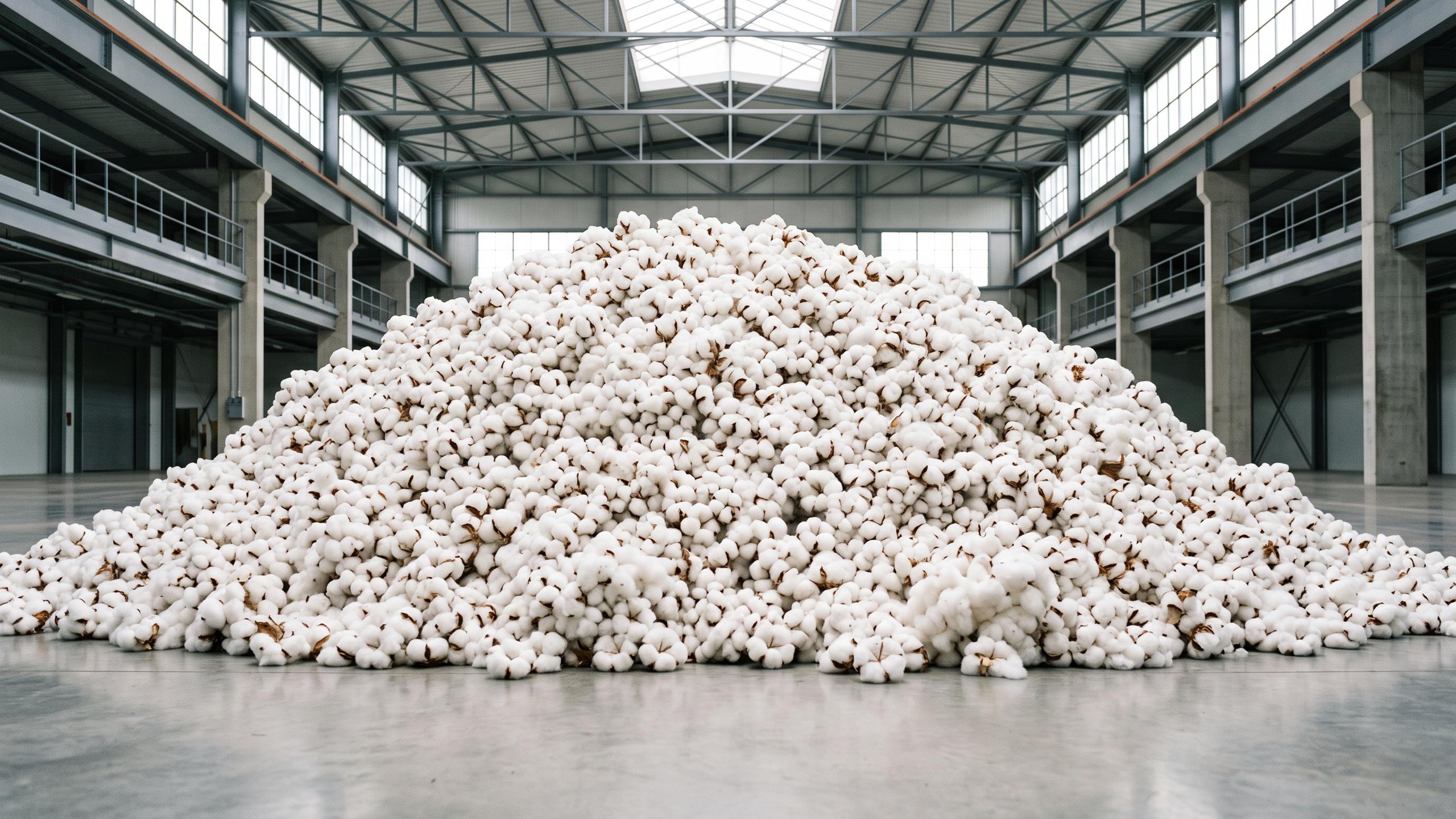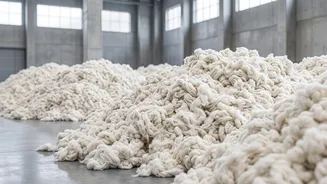





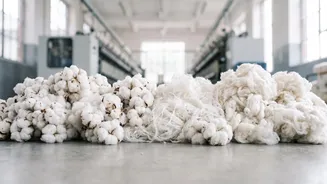


India's massive textile industry, a cornerstone of the national economy, is navigating a period of significant flux. Evolving government policies on cotton imports are creating ripples, forcing manufacturing hubs to rethink their sourcing strategies.
A Tale of Two Policies
The central issue revolves around an 11% import duty on cotton, which includes a basic customs duty and an Agriculture Infrastructure and Development Cess. This duty was implemented to protect domestic cotton farmers. However, the textile industry has long argued that it inflates raw material costs, making Indian garments less competitive against rivals like Bangladesh and Vietnam. In response to industry pressure and rising domestic cotton prices, the government has adopted a temporary solution. It waived the 11% duty from June 1, 2026, until October 31, 2026, to ease pressure during the lean season before domestic harvests arrive. Now, with that deadline approaching and domestic output for 2026-27 projected to be lower than demand, the industry is watching closely to see if the exemption will be extended.
The Government's Balancing Act
From the government's perspective, the policy is a difficult balancing act. On one hand, it aims to ensure farmers receive a fair price for their produce and shield them from international price volatility. On the other, it must support the country's vast textile value chain, which employs millions and is a major source of export revenue. The temporary duty waiver was designed as a compromise—a way to provide relief to textile mills facing high input costs without permanently dismantling the protective tariff for farmers. The government's stated goal for the temporary exemption was to moderate input costs, support MSMEs, and strengthen the overall competitiveness of Indian textiles, especially during the cotton off-season.
On-the-Ground Reality in Textile Hubs
For textile hubs like Tiruppur, the knitwear capital of India, the situation is complex. Even with the temporary duty removal, the relief has not been as significant as hoped. By the time the duty-free policy was in effect, international cotton prices had risen, meaning imported cotton was only marginally cheaper than domestic supply once other costs like freight and insurance were factored in. Consequently, manufacturers in Tiruppur have continued to struggle with high yarn prices. In September 2026, industry associations noted that yarn produced in Tamil Nadu was still significantly costlier than that from states like Gujarat. This has a direct impact on profitability, as manufacturers often have little room to pass on rising costs to international buyers or domestic consumers. Some outerwear producers have responded by increasing the use of man-made fibres from 50% to nearly 70% in their blends to manage costs.
The Push for a Stable Policy
Industry bodies like the Confederation of Indian Textile Industry (CITI) are advocating for a more predictable, long_term solution. They argue that temporary exemptions, while helpful, create uncertainty and do not allow for long_term strategic planning. A joint study by Gherzi and the International Cotton Advisory Committee (ICAC), released by CITI, called for a stable import policy, including duty_free access during shortages and the creation of a strategic cotton reserve. The core argument is that for India to achieve its ambitious target of becoming a $350 billion textile industry by 2030, its manufacturers need consistent access to competitively priced raw materials. This includes not just domestic cotton but also specialty imported varieties required to meet the quality standards of global brands.
What Happens Next?
As the October 31 deadline for the duty exemption looms, all eyes are on the government. Recent reports suggest an extension through December is likely, given that domestic cotton production is expected to fall short of demand and prices remain firm. India’s cotton output for 2026–27 is estimated to be below 29 million bales, against a demand of over 34 million bales. While an extension would provide short–term relief, the larger debate continues. The industry is grappling with fundamental challenges, including low domestic cotton productivity compared to other major producers. To that end, the government has approved a Mission for Cotton Productivity to improve yields. Ultimately, the response of textile hubs will depend on a combination of government policy, global market dynamics, and the industry's ability to adapt its sourcing and production strategies in a volatile environment.