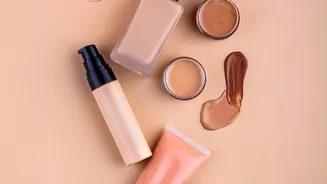





The Old-Fashioned Swatch Test
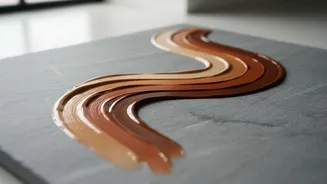
For decades, finding the right foundation shade involved a trip to the store, a series of hopeful swatches on your jawline, and a prayer that the harsh department store lighting wasn't playing tricks on you. This trial-and-error process is not just time-consuming;
it’s often inaccurate. Many shoppers end up with a drawer full of mismatched bottles and the frustration of never quite getting it right. This longstanding issue highlighted a major gap in the market: consumers needed a more reliable, convenient, and personalized way to shop for complexion products, especially as more shopping moved online where trying before you buy is impossible.
How AI Becomes a Personal Beauty Advisor
Enter artificial intelligence. Brands like L'Oréal, Clarins, and Mary Kay are now using sophisticated AI to act as a virtual makeup artist. These tools typically work through a brand's website or app. Using your smartphone camera, the AI scans your face, often asking you to take a photo in natural light without makeup. The technology then analyzes thousands of pixels from your skin, using computer vision to identify not just your overall skin tone but also your subtle undertones—the warm, cool, or neutral hues beneath the surface that are crucial for a perfect match. This data is then compared against a massive database of shades to recommend the best fit, a process that can take less than a minute.
The Promise of a Perfect, Personalized Match
The benefits of AI shade-matching are significant. The most obvious is convenience; you can find your shade from your couch without speaking to a salesperson. But the real promise is in precision and inclusivity. AI algorithms can detect nuances the human eye might miss and are trained on vast datasets of diverse skin tones, helping brands cater to a wider range of customers. This technology boosts shopper confidence, reduces product returns, and makes the entire experience more satisfying. Some companies report high accuracy rates, with one service claiming a 96% successful match rate in store settings. For many, it removes the guesswork and anxiety from one of beauty's most difficult decisions.
Are the Robots Always Right?
Despite its advancements, the technology isn't foolproof. The biggest challenge is the camera itself. Smartphone cameras are not always reliable sources of true color information, and results can be skewed by poor lighting, shadows, or even the quality of your device. Furthermore, there's a risk of algorithmic bias. If an AI model is trained on a dataset that isn't sufficiently diverse, its recommendations for underrepresented skin tones may be less accurate. Finally, most current AI tools recommend the closest available shade from a pre-existing product line. This means there can be a gap between the AI's perfect identification and the physical product you receive, due to manufacturing variances or limited inventory.
The Future Is Custom-Blended
The next frontier for this technology is moving beyond just recommending existing shades to creating truly bespoke products. Experts envision a future where AI analysis is linked directly to on-demand manufacturing. Instead of picking the 'best available' match, an AI could send your precise skin data to a machine that custom-blends a foundation formula just for you, fresh at the point of purchase. This would not only guarantee a perfect match but also dramatically reduce product waste from overproduction of less popular shades. As the technology evolves, the search for the perfect foundation could transform from a lifelong quest into a simple, data-driven solution.