


The Secret Is in the Planning
The key to a stress-free Sadya is not to attempt everything on the morning of the feast. Experienced home cooks begin their preparations one or two days in advance. Start by finalising your menu; a home Sadya doesn't need all 28 dishes. Aim for a balanced
selection of 9 to 15 items. Create your shopping list and get your groceries ahead of time. The day before, you can chop most of your vegetables and store them in airtight containers. You can also prepare dishes that have a longer shelf life, such as the pickles, Inji Puli (ginger-tamarind relish), and banana chips (Upperi and Sharkara Varatti).
The Accompaniments: Pickles and Chips
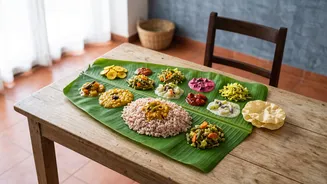
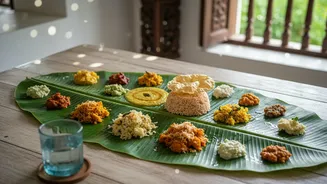
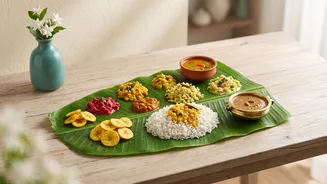
These are the small but powerful flavour bombs that kickstart the meal. Traditionally, a pinch of salt is placed on the leaf first. This is followed by accompaniments like Kaaya Varuthathu (banana chips) and Sharkara Varatti (jaggery-coated banana chips). The essential pickles include Naranga Achar (lime pickle) and Manga Achar (mango pickle). The star, however, is often Inji Puli, a sweet, sour, and spicy relish made from ginger, tamarind, and jaggery, which many consider a test of the whole meal.
The Vegetable Stars: Side Dishes
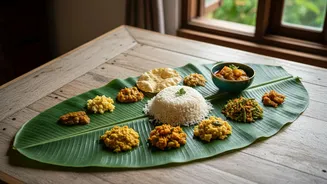
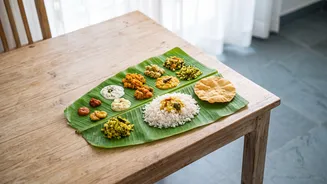
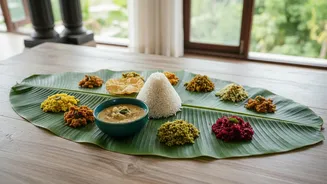
The upper half of the banana leaf is where the vibrant array of vegetable dishes resides. These include Thoran, a dry stir-fry of finely chopped vegetables like beans or cabbage with grated coconut. Then there are the cooling curd-based dishes: Kichadi (often cucumber or okra in a yogurt and mustard paste) and Pachadi (a sweeter version with pineapple or beetroot). Olan is a milder curry made with ash gourd and red beans in a light coconut milk base. Finally, no Sadya is complete without Aviyal, a thick medley of mixed vegetables cooked in a coconut and yogurt gravy, fragrant with curry leaves and fresh coconut oil.
The Main Event: Rice and Curries
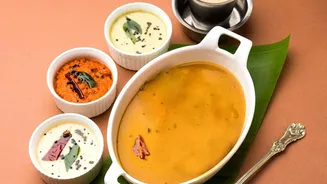
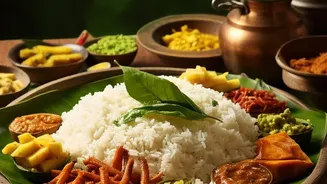
The lower, wider half of the leaf is reserved for rice, traditionally the parboiled red Matta rice of Kerala. The meal begins with a serving of rice topped with Parippu, a simple moong dal curry, and a spoonful of ghee. This is followed by Sambar, the iconic lentil-based vegetable stew with a tamarind base and a signature blend of roasted spices. After Sambar, a serving of tangy and peppery Rasam is poured over rice to cleanse the palate and aid digestion. The final savoury course is usually Pulissery or Moru Curry, a light and tangy spiced buttermilk curry.
The Sweet Finale: Payasam
A Sadya is judged by its Payasam. This sweet pudding is the grand finale of the feast. Traditionally, at least two types are served. A jaggery-based Payasam like Ada Pradhaman (made with rice flakes, jaggery, and coconut milk) or Parippu Pradhaman (made with lentils) is often served first. This is usually followed by a milk-based Payasam such as Palada Payasam (made with milk and rice flakes) or Semiya Payasam (vermicelli pudding). Many enjoy mashing a small banana and a crispy Pappadam into their Payasam for a delightful mix of textures.
The Art of Serving
The way the Sadya is served is as important as the cooking itself. Always use a 'thooshanila', the tapered tip of a banana leaf, and place it with the narrow end pointing to the guest's left. The accompaniments and side dishes are served in specific spots on the top half of the leaf, starting from the left with pickles and chips, and moving to the right with the vegetable dishes like Aviyal and Thoran. Rice is served on the bottom half only after the guest is seated. The curries are then poured over the rice in succession, starting with Parippu and ending with buttermilk to aid digestion.