



Why Is Saturn Stealing the Show?
Saturn's moment in the spotlight is thanks to an event called opposition, which occurs on October 4, 2026. This is when Earth passes directly between the Sun and Saturn, effectively placing the ringed planet on the opposite side of the sky from the Sun.
Because of this alignment, Saturn rises in the east around sunset, remains visible all night long, and sets in the west around sunrise. This is also when the planet is at its closest point to Earth for the year, making it appear larger and brighter than usual. To the naked eye, it will look like a bright, steady, yellowish point of light, outshining many of the stars around it.
How to Find the Ringed Planet
You don't need to be an expert astronomer to locate Saturn. It's bright enough to be seen from most places, even with some city light pollution. After sunset, look towards the eastern sky. Saturn will be located in the constellation Cetus, the Whale, just below the large asterism known as the Great Square of Pegasus. If you're having trouble, a simple stargazing app on your phone can point you in the right direction. The key difference between Saturn and a star is that planets tend to shine with a steady light, whereas stars often appear to twinkle.
An All-Month Viewing Opportunity
While opposition on October 4th is the peak moment, this celestial show is far from a one-night-only event. Because Saturn is so distant, it appears to move very slowly across our sky. This means it will remain a brilliant and rewarding target throughout the entire month of October and well into the following weeks. As the month progresses, you'll notice it rising a little earlier each evening. The best time to view it is generally around midnight, when it reaches its highest point in the sky. Looking at the planet when it's high above the horizon provides a clearer view, as you're looking through less of Earth's distorting atmosphere.
Getting a Look at the Famous Rings
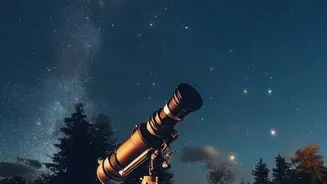
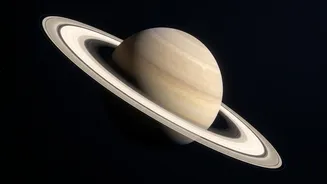
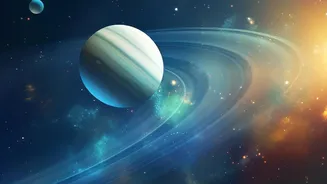
While Saturn is easily visible to the naked eye, its most famous feature—its spectacular rings—requires some optical aid. Even a good pair of high-powered binoculars, held steadily, might show the planet as slightly elongated rather than a perfect point. However, to truly see the rings as a distinct structure, you'll need a telescope. The good news is that even a small, modest telescope is often enough to reveal them. A telescope with an aperture of 60mm or more should do the trick, allowing you to witness the breathtaking sight of the icy rings circling the planet. For those with more powerful telescopes, you might even be able to spot the Cassini Division—a dark gap between the main rings—or Saturn's largest moon, Titan, which appears as a small point of light nearby.