







A Quick Refresher on El Niño
First, let's recap the main character. El Niño is the warm phase of the El Niño-Southern Oscillation (ENSO), a recurring climate pattern in the tropical Pacific Ocean. Under normal conditions, trade winds blow from east to west, pushing warm surface water
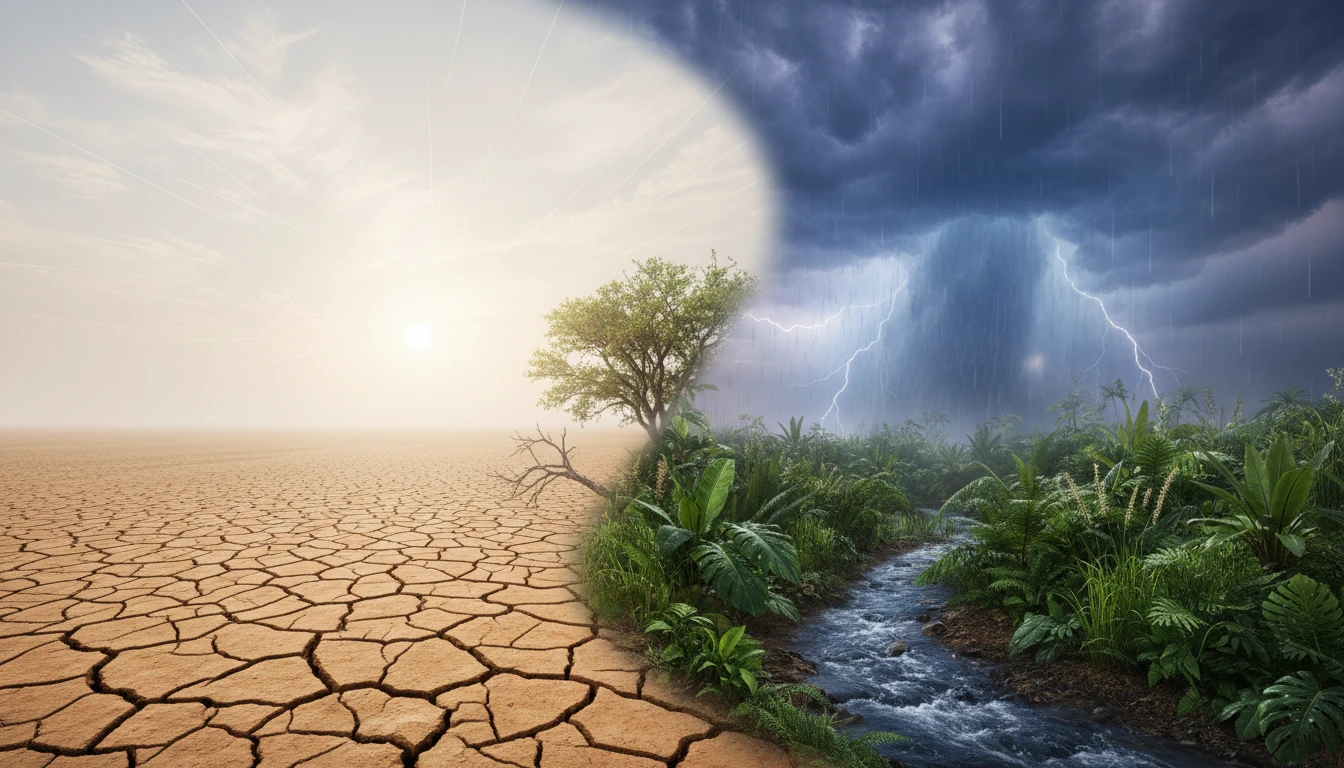
towards Asia and Australia. During an El Niño, these trade winds weaken, allowing the warm water to shift eastward, towards the Americas. This change in ocean temperature disrupts atmospheric circulation, causing a cascade of weather effects around the globe, from droughts in Australia and parts of South Asia to heavier rainfall in other regions. It’s a powerful, planet-shaping phenomenon, but it's only one piece of a much larger puzzle.
Meet the Indian Ocean Dipole (IOD)
Now, let’s turn to the neighbouring ocean basin. The Indian Ocean has its own version of this variability, known as the Indian Ocean Dipole, or IOD. Sometimes called the 'Indian Niño', the IOD is defined by the difference in sea surface temperatures between the western Indian Ocean (near the Arabian Sea) and the eastern Indian Ocean (south of Indonesia). It has three phases: positive, negative, and neutral. In a positive phase, the western Indian Ocean becomes warmer than average, while the eastern side cools. This typically brings more rainfall to East Africa and, crucially for India, can support a stronger monsoon. A negative phase does the opposite, with cooler western waters and warmer eastern waters often leading to drier conditions in India.
When El Niño and the IOD Collide
So, what happens when these two major climate drivers are active at the same time? Their interaction is key to understanding regional weather outcomes. El Niño and a positive IOD often occur together. The atmospheric changes from El Niño can help trigger a positive IOD event. When a strong El Niño (which tends to suppress India's monsoon) and a strong positive IOD (which tends to boost it) coincide, they can have a tug-of-war effect. The outcome for India's rainfall depends on which phenomenon is stronger. For example, a powerful positive IOD can sometimes counteract the drought-inducing effects of an El Niño, helping to normalise monsoon rainfall. Conversely, when El Niño occurs without a helpful positive IOD, its negative impact on the monsoon can be more severe.
The Wild Card: Madden-Julian Oscillation (MJO)
Adding another layer of complexity is the Madden-Julian Oscillation (MJO). Unlike the longer cycles of ENSO and the IOD, the MJO is a tropical disturbance that circles the globe eastward every 30 to 60 days. It’s best described as a pulse of clouds and rainfall that travels around the tropics. The MJO can interact with El Niño, either enhancing or suppressing its effects depending on its phase. Think of it as a temporary influencer; as the MJO's active, rainy phase moves over a region, it can briefly boost rainfall, while its suppressed, drier phase does the opposite. The MJO can affect the timing and intensity of monsoons and even contribute to the development or strength of El Niño events themselves, though it doesn't cause them directly.
The Overarching Influence of Climate Change
Finally, we cannot discuss these natural cycles without acknowledging the backdrop of human-induced climate change. A warmer world fundamentally alters the environment in which these patterns operate. Scientists are actively studying how global warming might change the frequency or intensity of El Niño events. For India, climate change is already altering monsoon dynamics. While El Niño might reduce the overall number of rainy days, the warming of the oceans, particularly the Arabian Sea, means the atmosphere can hold more moisture. This can lead to rain falling in shorter, more intense bursts, increasing the risk of floods even in a year with below-average total rainfall. El Niño and climate change can no longer be viewed as separate issues; one is delaying rains while the other is intensifying them.