





The New Space Race is Private
For decades, the Indian Space Research Organisation (ISRO) was the primary destination for anyone dreaming of a space career. Today, a new chapter is being written by a booming private sector. Supported by government reforms and the establishment of IN-SPACe—a
nodal agency to promote private participation—hundreds of startups are now part of India's space ecosystem. These companies are not just building rockets; they are creating everything from satellite components to data analysis platforms, and they are hiring aggressively. India’s space economy is projected to grow from around $8 billion today to $44 billion by 2033, signaling a massive expansion in job creation. This shift means that skills beyond traditional aerospace engineering are now in high demand.
Downstream Data: The Goldmine From Above
One of the fastest-growing areas is the 'downstream' sector, which focuses on using data collected by satellites. Companies like SatSure and Pixxel are leveraging satellite imagery for applications in agriculture, insurance, urban planning, and climate monitoring. This has created a surge in demand for geospatial analysts, data scientists, and AI/ML specialists who can interpret this data. A student with a background in computer science, remote sensing, or even agriculture can find exciting roles in this domain, turning satellite images into actionable insights for businesses and governments. Skills in Python, GIS software, and machine learning are particularly valuable here.
The Small Satellite Revolution
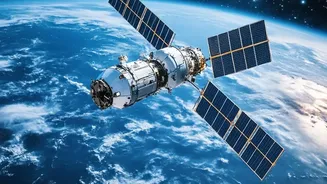
The future of space involves not just massive satellites, but also constellations of smaller, cost-effective 'smallsats'. Indian startups like Dhruva Space are at the forefront of designing and manufacturing these compact satellites for various applications. This sub-sector requires a wide range of engineers—from electronics and mechanical experts for hardware design to software developers for onboard systems. The growth in smallsat manufacturing also creates opportunities in ancillary industries for component suppliers, covering everything from solar panels to communication systems. This area is perfect for engineering students who are passionate about building tangible hardware that will operate in orbit.
Ground Segment and Mission Operations
Every satellite in orbit needs a team on the ground to manage it. The ground segment includes mission control centres, communication antennas, and the vast software infrastructure required to operate spacecraft. As the number of private satellites increases, so does the need for robust and secure ground services. This field offers roles for software developers, network engineers, and cybersecurity experts. Companies need professionals who can write the code for mission planning, ensure reliable communication links, and protect these valuable assets from cyber threats. It's a critical part of the space ecosystem that combines software skills with the unique challenges of space operations.
Space Situational Awareness (SSA)
With thousands of satellites and pieces of debris orbiting Earth, space is becoming a crowded place. Space Situational Awareness (SSA) is the field dedicated to tracking these objects to prevent collisions. Indian startups like Digantara are developing technologies to monitor space traffic. This sector requires a unique blend of skills, including physics and orbital mechanics for trajectory analysis, software development for building tracking systems, and data analysis to manage the vast catalogue of space objects. It's a niche but rapidly growing field essential for the long-term sustainability of all space activities.