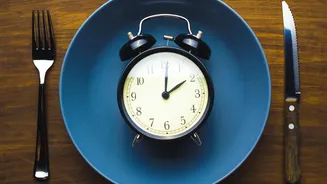







Meet Your Body’s Internal Clock
Deep inside your brain, a master clock known as the suprachiasmatic nucleus (SCN) keeps time. This clock, synced primarily by light and darkness, governs your 24-hour cycle, known as your circadian rhythm. It tells you when to feel sleepy and when to be
alert. But it’s not just about sleep. This master clock also directs a whole orchestra of smaller 'peripheral' clocks located in your organs, including your liver, pancreas, and even your fat cells. These clocks regulate thousands of bodily functions, from hormone release to body temperature. Crucially, they also manage how your body processes and uses energy from food. This coordination between your internal clocks and your metabolism is the foundation of what scientists call chrononutrition, or circadian nutrition.
The Science of Meal Timing
One of the most important jobs regulated by your circadian rhythm is glucose metabolism. Your body's ability to handle sugar from food is not constant throughout the day. This is largely due to insulin, the hormone that helps your cells absorb glucose from the bloodstream. Research consistently shows that insulin sensitivity is highest in the morning and early afternoon, and it naturally declines as evening approaches. This means your body is most efficient at processing carbohydrates and managing blood sugar earlier in the day. When you eat a meal, your pancreas, liver, and muscles all work together to use and store that energy. By aligning your eating patterns with this natural metabolic rhythm, you are essentially working with your body’s biology, not against it.
The Case for a Substantial Lunch
This brings us to the power of a large lunch. Eating your most significant meal midday, when your insulin sensitivity is near its peak, allows your body to process those calories and carbohydrates most effectively. Your muscles and liver are primed to take up glucose, preventing large spikes in blood sugar. When your body efficiently handles the glucose from a substantial lunch, it has a positive ripple effect. It leads to more stable energy throughout the afternoon and sets the stage for better metabolic processes overnight. Think of it as giving your body the fuel it needs when its engine is running at its hottest, allowing it to burn that fuel cleanly and store it properly for later.
The Trouble with Late, Heavy Dinners
Conversely, consuming a large meal late at night forces your body to deal with a flood of nutrients when it’s least prepared to do so. As insulin sensitivity wanes in the evening, the same meal that you handled well at noon will cause a much larger and more prolonged spike in blood sugar when eaten at 9 p.m. Your metabolic machinery is winding down for its nighttime restorative duties. Asking it to perform the heavy lifting of digesting a large dinner can lead to elevated blood sugar levels overnight, which may disrupt sleep and strain your metabolic system. Studies have shown that people who consume most of their calories later in the day often have poorer glucose control compared to those who eat more in the morning and afternoon.
Simple Hacks to Sync Your Meals
Adopting a circadian-friendly eating pattern doesn't have to be complicated. The classic advice to "breakfast like a king, lunch like a prince, and dine like a pauper" holds true. Make breakfast and lunch your main meals of the day. For dinner, focus on lighter fare that is lower in carbohydrates. Another powerful hack is to create a consistent eating window. Try to finish your last meal at least three to four hours before you go to sleep. This fasting period gives your liver and digestive system a much-needed break to perform their overnight cleanup and repair functions without the added burden of processing a new meal. Even small adjustments, like making your evening meal smaller than your midday one, can make a noticeable difference in your metabolic health.