





A Landmark Launch for India
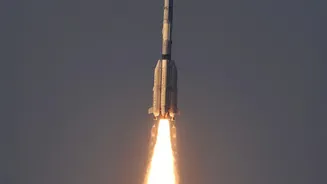
In a significant mission for the nation, ISRO successfully launched the GSLV-F17 rocket carrying the EOS-05 satellite on September 4, 2026, from the Satish Dhawan Space Centre in Sriharikota. This launch marked a crucial return to form for the space agency
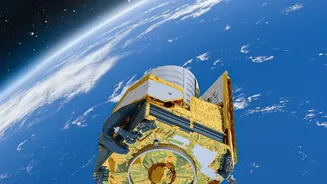
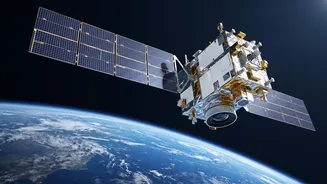
and was its first successful mission of 2026. The EOS-05, also known as GISAT-1A, is not just another satellite; it's India's first imaging satellite designed to operate from a geosynchronous orbit, approximately 36,000 kilometres above the Earth. This high-altitude post allows it to hover over the Indian subcontinent, providing near-continuous surveillance of a fixed geographical area. The successful launch was vital for ISRO's morale after a few setbacks and reinforces India's capabilities in space.
The Powerhouse Rocket: GSLV-F17
The vehicle tasked with this important delivery is the Geosynchronous Satellite Launch Vehicle (GSLV) F17. Standing 51.7 metres tall, this three-stage rocket is one of ISRO's most powerful launch systems. It is specifically designed to lift heavier satellites, like the 2,367-kilogram EOS-05, into high-energy orbits. A key component of the GSLV is its indigenous cryogenic upper stage, which uses liquid hydrogen and liquid oxygen as propellants. This advanced technology gives the rocket the immense power needed to reach the demanding geosynchronous transfer orbit. This mission was the 19th flight for the GSLV, demonstrating its reliability as a workhorse for India's ambitious space projects.
India's New Eye in the Sky: EOS-05
The main purpose of the EOS-05 satellite is to provide rapid, wide-area monitoring of the Earth's surface. Unlike satellites in lower orbits that pass over a location intermittently, EOS-05's position in a geosynchronous orbit allows it to watch over India constantly. Equipped with high-resolution and multi-spectral imagers, it can capture images of the entire Indian landmass every 30 minutes. Its applications are vast and directly impact national development and security. It will be used for near-real-time monitoring of natural disasters like cyclones, floods, and forest fires, providing crucial data for timely alerts and relief efforts. Furthermore, it will aid in agriculture by assessing crop health, support environmental studies, and enhance border surveillance.
Why This Mission is a Game-Changer
The successful deployment of EOS-05 represents a significant leap in India's strategic capabilities. The satellite is a replacement for EOS-03, which was lost in a launch failure in 2021, making this mission critical for restoring a key national asset. The ability to have a continuous eye on its territory has major implications for disaster management, allowing authorities to track developing weather systems and natural hazards with unprecedented frequency. This enhances public safety and can save lives. Beyond civilian uses, the satellite's constant surveillance capabilities serve important security and strategic functions. By developing and launching such advanced technology, ISRO not only boosts India’s self-reliance in space but also solidifies its standing as a major player in the global space community, with direct benefits for governance, economic planning, and public services.