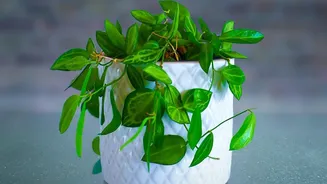





Money Plant (Epipremnum aureum)
A staple in many Indian homes, the Money Plant is exceptionally well-suited to the monsoon. Its lush, heart-shaped leaves thrive in the moisture-rich air, which mimics the tropical forests they originally come from. This plant is famously low-maintenance,
but during the rainy season, it truly comes into its own, often showing a visible growth spurt. High humidity keeps its leaves glossy and green. Just be mindful not to overwater; the damp air means the soil will stay moist for longer. Check that the top inch of soil is dry before giving it another drink.
Ferns (Nephrolepis exaltata)
Ferns are the quintessential humidity lovers. Their delicate, feathery fronds are notorious for turning brown and crispy in dry air, which is why the monsoon is their favorite time of year. Varieties like the Boston Fern or Bird's Nest Fern will look their absolute best, absorbing moisture directly from the atmosphere. They are perfect for shaded balconies or bathrooms where humidity is naturally higher. Keep their soil consistently moist but not waterlogged to prevent root rot, and they will reward you with a cascade of vibrant green foliage.
Peace Lily (Spathiphyllum)
If you want a plant that not only survives but visibly improves during the monsoon, look no further than the Peace Lily. Known for its elegant white blooms and glossy, dark green leaves, this plant appreciates the high ambient humidity of the rainy season. It helps the plant maintain its lush appearance and supports its air-purifying qualities. Peace Lilies prefer indirect light and are a great choice for brightening up a corner of your living room. The consistent moisture in the air means you can worry less about crispy leaf tips.
Snake Plant (Dracaena trifasciata)
The Snake Plant is known for its incredible resilience and near-indestructible nature, making it perfect for beginners. While it tolerates dry air well, it also adapts seamlessly to the higher humidity of the monsoon. This adaptability makes it a fuss-free choice. Unlike more delicate plants, it isn't prone to fungal issues in damp conditions, as long as you are careful with watering. Its key requirement is well-draining soil, as it is susceptible to root rot if left in soggy conditions. During the monsoon, you might only need to water it once the soil has completely dried out.
Spider Plant (Chlorophytum comosum)
The Spider Plant is another easy-going favourite that enjoys the humid conditions of the rainy months. Its arching, striped leaves bring a sense of life and movement to any space. During the monsoon, you will often see these plants producing 'spiderettes'—tiny baby plants that hang down from the mother plant, ready to be propagated. This is a sign that the plant is happy and thriving. They are adaptable to various light conditions but prefer bright, indirect light. The increased air moisture reduces the chances of their leaf tips turning brown, a common issue in drier climates.
A Note on Monsoon Care
While these plants love humidity, the monsoon season requires a few adjustments to your care routine. The biggest danger is overwatering. High humidity means soil dries out much slower, so always check the top inch or two of soil with your finger before watering. Ensure all your pots have drainage holes to let excess water escape. Good air circulation is also key to preventing fungal growth and pests, which can thrive in stagnant, damp conditions. Opening a window or using a small fan can help keep the air moving around your plants, ensuring they stay healthy.