





Looking for a simple, effective exercise to build a stronger lower body? Walking lunges are a powerhouse move that targets key muscles and joints, enhancing both strength and stability. Taking them outdoors adds a whole new dimension to your workout.
A Full-Body Workout in a Single Step
The walking lunge is a dynamic, functional exercise that builds strength from the ground up. Each step is a coordinated effort that engages multiple major muscle groups simultaneously. The primary muscles worked are the quadriceps (front of the thigh), the glutes (buttocks), and the hamstrings (back of the thigh). As you lower into the lunge, your front leg's quad works to control the descent, while the glute and hamstring of the same leg power you back up and forward into the next step. This makes it an incredibly efficient movement for building balanced lower-body strength. But it doesn't stop there. Your core muscles, including your abdominals and lower back, must constantly engage to keep your torso upright and stable as you move from one leg to the other. Even your calves play a role in providing the push-off for each step forward.
Your Step-by-Step Guide to Perfect Form
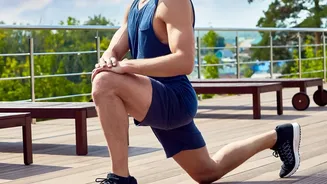
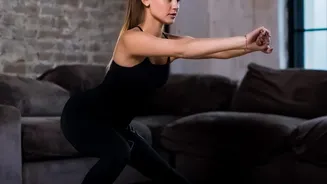
Proper form is crucial to maximize benefits and prevent injury. Start by standing tall with your feet hip-width apart and your core engaged. Place your hands on your hips or clasp them in front of your chest for balance. Take a controlled step forward with your right leg, about two feet or a comfortable stride length. As your right foot lands, bend both knees to lower your body toward the ground. Aim for both knees to create roughly 90-degree angles. Your front knee should be directly above your ankle, not drifting past your toes, and your back knee should hover just above the ground without touching it. Your torso should remain upright. Push off firmly through your right heel to stand and bring your left foot forward to step immediately into the next lunge. Continue this 'walking' motion, alternating legs with each step.
Common Mistakes and How to Fix Them
A few common errors can reduce the effectiveness of walking lunges and increase injury risk. One major mistake is letting the front knee travel too far past the ankle, which places unnecessary strain on the knee joint. This is often caused by taking too short of a step. Conversely, stepping too far forward can cause instability and strain the hamstring. Another frequent error is allowing the front knee to collapse inward, which can be a sign of weak hip stabilizers. To correct this, focus on keeping your knee aligned with your second toe. Many people also lean their torso too far forward, which takes the work out of the legs and puts it on the lower back. Keeping your chest up and your gaze fixed a few feet in front of you can help maintain an upright posture. Finally, avoid 'walking a tightrope' by ensuring your feet land hip-width apart with each step for a stable base.
The Added Benefit of Taking It Outdoors
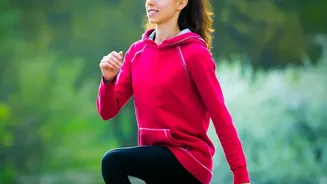
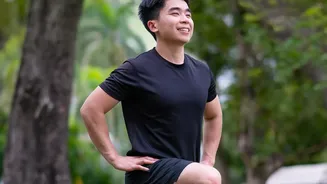
Performing walking lunges outside offers unique advantages that you can't get at the gym. Exercising in nature has been shown to improve mood, reduce stress, and increase overall feelings of well being. The fresh air and natural light provide a mental boost that can make your workout feel less like a chore and more like a refreshing break. From a physical standpoint, natural terrain is often slightly uneven. While you should choose a relatively flat, safe surface, minor variations in the ground challenge your stabilizing muscles in your ankles and core even more, enhancing your balance and coordination. This functional training prepares your body for the real world demands of walking on varied surfaces, from city pavements to park trails. An outdoor setting also breaks the monotony of an indoor routine, which can increase your motivation to stay consistent with your fitness goals.
Beyond the Basics: Simple Variations
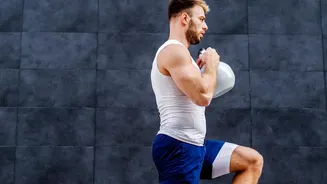
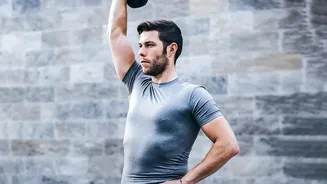
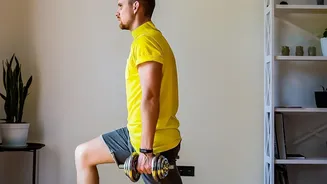
Once you have mastered the standard walking lunge, you can incorporate simple variations to keep things challenging. One popular option is the walking lunge with a torso twist. As you lower into the lunge, you rotate your upper body toward the side of your front leg, holding a light weight or medicine ball if desired. This adds an extra challenge for your core stability. Another way to increase the intensity is to hold dumbbells in each hand. This added resistance further strengthens your glutes, quads, and hamstrings. For those with sensitive knees, a reverse lunge can be a great alternative. Instead of stepping forward, you step backward, which can place less stress on the knee joint while still working the same primary muscles. These variations allow you to tailor the exercise to your fitness level and goals.