

A Glimpse into Watery Worlds
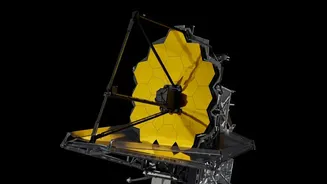
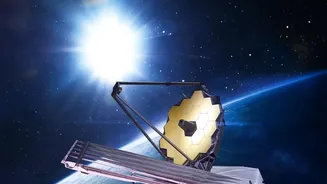
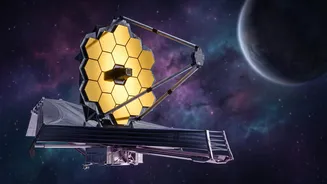
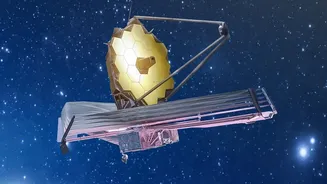
The James Webb Space Telescope is revolutionising our understanding of planets that orbit other stars, known as exoplanets. Its powerful infrared instruments have successfully identified the chemical signatures of water vapour in the atmospheres of several
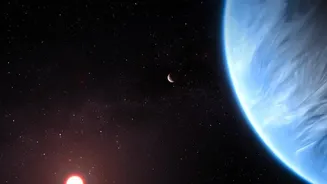
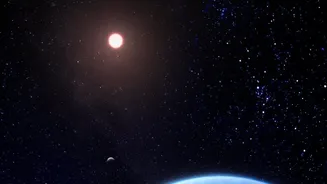
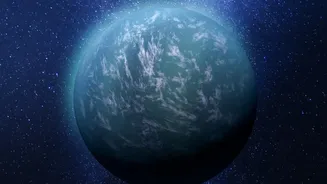
of these alien worlds, including planets classified as super-Earths. One prominent example is K2-18 b, a planet about 120 light-years away, where Webb confirmed the presence of water vapour along with other carbon-bearing molecules like methane and carbon dioxide. Another world, 55 Cancri e, a scorching hot super-Earth, is also thought to have a substantial atmosphere, which could be rich in carbon dioxide or carbon monoxide, potentially replenished by a vast magma ocean below. These findings demonstrate JWST's incredible ability to peer into the skies of distant planets, offering unprecedented insights into their composition.
What Exactly Is a Super-Earth?
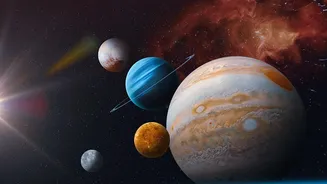
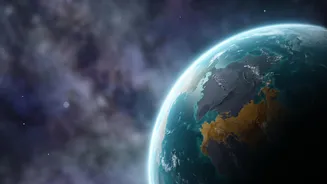
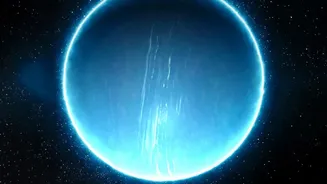
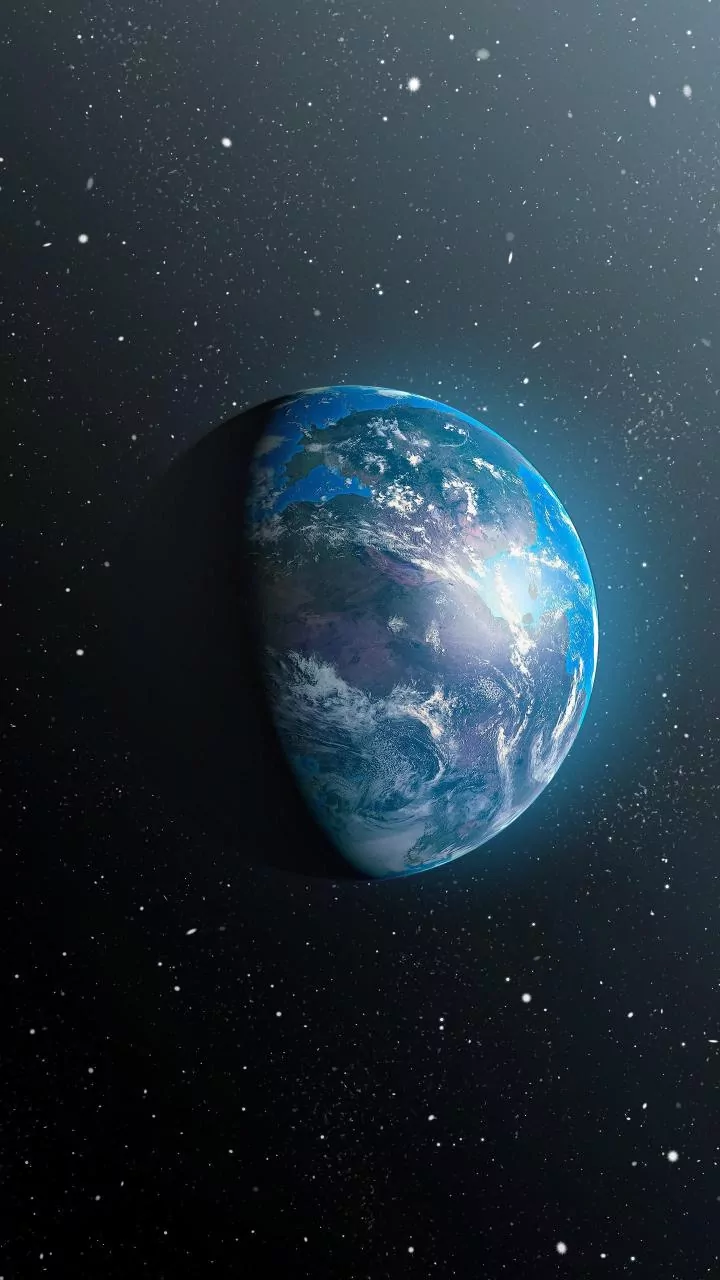
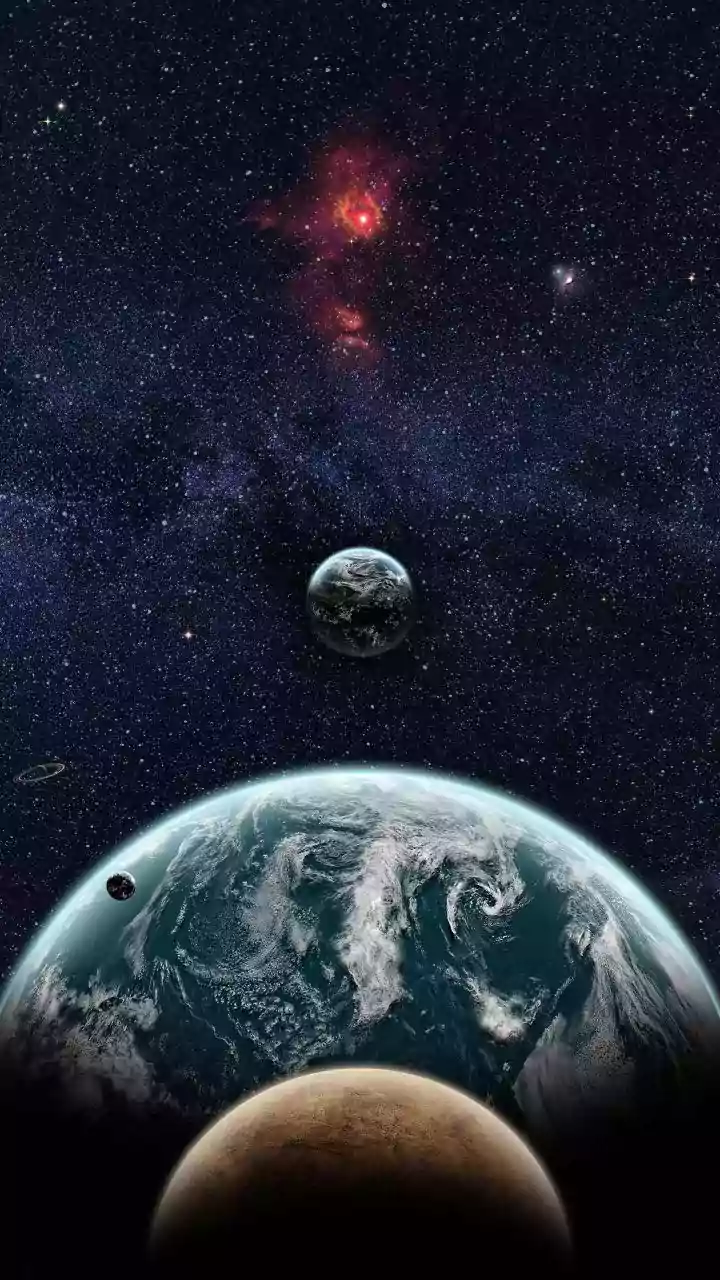
The term 'super-Earth' might conjure images of a bigger, better version of our own planet, but it's purely a size classification. Astronomers use the term to describe a planet that is more massive than Earth but lighter than our solar system's ice giants, Neptune and Uranus. These planets can be up to ten times the mass of Earth and can be made of rock, gas, or a combination of both. Interestingly, super-Earths are one of the most common types of planets discovered so far in our galaxy, yet our own solar system doesn't have one. This makes them a fascinating and mysterious class of planet. Their composition can vary wildly, from dense rocky worlds to 'mini-Neptunes' with thick gas envelopes, making each new discovery a unique puzzle for scientists to solve.
How the Telescope 'Sees' Water
Detecting molecules from hundreds of light-years away sounds like science fiction, but the JWST does it using a technique called transit spectroscopy. When an exoplanet passes in front of its host star from our point of view, a tiny fraction of the starlight filters through the planet's atmosphere. Different molecules in the atmosphere absorb specific colours, or wavelengths, of light. This leaves a unique chemical 'fingerprint' on the starlight that reaches the telescope. By capturing this light and spreading it out into a spectrum—like a rainbow—astronomers can identify which wavelengths are missing and, therefore, which molecules like water vapour, methane, or carbon dioxide are present. Webb's exceptional sensitivity to infrared light is what makes it especially powerful for these kinds of observations.
The Big Question: A Sign of Life?
Finding water vapour is a monumental step, but it is not confirmation of life. The presence of water in a gaseous state is very different from the liquid water oceans needed to support life as we know it. Many of the planets where water vapour has been found, like the intensely hot 55 Cancri e, are far too extreme to be considered habitable. However, on planets like K2-18 b, which lies in its star's habitable zone, the detection of water vapour alongside other key molecules is more compelling. The habitable zone is the orbital region around a star where conditions might be just right for liquid water to exist on a planet's surface. While these discoveries don't confirm the existence of oceans or life, they prove that the basic chemical ingredients for life exist on rocky worlds beyond our solar system, making them prime targets for future investigation.