






The Simple Science of Staying Cool
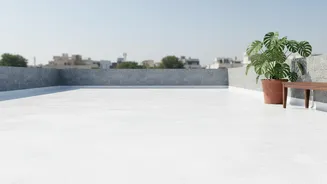
The magic of reflective terrace paint lies in a simple principle you already know: light colours reflect heat while dark colours absorb it. Think of wearing a white t-shirt on a sunny day versus a black one. Your terrace or rooftop acts the same way.
A typical dark or concrete roof absorbs a huge amount of solar radiation, heating up to over 65°C and transferring that heat directly into your home. Reflective paints, often called 'cool roof' coatings, are engineered to do the opposite. They have a high Solar Reflectance Index (SRI), which is a measure of a surface's ability to reflect sunlight and release absorbed heat. While a standard roof might absorb most of the sun's energy, a cool roof can bounce back up to 80% of it, keeping the surface itself and the rooms below it significantly cooler.
The Four-Degree Question: Does It Work?
The headline claim of a four-degree reduction is not just marketing hype; it is a realistic outcome for many. Scientific studies and real-world projects in Indian cities have shown that a proper cool roof coating can reduce indoor temperatures by anywhere from 3°C to 6°C. A study conducted in South Korea, for example, measured indoor temperature drops between 2.1°C and 4.1°C after applying reflective paint. The exact temperature drop in your home will depend on several factors, including your roof's material, the quality of the paint, local climate, and the home's overall insulation. However, the consistent finding is that reflective paint makes a noticeable difference, especially during the peak heat of the afternoon. Families in cities like Ahmedabad have reported immediate improvements in comfort and better sleep after getting their roofs painted.
More Than Just a Cooler Room
The benefits of applying reflective paint extend far beyond just feeling more comfortable. The most immediate financial advantage is a reduction in electricity bills. When your home is naturally cooler, your air conditioners and fans don't have to work as hard or as long, leading to significant energy savings. Furthermore, protecting your roof from constant, extreme heat can extend its lifespan. The paint acts as a protective barrier against harsh UV rays and reduces the thermal stress that causes materials to expand and contract, which can lead to cracks and damage over time. Some advanced formulations even offer waterproofing benefits. On a larger scale, widespread adoption of cool roofs helps combat the 'Urban Heat Island' effect, where cities become much hotter than surrounding rural areas due to heat-absorbing concrete and asphalt.
Choosing and Applying Your Paint
When shopping for a reflective paint, the most important factor to look for is the Solar Reflectance Index (SRI) value on the product label; a higher SRI means better performance. Most good quality products in India are water-based acrylic formulas, which are effective, durable, and easy to use. The cost is also quite reasonable. Prices generally range from ₹1,500 to ₹3,500 for a 20-litre bucket, which can cover a significant area. Applying the paint is a straightforward process, much like painting a wall. First, the terrace surface must be thoroughly cleaned of all dust, dirt, and loose debris. For best results, applying a primer may be recommended, followed by two even coats of the reflective paint. It's a project that can often be completed over a weekend.
What to Keep in Mind
While highly effective, a cool roof is not a 'fit-and-forget' solution. To maintain its high reflectivity, the surface needs to be kept relatively clean. Over time, dust and grime can accumulate, reducing the paint's effectiveness. A simple cleaning with water once or twice a year can help maintain its performance. The paint will also need to be reapplied every few years, depending on the product's durability and local weather conditions. Despite this maintenance, the return on investment through energy savings and increased comfort makes it one of the most cost-effective ways to cool down your home. The growing popularity of this solution is evident in government initiatives, such as Telangana's Cool Roof Policy, which encourages its use for new buildings.