






The Official Timetable
The India Meteorological Department (IMD) is the official timekeeper of the seasons. For decades, it has maintained a calendar that maps out the normal dates for the onset and withdrawal of the southwest monsoon. For instance, the monsoon normally sets
in over Kerala around June 1st and is expected to cover the entire country by July 8th. These dates are not arbitrary; they are based on long-term historical data. The IMD defines the monsoon's onset using specific criteria, including rainfall, wind field, and radiation levels. To declare the onset over Kerala, at least 60% of 14 designated weather stations must report 2.5 mm of rain or more for two consecutive days, alongside specific wind and radiation conditions. This structured system provides a baseline for planning, from national policy down to an individual farmer's schedule.
When Nature Ignores the Schedule
The problem is that the monsoon rarely adheres to this neat schedule. In recent years, its arrival has become more erratic, and its withdrawal more staggered. Climate change is a significant driver of this unpredictability, affecting both the timing and intensity of rainfall. While the IMD updated its normal dates in 2020 using more recent data (1961-2019) to better reflect these shifts, the concept of a fixed date remains a point of friction. The monsoon might be declared officially, but regions can experience prolonged dry spells immediately after. Conversely, intense pre-monsoon showers can mislead people into thinking the season has begun early. This mismatch between the official calendar and the on-ground reality creates confusion and challenges the utility of having such hard-edged timelines for a dynamic natural phenomenon.
The Real-World Consequences
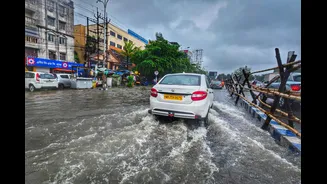
This discrepancy isn't just a matter of semantics; it has profound consequences. For India's farmers, who depend on the monsoon for over 70% of the country's annual rainfall, timing is everything. Sowing for crucial Kharif crops like rice, cotton, and soybean is synchronised with the monsoon's arrival. A delayed onset can lead to a shorter growing season and reduced yields, impacting farmer incomes and contributing to food inflation. An early but weak start can be equally damaging, providing false hope and leading to wasted resources. Beyond agriculture, urban planning is also affected. Municipalities often schedule the cleaning of stormwater drains based on the official calendar. When intense rains arrive ahead of schedule, unprepared drainage systems are quickly overwhelmed, leading to the familiar scenes of waterlogged streets and civic disruption that plague Indian cities.
Embracing a More Fluid Approach
So what does a calendar with 'fewer hard edges' look like? It means shifting focus from a single declaration date to a more nuanced, condition-based framework. Instead of asking "Has the monsoon arrived?", the more useful question might be, "Are the conditions for sustained monsoon rainfall being met?". This approach would communicate the monsoon's progress not as a line marching across a map on a specific day, but as a dynamic system establishing itself over a region. Modern forecasting, including advanced multi-model ensemble systems, is already improving the accuracy of seasonal predictions. The next step could be to translate this complex data into more practical guidance that acknowledges the monsoon's variability. This would involve communicating probabilities and characterising the rain's nature—whether it's an initial surge, a weak phase, or the onset of a sustained wet spell. This helps manage expectations and allows for more agile decision-making.