





What is the ‘Blaze Star’?
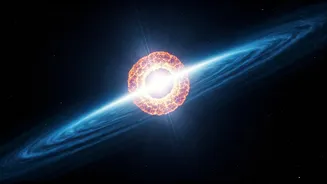
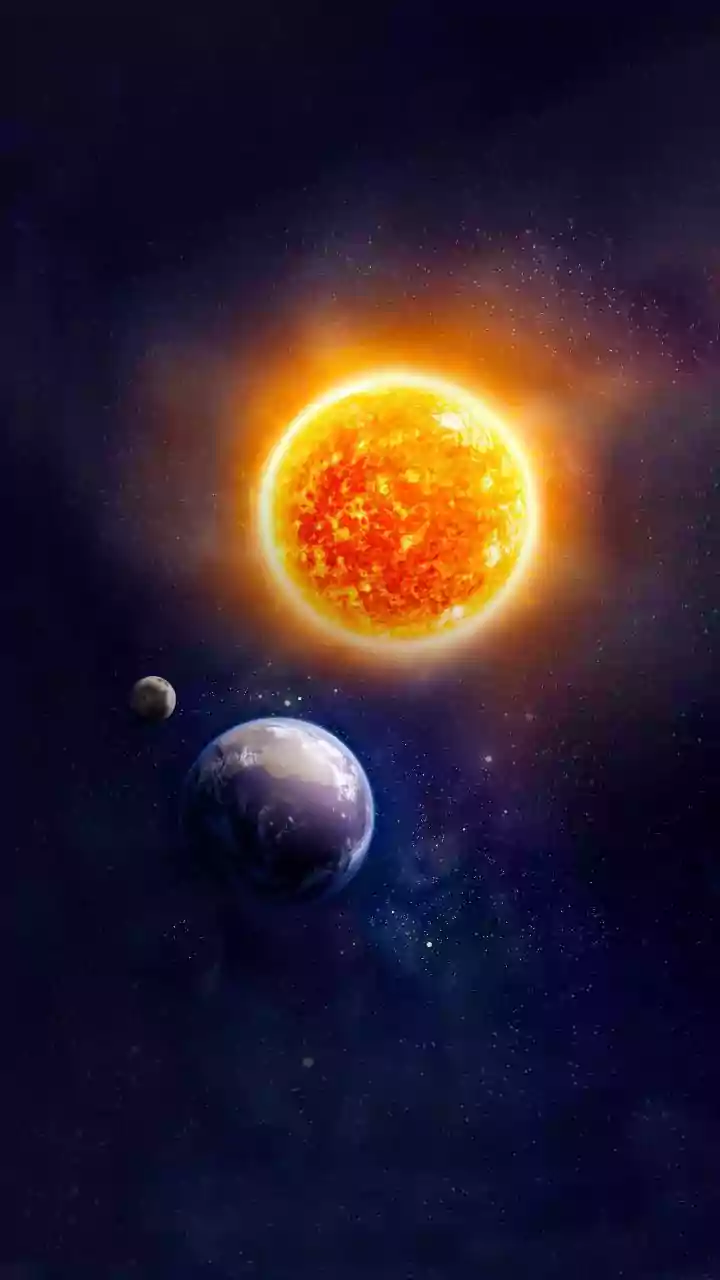
Deep in the cosmos, about 3,000 light-years from Earth, lies a fascinating stellar duo known as T Coronae Borealis. This isn't a single star, but a binary system where two stars are locked in a dramatic gravitational dance. One is a red giant—an old,
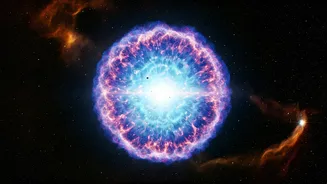
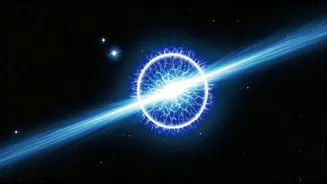
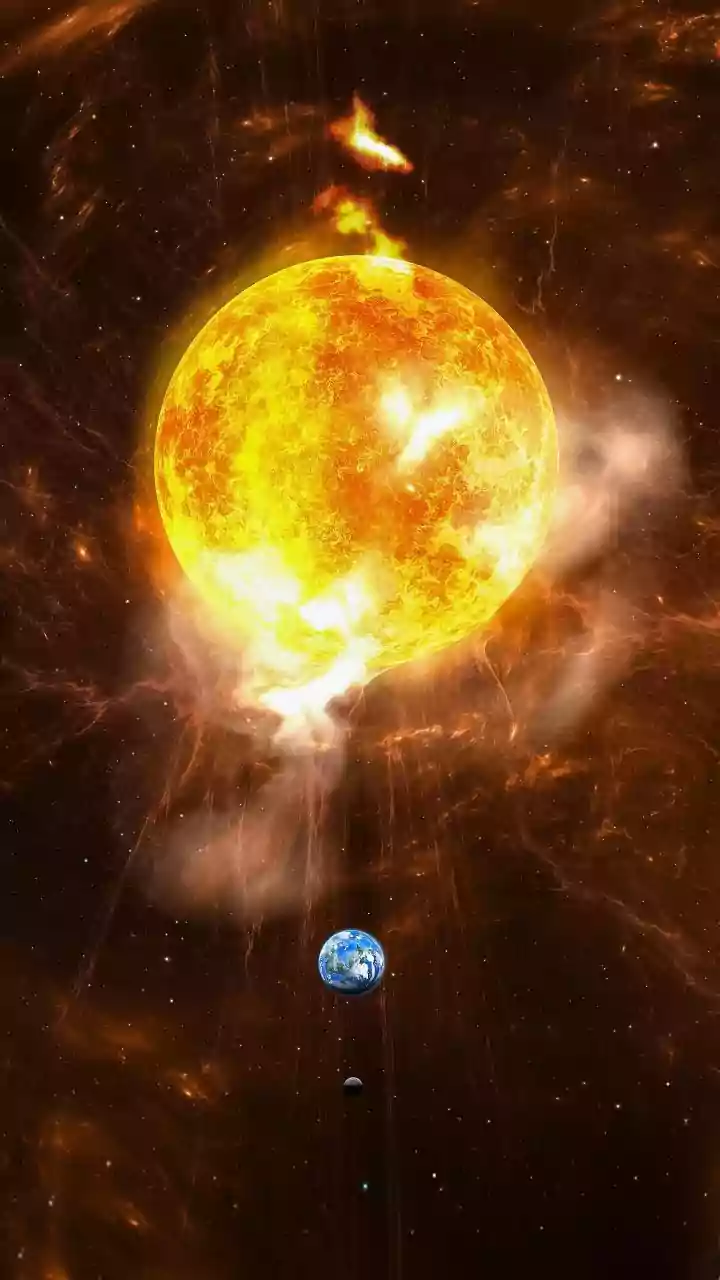
swollen star shedding its outer layers. The other is a white dwarf, the incredibly dense, hot core of a long-dead star. The white dwarf’s powerful gravity pulls material, mostly hydrogen, from its larger companion. This stolen gas accumulates on the white dwarf's surface, like piling fuel onto a cosmic fire. About every 80 years, the pressure and temperature become so intense that it triggers a runaway thermonuclear explosion. This event is called a nova. It’s crucial to know that this is not a supernova; the star doesn’t destroy itself. Instead, it violently blasts away the accumulated layer of gas, flaring up to become thousands of times brighter before settling down again, ready to repeat the cycle.
A Once-in-a-Generation Spectacle
The reason for the current buzz is simple: we are in the window for its next eruption. The last time T Coronae Borealis, nicknamed the 'Blaze Star', put on this show was in 1946. Before that, it was 1866. Its predictable 80-year cycle means the next nova is imminent. NASA and other astronomical agencies predict it will occur sometime between now and September 2024. When it happens, the star system will brighten dramatically. Normally, T Coronae Borealis has a magnitude of around +10, making it far too dim to see without a powerful telescope. But during the nova event, it's expected to surge to a magnitude of +2. This is as bright as Polaris, the North Star, making it easily visible to the naked eye for several days, and potentially visible with binoculars for over a week. It will look like a new star has suddenly appeared in the sky, before it gradually fades back into obscurity.
When and Where to Look
The key to seeing this celestial firework is knowing where to point your eyes. T Coronae Borealis is located in the constellation Corona Borealis, also known as the Northern Crown. This is a small, semi-circular arc of stars located between the larger constellations of Boötes (the Herdsman) and Hercules. To find it, first locate the bright star Arcturus in Boötes. From there, look nearby for the distinct 'U' shape of the Northern Crown. The nova will appear as a temporary bright point of light within this arc. Since the exact date of the eruption is unknown, astronomers and amateur stargazers are monitoring the system nightly. The best advice is to familiarise yourself with the Northern Crown constellation now, so you can easily spot the 'new' star when it finally appears. You won't need a telescope, just your eyes and a bit of patience.
Your Guide to Viewing from India
For stargazers in India, the Northern Crown is well-placed for viewing. It’s a northern hemisphere constellation, visible in our night sky, especially during the spring and summer months. To get the best view, you’ll want to escape the light pollution of major cities. Find a dark spot in the countryside or a park with an unobstructed view of the northern sky. The best time for viewing will be late at night, after the moon has set, to ensure the sky is as dark as possible. You can use a stargazing app on your smartphone (like Stellarium or SkyView) to help you locate Boötes and then the Northern Crown. When the nova occurs, it will be an unmissable addition to this familiar pattern. While no equipment is needed, a pair of binoculars will enhance the view and help you track its brightness as it fades over the subsequent days.