
The Reigning Champion: Why Lithium-Ion Rules the Road
For years, lithium-ion (Li-ion) batteries have been the undisputed king of energy storage for everything from smartphones to electric vehicles. Their success comes down to one key factor: high energy density. This means they can pack a lot of power into
a relatively small and lightweight package, making them ideal for providing the long-range performance that high-end electric car and scooter manufacturers demand. Different chemistries exist, like Nickel-Manganese-Cobalt (NMC) and Lithium-Iron-Phosphate (LFP), but they all rely on the same fundamental principle of moving lithium ions. However, this dominance comes at a price. The key materials, particularly lithium and cobalt, are relatively scarce, geographically concentrated, and expensive to mine. This reliance creates volatile supply chains and keeps the final cost of electric vehicles, including scooters, stubbornly high for many Indian consumers.
The Challenger: What Are Sodium-Ion Batteries?
Sodium-ion (Na-ion) technology isn't new; scientists have explored it since the 1970s. However, recent advancements have pushed it from the laboratory to the brink of mass production, presenting it as a commercially viable alternative. The working principle is nearly identical to Li-ion batteries, but instead of moving lithium ions between the anode and cathode, it uses sodium ions. The breakthrough appeal lies in its core material: sodium. It's one of the most abundant elements on Earth, found everywhere in rock salt and brines. This abundance means the raw materials are dramatically cheaper and the supply chain is far more stable and geographically diverse, a major strategic advantage for a country like India.
Head-to-Head: Cost vs. Performance
When comparing the two, a clear trade-off emerges. Lithium-ion still holds the crown for energy density, offering around 150-300 Wh/kg depending on the chemistry. The best commercial sodium-ion cells currently top out at about 175 Wh/kg. In simple terms, this means a Li-ion battery can offer a longer range for the same weight, which is why it remains the choice for premium, long-range EVs. However, Na-ion technology is rapidly closing the gap and excels in other areas. It is projected to be significantly cheaper to produce, potentially reducing the final cost of an electric scooter by a substantial margin. Furthermore, Na-ion batteries have demonstrated superior performance in extreme temperatures, both hot and cold, retaining over 90% of their capacity even at -40°C—a notable weakness for some Li-ion chemistries. They also show promise for incredibly fast charging, with some prototypes charging in minutes.
The Critical Safety Advantage
Beyond cost, safety is a huge selling point for sodium-ion technology. While rare, incidents of Li-ion battery fires, caused by a phenomenon called thermal runaway, are a known concern. Sodium-ion chemistry is inherently more stable and less prone to violent reactions when under stress. The electrolytes are less flammable, and the cells are less likely to form dendrites—tiny, sharp structures that can cause short circuits in lithium batteries. Crucially, Na-ion batteries can be safely discharged to zero volts for transport or storage without damaging the cell, a procedure that is risky and harmful for their lithium counterparts. This enhanced safety profile could be a major factor in convincing more consumers to make the switch to electric.
What This Means for the Indian Market
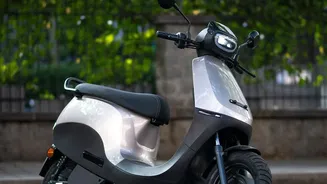
For India, the rise of sodium-ion technology is more than just an engineering development; it's a strategic opportunity. Widespread adoption could drastically reduce the nation's dependency on imported lithium and other minerals, aligning perfectly with initiatives like 'Make in India'. Several Indian firms are already exploring this space, with some, like Cygni Energy and KPIT Technologies, developing their own Na-ion battery packs specifically for two-wheelers. Jitendra EV has also announced plans to launch scooters powered by India-made sodium-ion batteries by early 2026. By making electric scooters significantly cheaper, Na-ion batteries could democratise electric mobility, putting it within reach of a much larger segment of the population and accelerating India’s goal of 30% EV adoption by 2030.