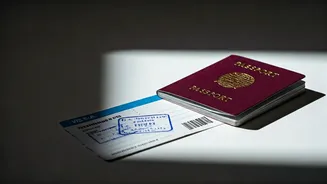









The Myth of the Open-Door Layover
Dubai has marketed itself as the ultimate stopover destination, a glittering oasis where you can swap airport boredom for a quick tour of the Burj Khalifa or a dash through the Gold Souk. For many Indian travellers, who frequently transit through Dubai International
Airport (DXB) on their way to Europe or North America, this sounds like a fantastic deal. The widespread belief is that a long layover automatically entitles you to a short-term visa to explore the city. Many travellers book their flights assuming that stepping out of the airport is a simple formality, something that can be sorted upon arrival. This assumption, fueled by advertising and word-of-mouth, often overlooks the fine print of immigration law. The reality is that without the correct, pre-arranged documentation, your grand layover plans will likely end at the immigration counter.
Reality: The Visa is Non-Negotiable
Let's be clear: as an Indian passport holder, you cannot simply decide to leave the airport during your transit. If you do not pass through immigration, you are free to use all the airside facilities like lounges, restaurants, and sleep pods without any visa. But to legally enter the country, even for a few hours, you need a visa. The default rule is that this must be arranged before you travel. Showing up at the immigration desk expecting to be let out based on your onward ticket is a recipe for disappointment. Officials are firm, and the rules are strictly enforced. The process is not designed for spontaneous decisions made at the airport; it's designed for passengers who have planned and applied for entry in advance.
Your Two Main Transit Visa Options
The UAE government offers two specific visas for this exact purpose: the 48-hour transit visa and the 96-hour transit visa. The 48-hour visa is often provided free of charge by UAE-based airlines like Emirates and Etihad to their passengers, though service fees may apply. It's perfect for a quick refresh at a hotel or a short sightseeing trip. The 96-hour visa comes with a fee but allows for a stay of up to four days, turning your stopover into a proper mini-holiday. The crucial point is that both these visas must be sponsored and applied for in advance, typically through the airline you are flying with. You'll need a confirmed onward ticket to a third country and a passport with at least six months of validity.
The Confusing 'Visa on Arrival' Exception
This is where most of the confusion arises. There is indeed a visa-on-arrival facility for Indian citizens, but it is highly conditional. You are only eligible for a 14-day visa on arrival if your passport holds a valid US visa (with minimum 6 months validity), a US Green Card, or a valid residence permit from the UK or an EU country. This is not a transit visa; it's a separate entry permit, and it comes with a fee of around USD 63. Do not mistake this for a universal rule. If you do not have one of these specific documents, you are not eligible for this facility and must apply for a standard transit visa in advance.
How to Get It Right
Planning is everything. The best way to secure your transit visa is to apply through the UAE-based airline carrying you to Dubai (Emirates, Etihad, flydubai, Air Arabia) when you book your ticket. Most airlines have a dedicated section on their website to manage bookings and apply for visas. The processing time is typically between 24 and 72 working hours, so applying last minute is a bad idea. Check your layover duration as well; some airlines require a minimum layover time, often 8 hours or more, to facilitate a transit visa application. Gather your documents—a clear copy of your passport, a passport-sized photo, and your confirmed onward ticket—and apply at least a week before you travel to avoid any stress.