





Why Airflow Is Everything
A refrigerator works by circulating cold air to maintain a consistent, safe temperature for your food. This cold air originates from vents and needs to travel around the entire compartment, absorbing heat from your groceries and keeping everything evenly
chilled. When shelves are packed too tightly, these pathways get blocked. This obstruction prevents the air from circulating effectively, leading to some areas becoming too warm and others getting too cold, creating an environment where food can spoil faster or freeze unexpectedly.
The Hidden Costs of Overstuffing
A crammed fridge doesn't just threaten the life of your lettuce; it has tangible consequences for your wallet. When airflow is poor, the refrigerator's compressor has to work much harder and run for longer periods to try and force the entire unit to the correct temperature. This extra effort leads to increased electricity consumption and higher utility bills. Over time, this constant strain can also cause excessive wear and tear on the appliance's components, potentially shortening its lifespan and leading to costly repairs. Furthermore, uneven cooling leads to faster food spoilage, which means you end up throwing away more food and money.
The Three-Quarters Full Rule
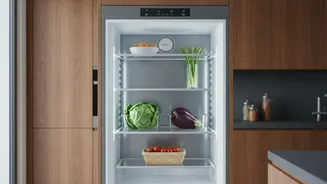
So, what is the ideal capacity for your fridge? Most experts agree that a refrigerator operates most efficiently when it is about two-thirds to three-quarters full. This leaves enough empty space for air to circulate freely but provides enough “thermal mass” from the chilled food to help maintain a stable temperature when the door is opened. An overly empty fridge can also be inefficient, as there are fewer cold items to help the space recover its temperature after warm air rushes in. Aim for that sweet spot where items aren't touching each other and you can easily see what you have.
Smart Organisation for Better Circulation
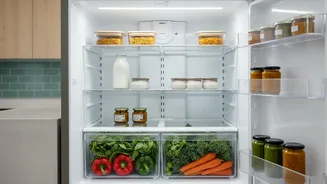
Achieving good airflow is about strategic placement. Avoid pushing items directly against the back or sides of the fridge, as this is often where the cooling vents are located. Use clear, stackable containers to group similar items; this not only keeps things tidy but also creates vertical space without forming a solid wall that blocks air. It can also be helpful to remove bulky outer packaging, like the cardboard box from a pack of drinks, to save space and improve flow. Try to leave a little bit of breathing room between all your containers, jars, and produce.
Know Your Fridge's Climate Zones
Different parts of your fridge have slightly different temperatures. The door is the warmest zone and is best for condiments and other less perishable items. The lower shelves are typically the coldest part of the main compartment, making them ideal for storing raw meat, poultry, and dairy products like milk. Placing raw meat on the bottom also prevents any potential drips from contaminating other foods below. Leftovers, drinks, and ready-to-eat foods can be stored on the upper shelves. Understanding these zones helps you store food optimally for freshness and safety.
The Freezer Is a Different Story
While your refrigerator needs space to breathe, the opposite is true for your freezer. A full freezer is actually more energy-efficient. The frozen items act like ice blocks, helping to maintain the cold temperature with less effort from the compressor, especially after the door has been opened. If your freezer is looking a bit empty, you can fill the space with bags of ice, bottles of water, or even wadded-up newspaper to help it run more efficiently. However, just like the fridge, be careful not to block any air vents.