






The Great Reptile and Amphibian Awakening
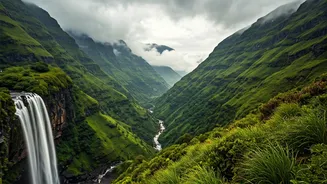
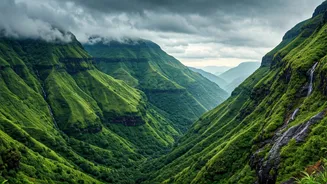
The monsoon is prime time for herpetology, the study of reptiles and amphibians. As the landscape turns a vibrant green, these often-elusive creatures become far more active. The Western Ghats, a UNESCO World Heritage Site, transforms into a hotspot for spotting
them. Destinations like Agumbe in Karnataka, known as the 'Cherrapunji of the South', become a haven for snakes like the Malabar pit viper and the iconic king cobra. Further south, in places like Amboli and Munnar, night trails reveal a symphony of croaking frogs. Enthusiasts can spot the stunning Malabar Gliding Frog with its emerald skin and webbed feet, or the uniquely adapted Purple Frog, which emerges from underground to breed only during this season. These guided 'herping' walks offer a thrilling, educational alternative to traditional safaris, focusing on the smaller, yet equally captivating, inhabitants of the forest floor.
A Chorus of Colourful Birds
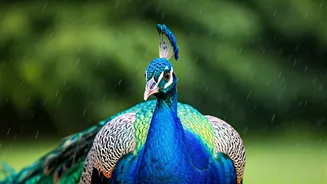
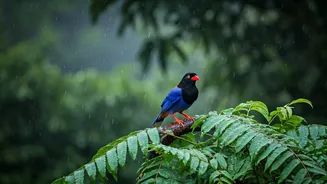
For birdwatchers, the monsoon is far from an off-season. The rains trigger breeding behaviours, and many birds display their most vibrant plumage. The Pied Cuckoo, famously known as the harbinger of the monsoon, is a key species to spot during this time. Parks that remain open, like Periyar in Kerala and Satpura in Madhya Pradesh, offer lush, green backdrops for photography. In the coastal regions of Maharashtra, such as Ratnagiri, birders can spot up to five different species of kingfisher within a small radius. Wetlands also become bustling hubs of activity. Places like Bhigwan in Maharashtra and Keoladeo National Park in Rajasthan, a UNESCO world heritage site, see an influx of resident waterbirds preparing for their nesting season. Even near urban centres, wetlands like Basai in Gurugram come alive with species like the Pheasant-tailed Jacana.
Mammals Against a Green Canvas
While the headline says skip tigers, it doesn't mean skipping mammals altogether. Many parks in Southern and Central India keep their buffer zones or specific areas open, providing a different kind of viewing experience. The Kabini region of Nagarhole National Park in Karnataka is spectacular during the monsoon, with boat safaris offering sightings of elephant herds against the misty, rain-washed landscape. Periyar National Park in Kerala also relies heavily on boat safaris across its lake, a prime spot to see elephants, gaur (Indian bison), and sambar deer. In Central India, buffer zones of parks like Tadoba and Pench in Maharashtra offer jeep safaris where the forest is dense and rejuvenated. The reduced crowds and dramatic, cloudy skies make for a more serene and atmospheric wildlife encounter, even if the primary focus shifts from the tiger to the broader ecosystem.
The Otherworldly Glow of Fireflies
Perhaps one of the most magical monsoon phenomena has nothing to do with a safari jeep at all. In the weeks leading up to and during the early monsoon, certain regions in the Western Ghats, particularly in Maharashtra, host spectacular firefly festivals. In places like Purushwadi and Bhandardara, thousands of fireflies gather in the forests, their synchronized flashing turning the landscape into an enchanting spectacle of natural light. This phenomenon is tied to their mating rituals, which are triggered by the humidity and onset of rain. Local communities have started organizing eco-tourism initiatives around this event, allowing visitors to witness the magic while ensuring the fireflies' habitat is protected from light and noise pollution. It's a quiet, humbling experience that captures the delicate beauty the monsoon brings.