







The Context of the Trade Suspension
Formal trade relations between the two nuclear-armed neighbours have been on thin ice for years, reflecting their volatile geopolitical relationship. The most significant recent disruption occurred in August 2019, when Pakistan formally suspended most trade ties
with India. This move came after New Delhi revoked the special autonomous status of Jammu and Kashmir. Following subsequent escalations, including the Pahalgam attack in 2025, restrictions were tightened further, with both countries imposing bans on direct and, in some cases, indirect trade. Despite these comprehensive restrictions, the flow of goods has not entirely ceased, pointing to deeply entrenched economic dependencies that formal decrees cannot easily erase.
The Third-Country Connection
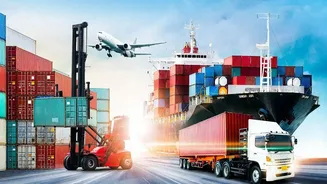
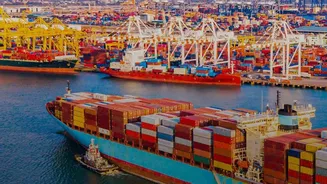
So, if direct trade is off the table, how are Indian products still appearing on Pakistani shelves? The primary answer lies in informal trade networks and third-country routing. Major trading hubs like Dubai, Singapore, and Malaysia have become key transit points. In this 'grey-zone' strategy, Indian goods are exported to a third country, stored in bonded warehouses, and then re-labelled with new documentation that obscures their original origin. For example, a product 'Made in India' can be relabelled as 'Made in UAE' and then shipped to Pakistan, effectively bypassing direct trade prohibitions. This method allows businesses to meet persistent market demand in Pakistan, albeit at a higher cost that covers additional logistics and paperwork.
What's on the Import List?
The composition of these imports reveals why the trade persists despite political will to stop it. The overwhelming majority of goods are not consumer luxuries but essential items. Pharmaceutical products, organic chemicals, and raw materials for medicines constitute the bulk of these imports, with some data suggesting they account for over 96% of the total value. For the 2025-2026 fiscal year, vaccines and blood products were among the largest categories. This reliance is driven by a combination of price competitiveness, established supply chains, and quality. Sourcing these critical items from other parts of the world could increase costs by 40-50%, making Indian supplies an economic necessity for Pakistan's healthcare and manufacturing sectors. Other goods finding their way across include dyes, plastics, rubber, and some food items like spices and tea.
An Unavoidable Economic Reality
The continued flow of Indian goods into Pakistan, valued at over $61 million in the first quarter of the 2026-27 fiscal year, underscores a fundamental economic principle: demand finds a way. While formal trade between the two nations has plummeted from its potential, estimated by the World Bank at $37 billion, the informal and third-country trade is estimated to be worth billions. This shadow economy thrives because it is efficient and meets crucial needs that don't disappear when diplomatic ties fray. For many Pakistani industries, particularly pharmaceuticals, Indian raw materials are not just preferable but essential. The national interest in securing these supplies often outweighs the political imperative to enforce a complete trade shutdown, leading to exemptions for therapeutic goods.
The View from the Ground
For traders and consumers, the situation is a mixed bag. The informal channels, while functional, add significant costs and complexities. The need to route goods through international hubs like Dubai means higher prices for the end consumer in Pakistan. Before the complete suspension, markets like Lahore's Paan Gali were famous for their collection of authentic Indian-made goods, from cosmetics and hair oils to snacks and Ayurvedic products, catering to a demand fuelled by shared cultural tastes. While many of these products are now harder to source, the persistent demand ensures that traders will continue finding innovative, if costly, ways to procure them. The situation highlights a disconnect between political postures and the everyday commercial needs of people and industries on both sides of the border.