



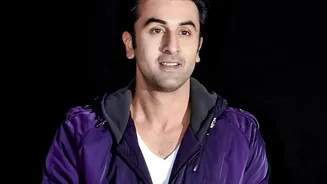
The Poster Boy of Urban Youth
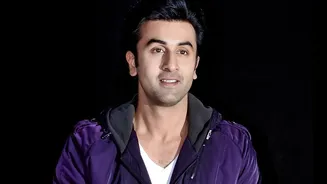
When Ranbir Kapoor arrived on the scene, he quickly became synonymous with a specific brand of character: the charming, often confused, urban young man. After a stylized debut in 'Saawariya' (2007), it was films like 'Wake Up Sid' (2009) that cemented
his status. As Sid Mehra, a spoiled but lovable Mumbai lad finding his purpose, Kapoor became the on-screen avatar for a generation grappling with adulthood. This persona was further solidified in 'Yeh Jawaani Hai Deewani' (2013), where his character Bunny's famous dialogue about leaving things behind to find oneself became an anthem for restless millennials. These roles were not just commercially successful; they were culturally significant, defining the aspirations and anxieties of a modernising India.
An Appetite for Risk
Just as he was being typecast as the go-to romantic hero, Kapoor pivoted towards more complex and artistically risky projects. This phase showcased his ambition as a performer over a conventional star. In 'Rockstar' (2011), he channeled a tormented musician, earning critical acclaim and awards for his intense portrayal. He followed this with 'Barfi!' (2012), a heartwarming performance as a deaf and mute man that further proved his versatility and willingness to move beyond dialogue-driven charm. However, this experimental phase also brought commercial failures like 'Bombay Velvet' (2015) and his home production 'Jagga Jasoos' (2017), which, despite their artistic merits, underperformed at the box office. Films like 'Tamasha' (2015) explored deeper, more complicated emotional states, reinforcing his image as an actor willing to challenge his audience.
The Turn to Blockbuster Spectacle
The turning point came with 'Sanju' (2018). His transformative portrayal of actor Sanjay Dutt was not just a critical triumph but also a colossal box office success. The film demonstrated that Kapoor could anchor a large-scale production and deliver a performance that appealed to a massive audience. This success seemingly marked a strategic shift. He followed it with 'Brahmāstra: Part One – Shiva' (2022), a fantasy epic that was one of the most expensive Indian films ever made. The film, with its heavy emphasis on visual effects and mythological lore, moved him firmly into the event-cinema space. This was no longer about a relatable boy finding himself; this was about a hero discovering his divine powers to save the world.
Embracing the Larger-Than-Life Persona
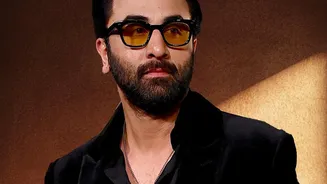
The 2023 release 'Animal' completed this transformation. Kapoor played a violent, morally ambiguous character in a film that was widely debated for its portrayal of toxic masculinity but became his highest-grossing release. The role was a stark departure from the lovable men he played in his early career, signaling a conscious move towards more provocative, larger-than-life characters that generate intense discussion. His co-star in 'Wake Up Sid', Konkona Sen Sharma, even noted that while she respected the film's success, it was not her kind of cinema, highlighting the dramatic shift in his choice of projects. This new phase sees him embracing roles defined by their scale, impact, and shock value, moving away from subtlety towards spectacle.
The Future is Epic
Kapoor's upcoming slate solidifies this new direction. He is set to portray Lord Ram in Nitesh Tiwari’s highly anticipated mythological epic, 'Ramayana', a project of unprecedented scale. This will be followed by sequels like 'Animal Park' and potentially 'Brahmastra 2'. These projects indicate a clear strategy: to lead massive franchises and event films that dominate the cultural conversation. The actor who once mirrored the life of the average young person on screen is now dedicated to creating cinematic worlds that offer pure escapism and grandeur. This evolution from relatable youth icon to an epic hero marks a significant chapter in the career of one of his generation's most definitive actors.