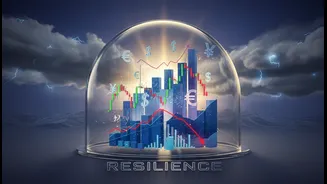










For Investors: Navigating a Balanced Market
The investment landscape for 2026 calls for balance and discipline over chasing blockbuster returns. After a period of volatility, a diversified portfolio is more critical than ever. Experts suggest that while India’s economic growth is expected to remain
strong—projected at around 6.4% to 6.9%—investors should prioritize a mix of assets. Large-cap equities are favoured for their relative stability in an uncertain global environment. Beyond stocks, consider diversifying with assets that play different roles. Corporate bonds are becoming attractive as they can shield portfolios from interest rate risks, while gold and silver offer a hedge against inflation and market volatility. The rise of Real Estate Investment Trusts (REITs) also presents a viable option for those seeking regular income and diversification. Rather than trying to time the market, the focus should be on a balanced approach that combines assets for growth, income, and stability. Opportunities in renewable energy and fintech are also significant, driven by massive government investment and rapid market expansion.
For Students: Smart Financial Planning Is a Must
For students, the financial journey is becoming increasingly complex, whether studying at home or abroad. The rising cost of tuition and living expenses makes robust financial planning essential. The first step is creating a realistic budget. A popular method is the 50/30/20 rule, where 50% of your income goes to needs, 30% to wants, and 20% to savings. Before taking an education loan, it's vital to understand the terms, interest rates, and repayment period. It is always advisable not to borrow more than you absolutely need. Building an emergency fund, even with small monthly contributions of ₹500 to ₹1,000, can provide a crucial safety net for unexpected expenses. For those with some savings, there are simple investment options available, but building a financial cushion should be the priority. Leveraging part-time work, from freelancing online to paid internships, can also significantly reduce financial pressure.
For First-Time Digital Savers: Welcome to the New Economy
India's digital payment revolution, spearheaded by the Unified Payments Interface (UPI), has transformed daily transactions and is now evolving into a powerful tool for saving and investment. In June 2026 alone, UPI processed over 22 billion transactions. For first-time digital savers, the journey begins with opening a zero-balance savings account, which many banks now offer through a simple online process using just Aadhaar and PAN details. These accounts remove the pressure of maintaining a minimum balance, making them ideal for beginners. The next step is to leverage the ecosystem. Many UPI apps are transforming into 'Super Apps', allowing users not just to pay but also to invest in digital gold, buy insurance, and manage bills. A notable trend is the rise of digital gold purchases via UPI, which nearly tripled in 2025 as younger users turn everyday spending rewards into small, regular investments. However, as you go digital, security is paramount. Always use strong, unique passwords, enable two-factor authentication, and be wary of phishing scams.
The Common Thread: Proactive and Informed Decisions
Regardless of whether you are an established investor, a student managing a tight budget, or a newcomer to digital finance, the underlying principle for success is the same: proactive and informed financial management. The economic environment remains strong, with GDP growth driven by resilient domestic consumption. However, global uncertainties and domestic inflation require everyone to be vigilant. Digital literacy is no longer optional; it is central to managing your money effectively, from making secure payments to accessing investment opportunities. The tools are more accessible than ever, with app-based banking and investing becoming the norm. The key is to build good habits early: budget diligently, save consistently, understand the products you use, and never stop learning about how to make your money work for you.