



First, What Are the Artemis Accords?
Think of the Artemis Accords as a modern rulebook for exploring the Moon and beyond. Introduced by NASA and the U.S. State Department in 2020, they aren't a binding treaty but a set of principles for nations to follow. The goal is to avoid chaos as more
countries and private companies set their sights on space. Key tenets include peaceful exploration, transparency about mission plans, a commitment to helping astronauts from any nation in distress, and the open sharing of scientific data. The Accords also tackle tricky subjects like managing space debris and establishing that while nations can use space resources—like mining for water ice at the lunar south pole—they can't claim sovereignty over celestial bodies. Essentially, it’s a U.S.-led framework to ensure the next chapter of space exploration is cooperative, not colonial.
India’s Signature: A Major Geopolitical Shift
For decades, India has prided itself on its strategic autonomy in space, developing impressive capabilities on its own terms. So, its decision to join the U.S.-led Artemis coalition in 2023 marked a significant moment. This move is widely seen as both a practical and geopolitical calculation. On a practical level, it prevents India's burgeoning space program from becoming technologically isolated and ensures its systems are compatible with emerging global standards. Geopolitically, it aligns India with a democratic bloc of spacefaring nations, a clear counterbalance to the parallel space ambitions of China and Russia, who are not signatories. With its historic Chandrayaan-3 landing near the lunar south pole in 2023, India proved it's a formidable space power with invaluable expertise. Partnering with ISRO gives the Artemis program access to that skill, particularly in cost-effective mission design.
Beyond the Handshake: Joint Projects
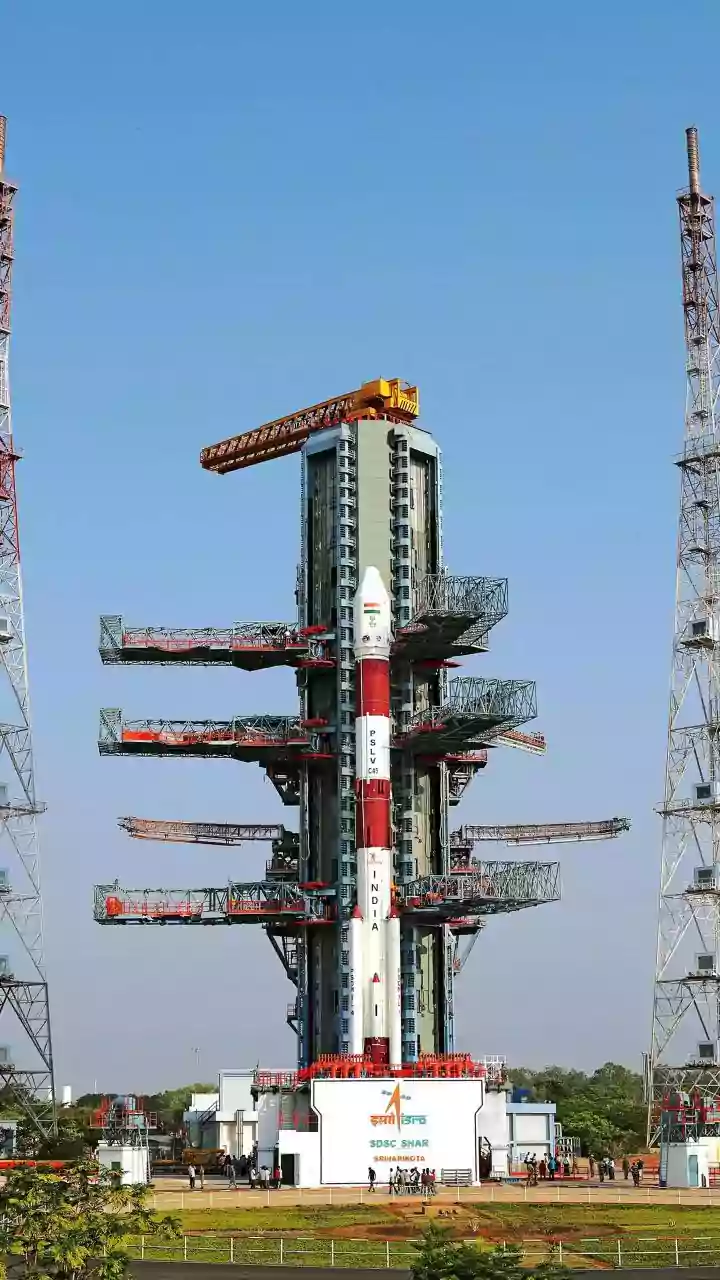
The NASA-ISRO partnership isn't just on paper; it's already producing some of the most advanced space hardware ever built. The centerpiece of this collaboration is the NISAR (NASA-ISRO Synthetic Aperture Radar) satellite. Launched in 2025, this joint Earth-observing mission uses two different radar frequencies to map our planet in unprecedented detail. It tracks everything from ice sheet collapse and volcanic activity to deforestation and the effects of climate change. NASA provided the L-band radar, while ISRO contributed the S-band radar and the launch vehicle, making it a truly integrated effort. Looking forward, the cooperation is set to deepen significantly. NASA has formally invited ISRO to participate in its Moon Base program, a plan to build a permanent human outpost near the lunar south pole. This could involve ISRO contributing everything from scientific instruments to robotics and infrastructure components. There is also an agreement for NASA to provide advanced training to Indian astronauts, preparing them for a joint mission to the International Space Station.
A Win-Win for Washington and New Delhi
This alliance offers substantial benefits to both sides. For the United States, it adds a powerful and technically proficient partner to the Artemis coalition, sharing the immense cost and complexity of returning to the Moon. India’s proven track record, especially its knack for frugal innovation, makes it a highly valuable collaborator. For India, the partnership is a force multiplier for its own ambitions. It provides access to NASA's deep-space technologies, decades of operational experience in human spaceflight, and a direct role in shaping humanity's future on another world. It accelerates India’s own Gaganyaan human spaceflight program and its long-term goal of landing an astronaut on the Moon by 2040. By aligning with the Accords, ISRO ensures its technology and protocols are interoperable with the world's leading space agencies, paving the way for more ambitious joint missions in the future.