






The Predictable Seasonal Chaos
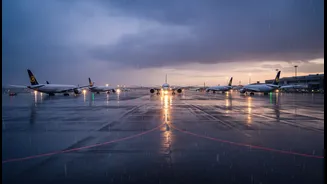
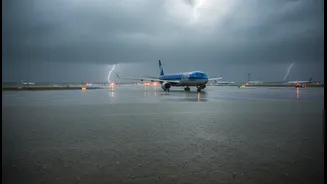
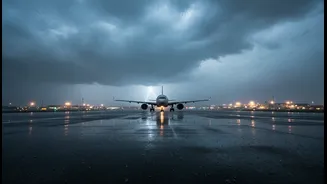
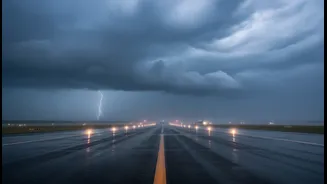
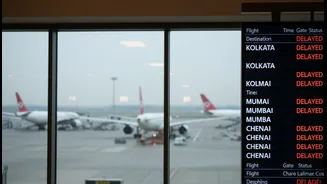
For Netaji Subhas Chandra Bose International Airport (CCU), the monsoon is an annual stress test it repeatedly struggles to pass. Heavy rainfall is a given, yet every year brings a fresh wave of disruption. On July 10, 2026, airlines again issued advisories
for passengers flying to and from Kolkata, warning of likely delays due to intense showers. This isn't an isolated event; it's a pattern. The issues are multifaceted, ranging from low visibility during downpours to waterlogging on runways and taxiways, a problem that has historically plagued the airport. These initial delays don't happen in a vacuum. In a tightly packed national aviation network, a single delayed departure from Kolkata can trigger a domino effect, causing subsequent flights across the country to run late. Passengers find their plans unraveling, not because of one storm, but because the system lacks the resilience to absorb its impact.
What Are Flight Buffers, Really?
The term “flight buffers,” also known as schedule padding, sounds like a simple fix: just add more time. In reality, it’s a more strategic concept. It’s not about making every flight longer, but about intelligently inserting pockets of time into an airline's schedule to absorb unforeseen events. Think of it as strategic slack. This can mean scheduling a slightly longer flight time on a route known for weather-related air traffic congestion, or extending the ground time (turnaround time) for an aircraft at an airport like Kolkata, which is prone to operational slowdowns during rain. Airlines use sophisticated analysis of historical data, weather patterns, and air traffic control trends to decide where these buffers will be most effective. The goal isn't to slow everything down, but to prevent a small, localized problem from cascading into a network-wide meltdown.
The Strong Case for Building Resilience
Implementing more robust buffers is an investment in reliability. For passengers, the benefit is obvious: a scheduled flight time that might be 15 minutes longer is vastly preferable to an unpredictable two-hour delay at the gate. It provides certainty and reduces travel stress. For airlines, the calculus is more complex but equally compelling. While tighter schedules allow for higher aircraft utilisation, the costs of disruption are enormous. These include expenses for accommodating stranded passengers (meals and hotels, as mandated by DGCA rules even for weather delays), the operational chaos of re-crewing and rescheduling flights, and significant damage to brand reputation. A proactive strategy of building buffers can mitigate these costs. Airlines like IndiGo have already started taking proactive measures, such as positioning extra crew at airports and enhancing maintenance checks during monsoon, which acknowledges the need for operational cushions. A buffered schedule is a more robust one, capable of self-correcting before disruptions spiral out of control.
Isn't This Just Slower, More Expensive Travel?
The primary argument against schedule padding is that it reduces efficiency and aircraft utilisation, potentially driving up costs for carriers operating on thin margins. Some critics argue it can be used to manipulate on-time performance statistics, making an airline appear more punctual than it is operationally efficient. However, this view overlooks the hidden costs of a brittle system. The current model prioritizes theoretical speed over practical reliability. When a storm hits Kolkata, that model breaks. The resulting delays, cancellations, and passenger compensation are a direct cost of a schedule that has no slack. The case for buffers is a case for valuing predictability. It's an acknowledgment that for a system as complex as aviation, and in a climate as challenging as India's monsoon, a degree of planned flexibility is not a luxury but a necessity for stable operations.