


A Day Longer Than a Year?
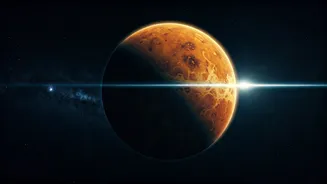
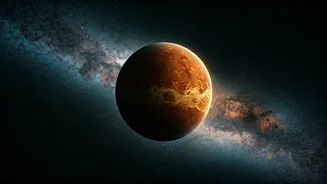
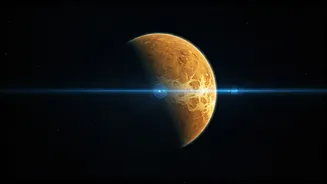
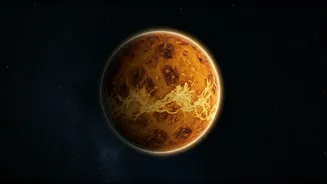
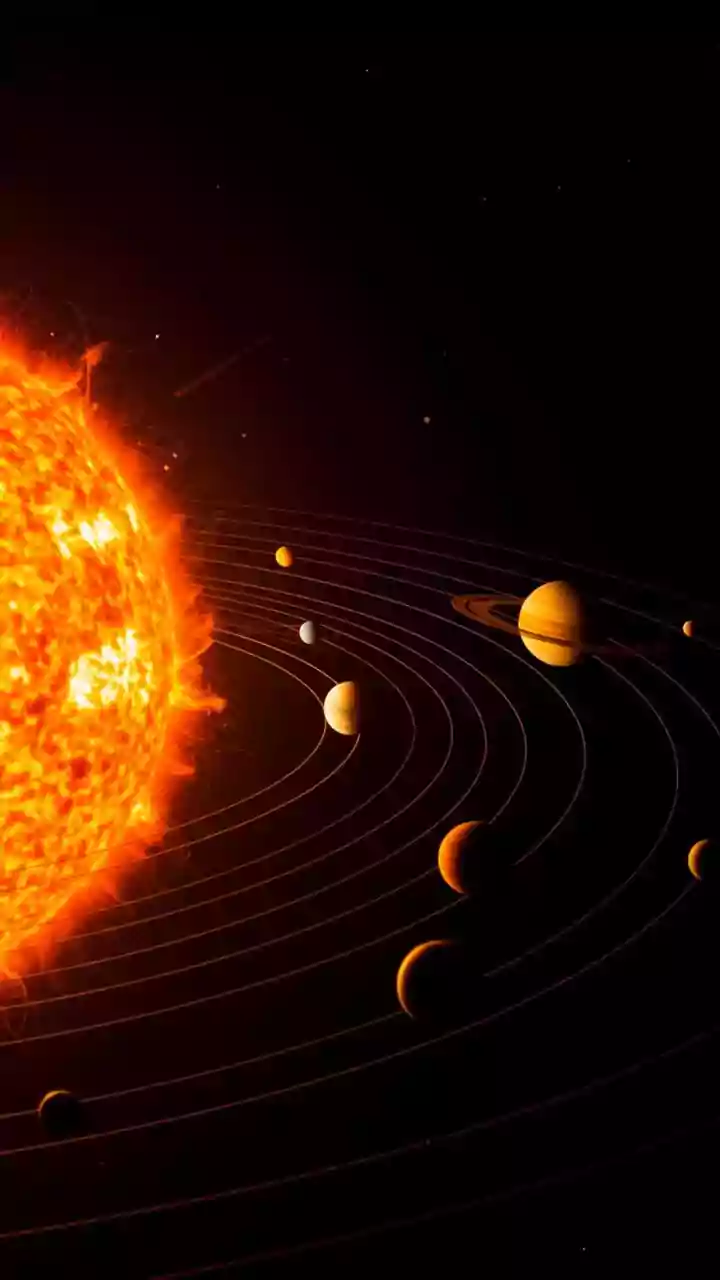
Let's get the numbers straight because they are at the heart of this cosmic puzzle. A 'year' on any planet is the time it takes to complete one full orbit around the Sun. For Venus, this journey takes about 225 Earth days. By contrast, a 'day' is the time it takes for
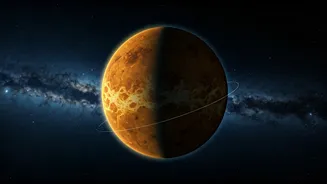
a planet to complete one full rotation on its own axis. On Venus, this single spin takes a stunning 243 Earth days. So yes, you read that right: a Venusian day (243 Earth days) is indeed longer than a Venusian year (225 Earth days). If you were standing on Venus, the planet would complete its entire lap around the Sun before it finished spinning on its axis just once. It’s a concept that completely defies our Earth-based intuition about time.
The Backward Planet
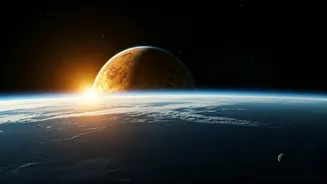
To make things even stranger, Venus spins backwards. Nearly every planet in our solar system, including Earth, rotates on its axis in a counter-clockwise direction when viewed from above the Sun's north pole. This is called prograde rotation. Venus, however, engages in 'retrograde rotation,' spinning clockwise. This means if you could survive on its surface, you would see the Sun rise in the west and set in the east. This backward spin is a crucial part of why its day-year relationship is so bizarre. Uranus also has a peculiar rotation, spinning on its side, but Venus's slow, backward crawl is unique among the terrestrial planets.
What 'Day' Are We Talking About?
Here's a small but important clarification. The 243-day figure is for a 'sidereal day'—one full 360-degree rotation relative to the distant stars. But what about a 'solar day,' the time from one sunrise to the next? Because Venus is orbiting the Sun while it slowly spins backward, the two motions interact in a strange way. The result is that a solar day on Venus is significantly shorter than its sidereal day, clocking in at around 117 Earth days. So, while one full spin takes 243 days, the sun appears to cross the sky from sunrise to sunrise every 117 days. This means a Venusian year contains just under two of these 'solar days.' It's still an incredibly long time to wait for the sun to set!
Why Is Venus So Weird?
Scientists don't have a single definitive answer, but two major theories dominate the discussion. The first is the 'giant impact' hypothesis. In the chaotic early days of the solar system, a massive planet-sized object may have collided with a young Venus, sending it into its slow, backward spin. A cataclysmic event of that scale could have dramatically altered its rotational momentum forever.
The second, more recent theory points to Venus's crushing atmosphere. The Venusian atmosphere is about 90 times denser than Earth's and is composed almost entirely of carbon dioxide, creating an extreme greenhouse effect. This thick, heavy atmosphere is thought to create powerful 'thermal tides.' The Sun heats the atmosphere, causing it to bulge and flow. Over billions of years, the gravitational drag from these atmospheric tides could have acted as a brake, slowing Venus's original rotation to a crawl and perhaps even reversing it.
A Truly Alien World
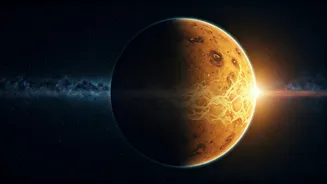
This bizarre timekeeping is just one feature that makes Venus a true 'hell planet.' The surface temperature hovers around a scorching 465°C, hot enough to melt lead. The atmospheric pressure is equivalent to being 900 metres underwater on Earth. Add in clouds of sulfuric acid and you have one of the most inhospitable environments in the solar system. The slow day-night cycle contributes to this, as the night side has no quick relief from the blistering heat trapped by the thick cloud cover. It's a runaway greenhouse effect in action, serving as a cautionary tale for our own planet.