






How AI Detectors Work
At their core, AI image detectors are specialized machine learning models trained to spot the subtle tell-tale signs of digital creation. They are fed millions of both real photographs and AI-generated images to learn the invisible "footprints" or artifacts
that generative AI tools often leave behind. These can include unusual patterns in lighting and shadows, unnatural textures, pixel-level inconsistencies, or other glitches that are often invisible to the human eye. When a new image is analyzed, the detector scans for these learned characteristics, comparing the image's features against the vast dataset of synthetic and authentic content it was trained on. The result is not a definitive 'real' or 'fake' verdict, but a probability score on how likely it is that the image was created or manipulated by AI.
An Imperfect Arms Race
The challenge for platforms is that detection technology is locked in a perpetual arms race with generation technology. As AI models for creating images get more sophisticated, they produce more realistic outputs that are harder to flag. At the same time, simple modifications like taking a screenshot, adding a filter, or slightly editing an image can strip away the digital clues that detectors rely on. This leads to both false negatives (where an AI image is missed) and false positives (where a real photo is incorrectly flagged). While some detection tools report accuracy rates as high as 99%, these figures are often achieved under ideal lab conditions with unaltered files. In the messy, real-world environment of social media, their effectiveness can be significantly lower, as demonstrated by audits showing platforms fail to label a large portion of AI content.
A Layered Approach: More Than Just Detection
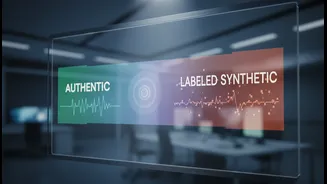
Recognizing the unreliability of detection alone, platforms employ a multi-layered strategy. This often starts with creator self-disclosure. Platforms like Meta and YouTube require users to manually label content that was made with AI, with penalties for failing to do so. The second layer is cryptographic metadata. An industry-wide effort called the Coalition for Content Provenance and Authenticity (C2PA) has created a standard for embedding a secure, tamper-evident history into a file itself. This 'digital nutrition label' can show who created the content and what tools were used. Major platforms can then read this C2PA data and automatically apply a label like "Imagined with AI."
So, Why Bother with Detectors?
If self-disclosure can be ignored and metadata can be stripped, why do AI detectors still matter? Because they form the crucial third layer of defense. They are the backstop for catching content that slips through the other two systems. Even an imperfect detector acts as a significant deterrent. Its existence forces malicious actors to take extra steps to launder their generated images, adding friction to the process of spreading misinformation at scale. Furthermore, the development and deployment of detectors are pushing the entire tech industry—from camera manufacturers to software developers—to embrace standards like C2PA more quickly. They are a necessary, if flawed, component in the broader shift from reactive detection to proactive, verifiable proof of origin.
The Goal Is Transparency, Not Perfection
Ultimately, the goal of labeling synthetic media is not to achieve perfect detection, but to foster transparency and give users more context about what they are seeing. As of mid-2026, platforms like Meta have shifted their policy from removing manipulated media to labeling it, acknowledging that labeling is a more scalable and sustainable long-term strategy. This approach recognizes that AI detectors are not a magic bullet. Instead, they are one essential tool in a wider ecosystem that also includes user education, creator accountability, and verifiable digital watermarks. Studies show that while AI labels can reduce belief in false content, they can also cause users to wrongly distrust real content or overly trust unlabeled content, highlighting the need for consistent and reliable systems. The road ahead is not about eliminating AI-generated content, but about building a digital environment where its origins are clear, giving us all a better chance to discern what's real and what's not.