





The Persistent Problem of Martian Dust
For robotic explorers on Mars, dust is a relentless adversary. This fine, electrostatically charged powder gets everywhere. For rovers that rely on the sun for energy, it’s a potentially mission-ending threat. As dust accumulates on solar panels, it forms
a layer that blocks sunlight, steadily reducing the amount of power the rover can generate. This isn't a minor inconvenience; a significant coating can decrease power conversion by 40% or more. Over time, this decline in energy forces mission managers into a difficult balancing act, forcing them to power down instruments and limit scientific activities to conserve energy. The ultimate victim of this dusty demise was NASA's InSight lander, which ceased operations in late 2022 after its panels became so coated it could no longer charge its batteries.
Two Paths to Power
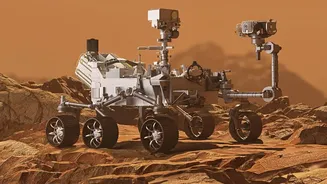
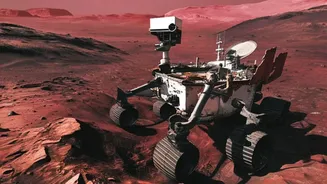
Not all rovers face the same level of risk. Mars missions have generally taken one of two approaches to power. Rovers like Spirit, Opportunity, and the InSight lander were designed with large solar arrays. This is a cost-effective and lighter option for launch, but it makes them vulnerable to dust accumulation and the dramatic reduction in sunlight during major dust storms. The Opportunity rover, for instance, survived for an incredible 14 years thanks in part to periodic gusts of wind, or "cleaning events," that blew dust off its panels. However, a massive, planet-encircling dust storm in 2018 ultimately blocked out so much sun that the rover could not recover. In contrast, larger rovers like Curiosity and Perseverance use a Multi-Mission Radioisotope Thermoelectric Generator (MMRTG), essentially a nuclear battery that uses the heat from decaying plutonium to create electricity. This provides a continuous power supply, day or night, regardless of weather, making them immune to the power-draining effects of dust.
An Eye in the Martian Sky
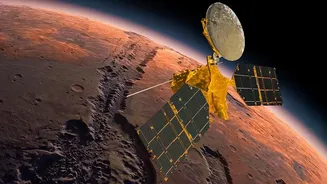
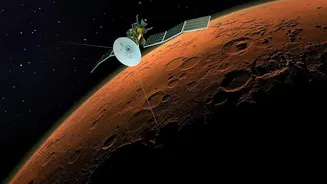
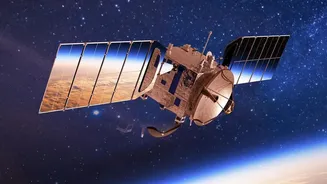
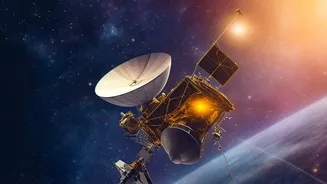
For the vulnerable solar-powered assets on the ground, an early warning system is essential. This is where orbital monitoring becomes critical. Spacecraft like NASA’s Mars Reconnaissance Orbiter (MRO) and Mars Odyssey are constantly circling the planet, equipped with sophisticated instruments. The MRO's Mars Color Imager (MARCI) creates daily global weather maps, allowing scientists to spot dust storms as they begin and track their development. Other instruments, like the Mars Climate Sounder, measure atmospheric temperature changes, which indicate how high the dust is being lofted and can help predict how a storm might grow. These orbiters don't just see the storms; they provide quantitative data on atmospheric opacity—or how much sunlight the dust is blocking.
From Data to Actionable Decisions
This orbital data is a lifeline for rover operators on Earth. When an orbiter detects a growing storm, that information is relayed to the teams managing the surface missions. The data allows engineers to forecast how much the rover's power levels will drop in the coming Martian days, or sols. With this predictive power, they can take pre-emptive action. If a storm is approaching, the team can send commands to the rover to conserve energy long before the skies above it darken. This might involve shutting down science instruments, halting movement, and entering a low-power "hibernation" state, using just enough energy to keep vital electronics warm and stay in touch with Earth. During a severe storm in 2007, operators commanded Opportunity to communicate only once every three days to save its dwindling battery charge. This proactive power management, made possible by orbital forecasting, is the key to weathering the storm.