
The Old Story of Galaxy Growth
For decades, astronomers have worked with a standard model for how galaxies like our own Milky Way came to be. The theory, known as the 'hierarchical' or 'bottom-up' model, painted a picture of slow, steady construction over billions of years. In this
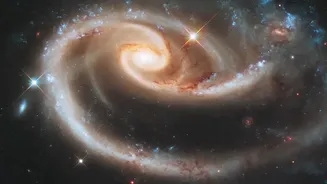
view, the first galaxies were small, chaotic, and messy. Over cosmic time, these smaller structures would collide and merge, gradually building up into the grand, spiral and elliptical galaxies we see today. It was a patient, bottom-up process, like small streams joining to form a mighty river. This model made sense and was supported by the best observations available. It predicted that the truly massive and well-structured galaxies wouldn't appear until the universe was at least a couple of billion years old, giving them enough time to assemble.
A Glimpse into Cosmic Dawn
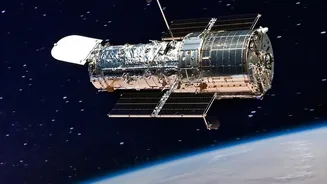
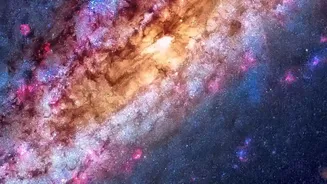
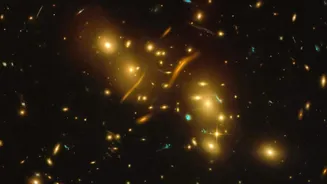
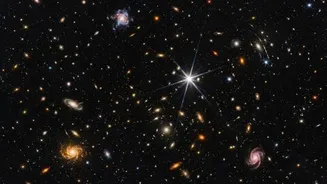
Enter the James Webb Space Telescope (JWST). With its incredible power to peer back in time, it's giving us a look at the universe when it was just a cosmic infant, only a few hundred million years old. And what it's finding is shaking up the old story. Recent findings have revealed galaxies that are far more massive and mature than they have any right to be. Astronomers are spotting surprisingly bright and large galaxies that existed when the universe was less than a billion years old. Some appear to have complex structures, like rotating discs or bars, which were thought to take much longer to develop. One study even identified a tightly packed collision of at least five galaxies happening just 800 million years after the Big Bang, a level of complex interaction not expected so early.
Rewriting the Cosmic Timeline
These discoveries are more than just curiosities; they present a direct challenge to the established timeline of galaxy formation. The presence of such large galaxies so early on suggests that the 'bottom-up' model can't be the whole story. There simply wasn't enough time for small galaxies to merge into these behemoths. It's like finding a fully grown oak tree in a field where you only planted a seed last week. This gap between theory and observation is forcing scientists to rethink fundamental assumptions. The universe, it seems, was not just capable of making galaxies quickly; it was capable of making them big, structured, and surprisingly mature right from the start. This suggests a much more rapid growth process was at play in the cosmic dawn.
Accelerated Growth and New Questions
So, what could be happening? One idea gaining traction is that some galaxies might form through a 'top-down' process, where enormous clouds of gas collapse directly into a large galaxy, bypassing the slow-merger phase altogether. Another clue comes from the chemical makeup of these early galaxies. Observations have found heavier elements like oxygen, which are forged inside stars and released when they die. Finding these elements in such young galaxies means that at least one generation of stars had already lived and died, a process that was thought to take more time. This suggests star formation was incredibly rapid and efficient from the very beginning. These early, massive galaxies might have exhausted their gas for making stars early on, evolving into the huge, inactive galaxies that Webb is now observing at slightly later cosmic times.
The Next Chapter of Discovery
This is an incredibly exciting time in astronomy. The established narrative is being revised in real-time. Far from having all the answers, these new observations have opened up a universe of new questions. Scientists are now racing to adjust their computer simulations and theories to account for this accelerated evolution. Future observations with the JWST and other powerful telescopes will focus on these early structures, hoping to understand the mechanics of their rapid growth. We are moving from simply knowing that galaxies existed early on to understanding the diverse and unexpectedly dynamic processes that built them. Each new image from the depths of space adds another page to our cosmic origin story, revealing a universe that is far more complex and fascinating than we ever imagined.