





The Modern Farmer’s Pressing Challenges
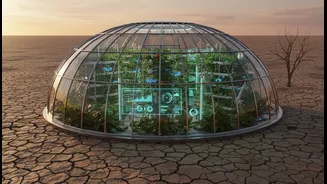
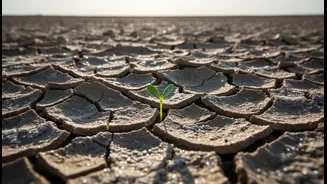
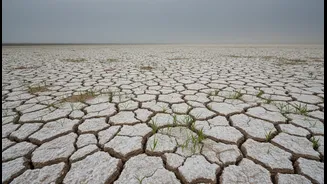
Farming in India has always been a battle against the odds, but today’s agriculturalists face a complex web of new and intensified pressures. Unpredictable weather patterns, driven by climate change, can turn a promising season into a devastating loss
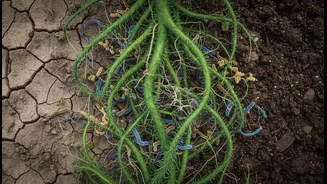
overnight. Water, the lifeblood of agriculture, is becoming an increasingly scarce and contested resource. On top of that, persistent threats from pests and crop diseases can wipe out significant portions of a harvest, while soil health degrades under conventional farming practices. For the millions of smallholder farmers who form the backbone of Indian agriculture, these challenges are not abstract concepts; they are daily threats to their livelihoods. The traditional knowledge passed down through generations is invaluable, but it is no longer enough to guarantee a sustainable and profitable future.
How AI Becomes a Farmer's Ally
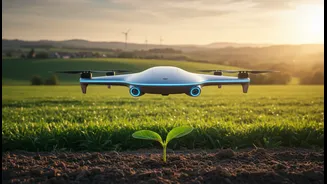
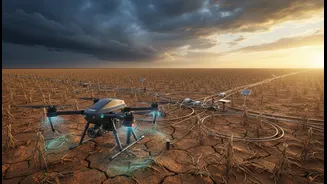
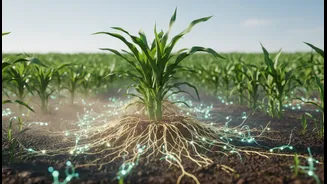
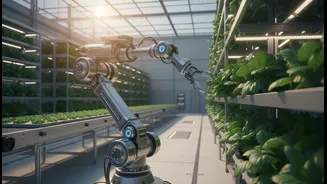
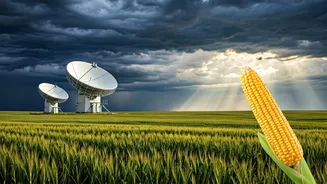
This is where Artificial Intelligence enters the field, not as a replacement for the farmer, but as a powerful new tool in their arsenal. Think of AI as a digital co-pilot with superhuman senses. It can analyse data from sources a farmer could never access all at once: satellite imagery, drone footage, on-ground sensors, and weather models. By processing this information, AI can provide hyper-specific, actionable advice. It can tell a farmer precisely which part of a field needs water, identify a pest outbreak before it spreads, or predict crop yields with remarkable accuracy. This approach, known as precision agriculture, is about doing more with less—optimising the use of water, fertiliser, and pesticides, which not only increases profitability but also promotes environmental sustainability. It’s about replacing guesswork with data-driven decisions.
IIT Ropar's Vision for a Digital Harvest
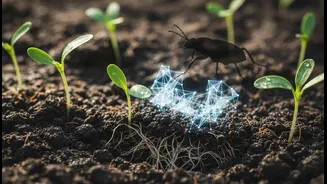
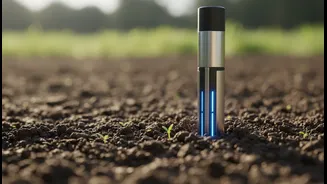
The Indian Institute of Technology (IIT) Ropar has firmly positioned itself at the forefront of this agricultural transformation. Through its iHub – AWaDH (Agriculture and Water Technology Development Hub), the institution is translating the promise of AI into practical solutions for Indian farmers. This is not just theoretical research; it is a mission-driven effort to build affordable and scalable technologies. For instance, their team has developed AI-enabled micro-weather stations that can be installed on a farm to provide hyperlocal weather forecasts with up to 99% accuracy. Another groundbreaking project is an AI-powered pest advisory system. A farmer can simply take a photo of an affected crop with their phone; the AI model, trained on millions of images, identifies the pest and recommends the right treatment, even advising on the best time to spray to avoid harming beneficial insects.
From the Lab to the Land
The phrase “for real farms” in the headline is key to understanding IIT Ropar’s philosophy. The institution recognises that technology is only useful if it is accessible, affordable, and easy to use for the average farmer. A crucial part of their work involves designing farmer-friendly interfaces, including chatbots and apps that can work in local languages. Their efforts go beyond just developing tech; they are building an entire ecosystem. The AWaDH hub has already incubated over 150 startups and developed more than 70 technologies that are now being commercialised. Furthermore, through initiatives like the ANNAM.AI Centre of Excellence, IIT Ropar is partnering with major industry players like Syngenta to co-develop solutions for crop health and pest forecasting, ensuring that their innovations have a direct path to the fields and reach millions of farmers.
The Road Ahead: Hurdles and Hopes
Despite the immense potential, the path to widespread adoption of AI in Indian agriculture is not without obstacles. High costs, lack of digital literacy in rural areas, intermittent internet connectivity, and the sheer diversity of Indian farming practices are significant challenges. Building trust among farmers, many of whom are accustomed to traditional methods, is paramount. The success of initiatives like those at IIT Ropar will depend on their ability to demonstrate tangible economic benefits and to provide robust training and support systems. The goal is not just to create shiny new gadgets, but to empower farmers, improve their resilience, and secure the future of India's food supply. The work at IIT Ropar is a critical step in turning this ambitious vision into a reality, one byte and one bushel at a time.