






The Engine of Growth: What Is Compounding?
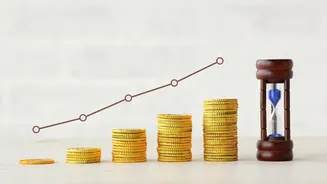
At its heart, compounding is simple: it’s the process of earning returns on your returns. When you invest, your money earns interest. The next year, you earn interest not just on your original investment, but also on the interest you earned the previous
year. That small addition might seem insignificant at first—a few extra rupees. But over decades, this 'interest on interest' effect starts to snowball, leading to exponential growth that far outpaces simple, linear returns. It’s the single most powerful tool for long-term wealth creation.
A Tale of Three Investors
To see this in action, let’s imagine three friends—Priya, Rohan, and Ananya. Each invests ₹10 lakh at the age of 30 and doesn't touch it for 30 years. Their only difference is the average annual yield they achieve. - Priya is cautious and earns a 6% annual return, typical of some conservative debt instruments. - Rohan is moderately balanced, achieving an 8% annual return. - Ananya is a bit more aggressive with equities, averaging a 10% annual return. After 30 years, the differences are staggering. - Priya’s ₹10 lakh grows to approximately ₹57.4 lakh. - Rohan’s ₹10 lakh, with just a 2% higher yield, grows to roughly ₹1 crore. - Ananya’s ₹10 lakh, at 10% per year, balloons to over ₹1.74 crore. The mere 4% gap between Priya’s conservative approach and Ananya’s growth-oriented one results in a difference of over ₹1.17 crore. This isn't because Ananya was a genius investor, but because she allowed a slightly higher growth rate to work its magic over three decades.
The Dark Side: Compounding of Fees
Compounding is a double-edged sword. Just as it amplifies returns, it also amplifies costs. A seemingly small annual fee of 1% or 2% can devastate your long-term wealth. This is what Vanguard founder John Bogle called the 'tyranny of compounding costs'. An annual management fee is deducted from your balance every year, meaning you lose not only the fee itself but all the future growth that money could have generated. Over 30 years, a 1% annual fee can reduce your final portfolio value by nearly 30%. Suddenly, that 'small' difference in fees becomes the difference between a comfortable retirement and a compromised one.
A Quick Mental Shortcut: The Rule of 72
If you want a quick way to understand the impact of different yields, use the Rule of 72. This simple formula helps you estimate how long it will take for your investment to double. Simply divide the number 72 by your annual interest rate. - At 6% interest, your money will double in approximately 12 years (72 ÷ 6). - At 8% interest, it will double in about 9 years (72 ÷ 8). - At 10% interest, it takes just over 7 years (72 ÷ 10). This handy rule makes it immediately clear how a higher rate of return dramatically shortens the time it takes to build wealth, a crucial factor for long-term financial planning.
Putting It All Together
Understanding this principle is the first step. The second is acting on it. This doesn't mean chasing risky, high-return investments blindly. It means being deliberate. When choosing between investment options like fixed deposits, bonds, or equity mutual funds, the long-term average return is a critical factor. Pay close attention to the fees associated with any product, as they represent a guaranteed negative return that will compound against you. A low-cost index fund with an 8% average return will almost certainly build more wealth over 30 years than a managed fund that returns 9% but charges a 2% annual fee, leaving you with only 7%. The math is unforgiving, but it's also on your side if you use it wisely.