

The Long Hunt for Lunar Water
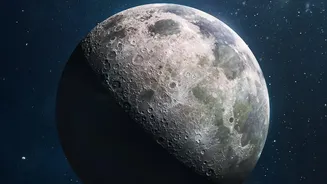
For decades, the question of water on the Moon has been a scientific rollercoaster. The Apollo missions in the 1960s and 70s brought back soil samples that were completely dry, leading to the conclusion that our nearest neighbour was a sterile, waterless
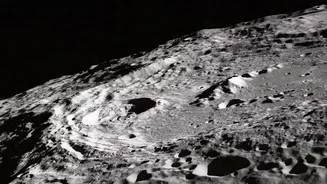
world. That picture began to change in the 1990s, with missions like Clementine and Lunar Prospector detecting hints of hydrogen, a key component of water, concentrated at the frigid lunar poles. These were not direct detections of ice but strong suggestions that something was frozen in the permanent shadows of deep craters, areas that haven't seen sunlight in billions of years.
Infrared Vision Reveals the Truth
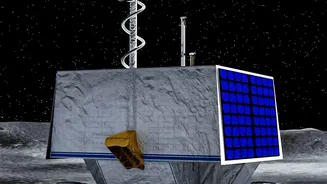
The major breakthrough in confirming lunar water came from seeing the Moon in a different light: infrared. Instruments like NASA's Moon Mineralogy Mapper (M3), flying aboard India's Chandrayaan-1 spacecraft, were game-changers. Unlike earlier instruments that just looked for hydrogen, M3 could perform spectroscopy, analysing the specific wavelengths of infrared light absorbed by the lunar surface. Water ice absorbs infrared light in a unique and identifiable way, creating a specific spectral signature. By detecting this signature, scientists could finally say with certainty that they were seeing actual H2O ice, not just its component parts or other reflective minerals.
More Than Just Ice in a Crater
The latest analysis of infrared data, including from the Stratospheric Observatory for Infrared Astronomy (SOFIA), has revealed even more surprising secrets. The headline discovery was that water isn't just confined to the deep, permanently shadowed craters. Data showed evidence of water molecules even on sunlit portions of the Moon, likely trapped within mineral grains or existing as a thin frost. This fundamentally changes our understanding, suggesting that water is more widespread than previously believed, though in much smaller concentrations in these sunlit areas. The new data helps scientists distinguish between water ice mixed with lunar soil (regolith), and hydroxyl molecules chemically bound to rocks.
A Blueprint for Future Exploration
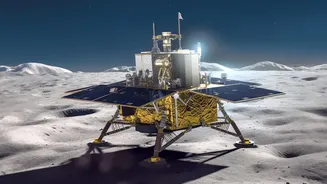
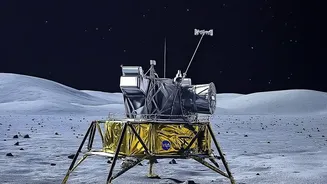
This detailed understanding of lunar water's form and distribution is more than just a scientific curiosity; it's a critical piece of the puzzle for humanity's future in space. Knowing precisely where to find accessible water ice is a primary goal for programs like NASA's Artemis missions, which aim to establish a long-term human presence on the Moon. Water is not just for drinking. Through a process called electrolysis, it can be split into hydrogen and oxygen. This provides breathable air for astronauts and, crucially, the two main components of rocket fuel. Being able to 'live off the land' by sourcing water on the Moon could slash the prohibitive costs of launching everything from Earth.
An Ancient Record Preserved in Ice
Beyond its practical use as a resource, the ice hidden in these lunar cold traps is an invaluable scientific treasure. These deposits are, in effect, a frozen archive of the solar system's history. Accumulated over billions of years, the ice could contain chemical traces of ancient comets and asteroids that delivered water to the inner solar system, including Earth. By studying these pristine ice deposits, we can gain unprecedented insights into the formation of our planet and the origins of the water that makes life possible. The same ice that could fuel future missions also holds the keys to understanding our distant past.