








Understanding the Contenders: The Two Paths
Imagine two ways to climb a mountain. One is a winding, paved road that gradually leads to the top. The other is a series of steep, unmarked trails with thrilling shortcuts and dangerous drops. In the world of investing, a diversified index fund is like
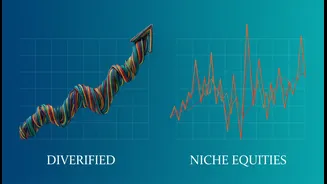
that steady road. It’s a type of mutual fund or ETF that holds all the stocks in a specific market index, such as India's NIFTY 50 or Sensex. Instead of trying to beat the market, its goal is to mirror the market's performance. On the other hand, volatile niche equities are the steep, unmarked trails. These are individual stocks in very specific, often new, and sometimes speculative sectors—think of a single green energy startup, a niche AI firm, or a small biotech company. They offer the potential for rapid, spectacular gains but also carry the risk of equally spectacular losses.
The Power of Not Putting All Eggs in One Basket
The core principle that makes index funds a safer bet is diversification. When you buy a NIFTY 50 index fund, you are not just investing in one company; you are buying a tiny piece of 50 of India's largest and most established companies across various sectors like banking, IT, and energy. If one company or even one whole sector has a bad quarter, its poor performance is cushioned by the other 49 companies that may be doing well. This built-in diversification spreads your risk. Investing in a single niche equity is the exact opposite. Your entire investment's fate is tied to the success or failure of that one company. If it secures a massive contract, your stock could soar. But if its product fails or a competitor outmanoeuvres it, your investment could plummet.
Taming the Beast of Market Volatility
Volatility refers to how fast and how much an asset's price changes. Niche equities are often highly volatile. Their prices can swing dramatically based on news, investor sentiment, or industry-specific events. While these swings can create opportunities for massive short-term profits, they also create an environment of high anxiety and risk. For most investors, trying to time these swings—buying low and selling high—is incredibly difficult and often leads to costly mistakes, like panic selling during a dip. Index funds, by their very nature, smooth out this ride. Since they represent a broad average of the market, the extreme highs and lows of individual stocks are balanced out. This leads to more stable, predictable growth over time, reducing the emotional stress that causes many investors to make poor decisions.
The Hidden Drain: Costs and Effort
Successfully investing in niche stocks requires a significant amount of research, constant monitoring, and a stomach for risk. This active involvement can feel like a second job. Furthermore, frequent buying and selling of individual stocks can rack up costs like brokerage fees and taxes on capital gains. Index funds are the epitome of passive investing. Since they automatically track an index, they require very little management. This results in significantly lower management fees, known as expense ratios. In India, some index funds have expense ratios as low as 0.1% or even less, meaning more of your money stays invested and working for you. Over a long investment horizon, these seemingly small cost savings can compound into a substantial difference in your final returns.
Winning the Marathon, Not the Sprint
The allure of niche equities is the chance to find the 'next big thing' and multiply your investment overnight. While this does happen, it's the exception, not the rule. For every success story, there are countless more stories of companies that fizzled out. The investment strategy behind index funds is about winning the long race. They don't promise to make you rich tomorrow. Instead, they offer consistent, market-average returns that compound over years and decades. History shows that very few actively managed funds—let alone individual investors picking stocks—consistently beat the market average over the long term. By simply aiming to match the market's performance with a low-cost, diversified index fund, you are positioning yourself for steady, reliable wealth creation.