



The Underrated Hero: Guava
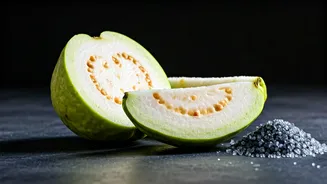
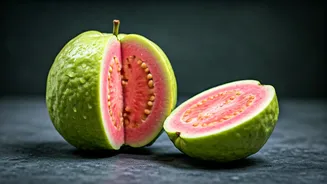
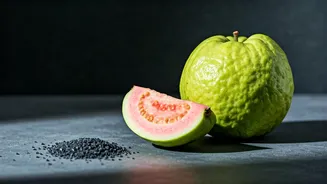
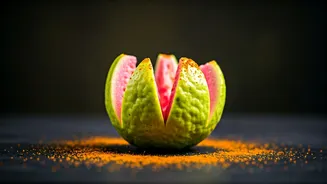
Let's first appreciate the guava (amrood) for what it is. It's a fruit of wonderful contradictions. The pale green exterior, often firm to the touch, hides a spectrum of possibilities. It can be startlingly crisp, with a clean, almost vegetal crunch,
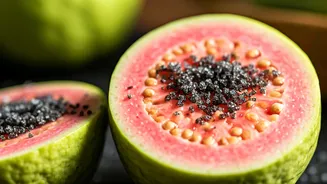
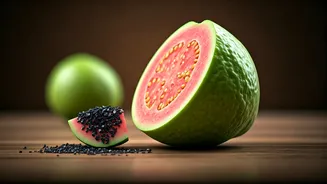
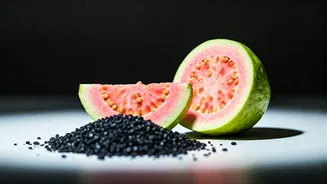
or it can be tender and yielding, its flesh blushing pink and fragrant. The flavour is a delicate dance between sweet and tart, with floral notes that are uniquely its own. Unlike the overpowering sweetness of a mango or the sharp tang of citrus, guava offers a more subtle, complex profile. It's this complexity that makes it the perfect canvas for a bold flavour companion. Eating a raw guava on its own is pleasant, but it’s an experience waiting for its soulmate. It’s a melody that’s beautiful but incomplete, humming in anticipation of its harmony.
The Magic of Kala Namak
This isn't your everyday table salt. Black salt, or kala namak, is a kiln-fired rock salt with a distinctive sulphurous punch. If you’ve ever smelled it for the first time, you know the scent: sharp, slightly funky, and reminiscent of boiled eggs. This is due to the presence of sulphur compounds, primarily hydrogen sulphide. While this might sound off-putting, in the world of flavour, it’s an alchemy. Kala namak doesn't just add saltiness; it adds a layer of savoury, umami depth that transforms everything it touches. It’s the secret weapon in chaat, the zing in jal-jeera, and the essential counterpoint to the sweetness of fruit. To dismiss it as just 'salty' is to miss its profound culinary power. It’s a flavour that wakes up your palate and demands attention.
The Perfect Union
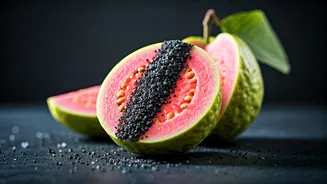
So, what happens when these two meet? Magic. The saltiness of kala namak immediately cuts through and amplifies the guava's inherent sweetness. It's a foundational principle of flavour science: salt reduces bitterness and makes sweet things taste even sweeter. But it’s the unique sulphurous note of the black salt that truly elevates the experience. It creates a savoury contrast that prevents the fruit from feeling one-dimensionally sweet. The slight tang of the guava, the floral aroma, the granular crunch of the fruit, the sharp savoury hit of the salt — it’s a symphony of textures and tastes in every single bite. The salt coaxes out hidden notes in the guava, making it taste more intensely of itself. It’s not about masking the fruit's flavour, but about unlocking it, allowing it to become the best version of itself.
More Than a Snack, It’s a Memory
For countless people in India, this combination is deeply woven into the fabric of memory. It’s the taste of an after-school treat, bought from a street vendor with a cart piled high with green globes. It’s the flavour of a lazy winter afternoon, with slices of guava passed around on a plate among family. The vendor’s practiced motions—the quick, rhythmic slicing of the fruit, the expert flick of the wrist that sends a perfect dusting of salt and perhaps a pinch of red chilli powder over the top—are a form of culinary theatre. This simple act connects generations. It's a taste that brings you back to childhood, to simpler times, to the pure, unadulterated joy of a perfect snack that costs next to nothing but delivers a world of satisfaction.