





The Sacred Commencement
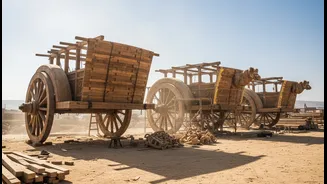
The entire process is a living tradition, a remarkable feat of engineering and devotion performed without modern blueprints or machinery. The construction begins on Akshaya Tritiya, an auspicious day in the Hindu calendar. On this day, after special rituals,
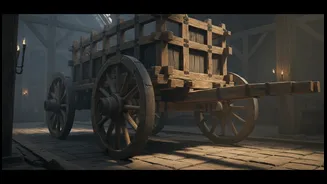
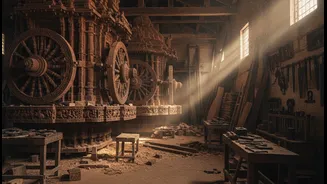
the temple priests hand over garlands to the chief carpenters, known as Viswakarma Sevakas, signalling the divine sanction to begin. The construction site, called the Ratha Khala, becomes a hive of activity right in front of the king's palace and the temple office.
From Forest to Grand Avenue
The journey of the chariots begins long before the first piece is assembled. It starts in the forests, with the careful selection of specific wood like Phasi, Dhausa, and Asana. Traditionally, over a thousand logs are sourced from the forests of the former princely state of Dasapalla, supplied free of cost by the state government. These logs are then floated down the Mahanadi river as rafts before being collected near Puri and transported by road to the Ratha Khala. It's a process steeped in reverence, acknowledging the sacred material that will soon form the moving temples of the deities.
The Hereditary Artisans
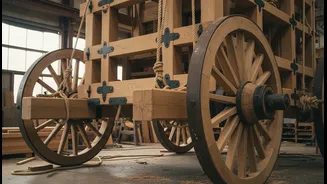
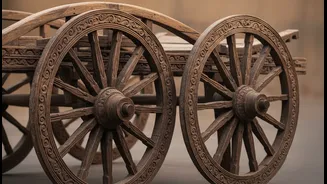
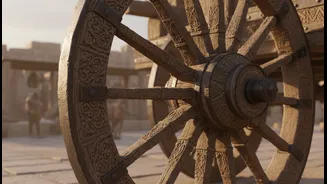
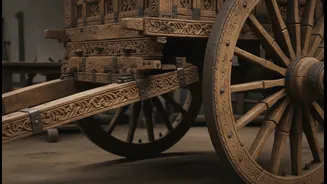
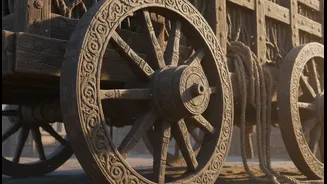
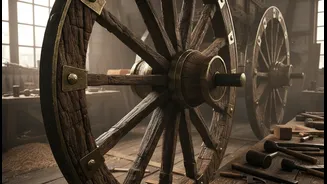
The construction is not undertaken by just any craftsmen. It is the hereditary privilege and duty of several groups of artisans, each with a specialised role passed down through generations. The main carpenters, the Badhei Maharanas, oversee the primary construction. They are assisted by the Pahi Maharanas who fix the wheels, the Kamara Kanta Nayakas or ironsmiths who forge every nail and clamp, and Rupakaras who carve intricate wooden images. Painters (Chitrakaras) and tailors (Daraji Sevakas) also play crucial roles, ensuring every aspect of the chariot is perfect. In total, around 200 artisans work together in a symphony of coordinated skill.
Anatomy of the Divine Chariots
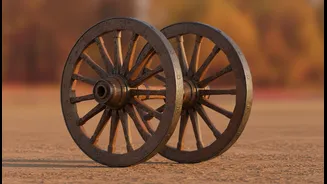
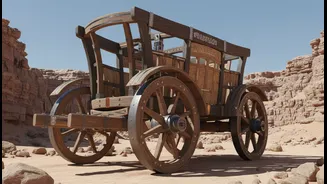
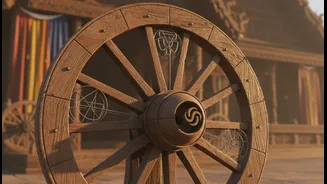
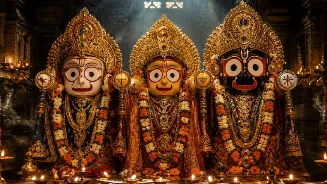
The three chariots are unique in their design, size, and colour, each a distinct home for its deity. Lord Jagannath’s chariot, Nandighosha, is the tallest at about 44 feet and has 16 wheels, draped in red and yellow cloth. Lord Balabhadra’s chariot, Taladhwaja, stands at 43 feet with 14 wheels and is covered in red and green. Devi Subhadra’s chariot, Darpadalana, is the smallest at 42 feet, with 12 wheels and a covering of red and black cloth. Astonishingly, no metal nails are used in the main structure; the massive wooden components are held together using traditional joinery of pegs and sockets, a testament to ancient engineering prowess.
The Final Touches
As the construction progresses, the other artisan groups begin their work. The Chitrakaras mix traditional pigments of red, yellow, black, and white to paint the chariots and the nine Parsva Devatas (guardian deities) that adorn each one. The Daraji Sevakas, many from the famous appliqué craft village of Pipli, stitch the massive cloth canopies that crown the chariots, following a strict colour code centuries old. Finally, the thick ropes, made from coconut fibre, are attached. These are the ropes that millions of devotees will grasp to pull the gods on their annual journey.