


First, What Are Super-Earths?
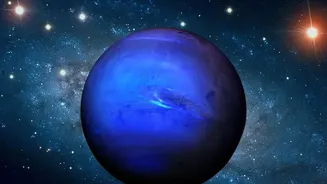
Before diving into the technology, it's helpful to know what we're looking at. Super-Earths are a class of exoplanet—planets outside our solar system—that are larger in mass and radius than Earth but smaller than our ice giants like Neptune. They are one
of the most common types of planets discovered in our galaxy so far, yet our own solar system curiously lacks one. This ubiquity makes them prime targets for astronomers eager to understand planetary diversity and the potential for habitable conditions elsewhere in the universe. Some, like the famous K2-18 b, orbit within their star's habitable zone, the region where temperatures could allow for liquid water.
The Telescope’s Secret: Reading Planetary Silhouettes
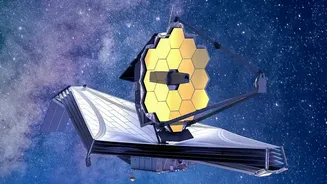
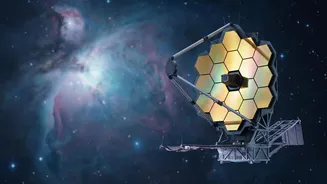
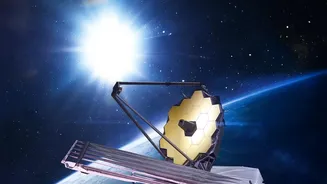
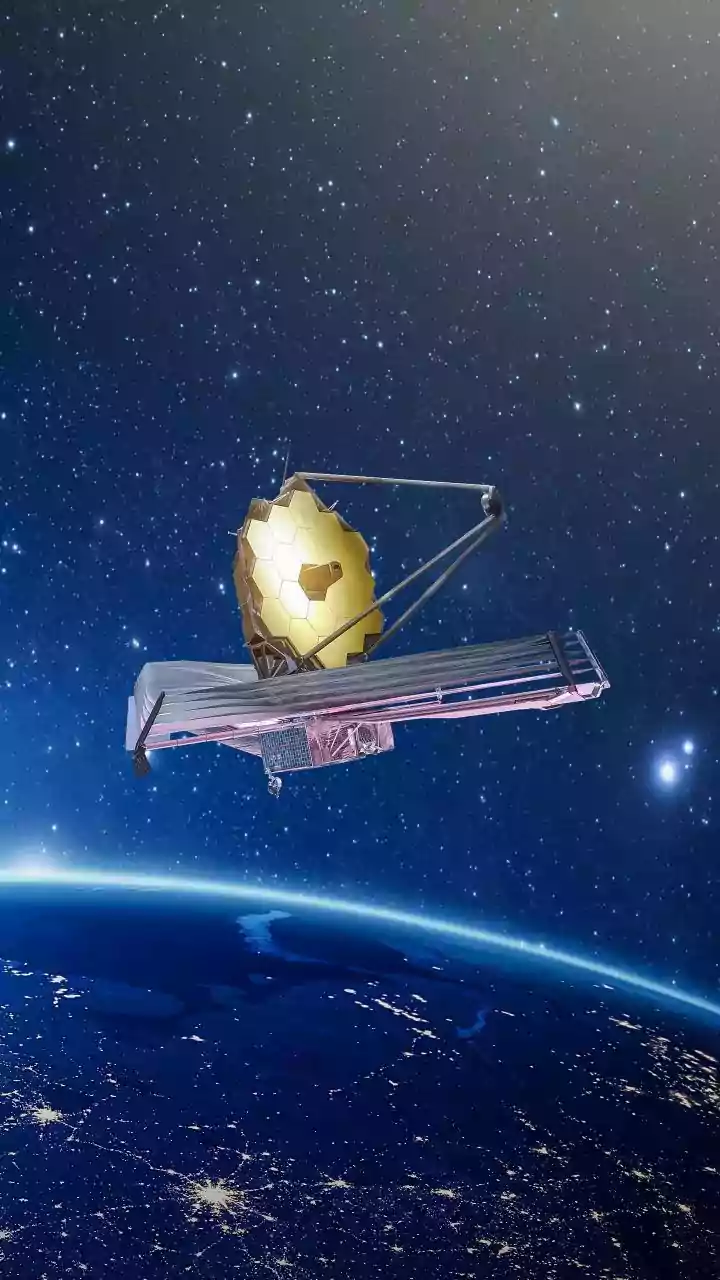
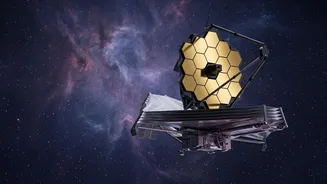
JWST’s primary method for analyzing an exoplanet’s atmosphere is a technique called transit spectroscopy. It requires patience and perfect alignment. Astronomers wait for a planet to transit, or pass in front of, its host star from our perspective. As the planet makes this journey, a tiny fraction of the starlight shines directly through the edge of the planet's atmosphere. This filtered light carries with it a chemical fingerprint of the gases that make up that atmosphere. The telescope's powerful instruments are designed to capture and decode this incredibly faint signal.
Decoding Starlight for Chemical Clues
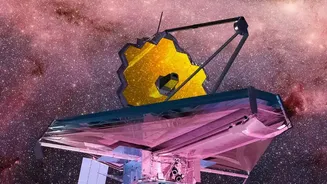
Once JWST captures the starlight that has passed through the atmosphere, its advanced spectrographs, such as the Near-Infrared Spectrograph (NIRSpec) and the Mid-Infrared Instrument (MIRI), get to work. These instruments spread the incoming light into its component colors, creating a spectrum—much like a prism creates a rainbow. Different molecules in the planet's atmosphere absorb very specific wavelengths, or colors, of light. Water, methane, carbon dioxide, and other compounds each leave a unique pattern of dark lines in the spectrum, like a barcode. By analyzing which colors are missing, scientists can determine precisely what chemicals are present in the distant world's air.
From Barcodes to Weather Maps
Identifying chemicals is just the start. To understand weather, astronomers observe a planet continuously as it orbits its star. This is known as creating a phase curve. By measuring changes in the planet's brightness and thermal emissions at different points in its orbit, scientists can build temperature maps of its surface and atmosphere. These maps can reveal which side of the planet is hotter, indicating it might be tidally locked, and can show how heat is distributed by winds. Observations of clouds, like the discovery of quartz crystal clouds on the gas giant WASP-17 b, show how JWST can detect dynamic weather systems in action. While these detailed weather maps are easier to create for large, hot planets, the same principles are being applied to smaller super-Earths.
The Hunt for Water Worlds
One of the most exciting applications of this technology is the search for water. Take K2-18 b, a super-Earth about 120 light-years away. Initial studies suggested the presence of water vapor. However, more recent and detailed JWST observations found a world rich in methane and carbon dioxide, but with a surprising lack of detectable water vapor in its upper atmosphere. This has led to the fascinating hypothesis that K2-18 b could be a 'Hycean' world—a planet with a vast liquid water ocean concealed beneath a thick, hydrogen-rich atmosphere. In this model, the water is real but trapped below the layers the telescope can easily see, fundamentally changing how we search for habitable environments.