








A Tale of Two Spacewalks
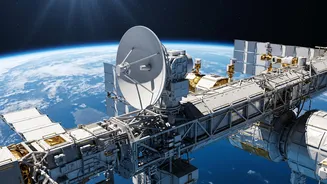
The mission to replace a faulty Space-to-Ground antenna (SGANT) required two separate extravehicular activities (EVAs) by NASA astronaut Anil Menon and European Space Agency (ESA) astronaut Sophie Adenot. During the first spacewalk on August 18, the pair
successfully removed the failed antenna but ran out of time to install its replacement. The initial work proved more challenging than anticipated, as disconnecting stubborn cables and bolts took longer than planned. The duo returned to the task on August 25, successfully installing the new antenna during a spacewalk that lasted six and a half hours. The completion of the task was met with celebration, with mission control musically confirming the success: "You just saved the video dish!"
Who Were the Spacewalkers?
The challenging upgrade was carried out by a seasoned spacewalker and a history-making rookie. The mission was the third EVA for NASA's Anil Menon, who served as the lead spacewalker. For ESA's Sophie Adenot, it was her second venture into the vacuum of space. With her first spacewalk on August 18, Adenot became the first woman from France to perform an EVA. This international collaboration highlights the cooperative nature of the ISS program, bringing together expertise from multiple space agencies to maintain the orbiting laboratory.
Restoring a Critical Link
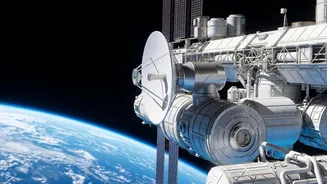
The Space-to-Ground antennas are crucial pieces of hardware for the ISS. They provide the high-speed communications link that allows the station to transmit voice, video, and critical data to and from Mission Control in Houston via NASA's Tracking and Data Relay Satellite system. The antenna that was replaced had failed last November, forcing the station to rely on its second, functioning antenna. While the station remained operational, the failure eliminated important redundancy in the system. The successful installation on August 25 restored this critical backup, ensuring robust communication capabilities for the foreseeable future.
More Than Just a Repair
This repair is part of a broader, ongoing effort to modernize the station's communication systems. While this spacewalk focused on a NASA antenna, ESA has also been enhancing its own data pipeline. In 2021, astronauts installed the Columbus Ka-band antenna, known as ColKa, on the European Columbus module. This system works through the European Data Relay System (EDRS), giving European scientists a direct, high-speed data link to their experiments at speeds comparable to home broadband. Together, these upgrades by NASA and ESA ensure that the aging space station can continue to serve as a world-class laboratory, capable of sending massive amounts of scientific data back to Earth almost instantaneously and keeping the crew safely connected.