




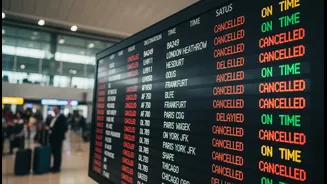




Why On-Time Performance Matters
A delayed flight is more than just an inconvenience; it can trigger a cascade of negative consequences. For a business traveller, a two-hour delay could mean a missed meeting and a lost opportunity. For a family on holiday, it could result in a forfeited
hotel booking or a missed connecting flight to an international destination. These disruptions carry real financial and personal costs. In an increasingly crowded aviation market, where schedules are tight and airports are congested, an airline’s ability to stick to its timetable is a powerful indicator of its operational health and reliability. Using this data to inform your booking is not about chasing seconds, but about strategically avoiding predictable disruptions and safeguarding your travel plans.
Understanding the Official Numbers
In India, the primary source for this information is the Directorate General of Civil Aviation (DGCA). Every month, the DGCA publishes On-Time Performance (OTP) reports for scheduled domestic airlines. A flight is considered 'on-time' if it departs from the gate within 15 minutes of its scheduled departure time. This is a strict metric. The data specifically tracks performance at four major metro airports: Bengaluru, Delhi, Hyderabad, and Mumbai, which collectively handle a majority of the country's passenger traffic. While this doesn't cover every airport, it provides a strong, standardized benchmark for comparing the biggest players in Indian aviation.
How to Find and Use Punctuality Data
Accessing this information is straightforward. The DGCA's monthly reports are available on its official website. Beyond this, several third-party aviation analytics firms like Cirium and OAG publish global and regional rankings. Many travel booking websites and apps are also beginning to integrate this data, allowing you to see an airline's punctuality score as you browse flights. When you review the numbers, look for consistency. An airline that consistently maintains an OTP of over 80% is generally a reliable choice. For instance, DGCA data for May 2026 showed IndiGo leading with an 82.8% OTP, followed by Akasa Air at 78.3%. In contrast, an airline with a volatile or low OTP, like SpiceJet's 26.5% in the same period, signals a higher risk of delays.
Look Beyond the Headline Figure
While an airline's overall OTP is a useful starting point, savvy travellers should dig a little deeper. Performance can vary significantly based on the route, time of day, and even the season. An airline might have excellent overall punctuality but struggle on a specific high-traffic route. Conversely, some airports are simply more efficient than others. DGCA data from May 2026, for example, revealed Chennai International Airport had an impressive OTP of 92.2%, while Mumbai's was much lower at 70.5%. Factors like monsoon season (June-September) or winter fog in North India can reduce all airlines' OTP by 5-12 percentage points. Before booking a critical flight, it’s wise to check the recent performance not just of the airline, but if possible, of that specific flight number or route on tracking websites like Flightradar24 or FlightAware.
The Punctuality vs. Cost Trade-Off
Often, the most punctual airlines are not the absolute cheapest. This presents a classic dilemma: should you pay more for a higher chance of being on time? The answer depends entirely on the nature of your trip. If you are flying for a wedding, a crucial business presentation, or a tight international connection, paying a premium of ₹1,000-₹2,000 for an airline with a 10-point OTP advantage could be a wise investment. The potential cost of a delay far outweighs the savings on the ticket. However, if you are on a flexible vacation with no immediate commitments upon arrival, a budget-friendly airline with a slightly lower (but not abysmal) OTP might be perfectly acceptable. The key is to consciously weigh the risk against the savings. Recent data showing Air India's significant improvement, ranking fourth globally in June 2026 with an 86.85% on-time arrival rate, demonstrates that reliability is becoming a key competitive battleground.